The Neumayer III research station in Antarctica faces unique challenges as the sun has not set for over two weeks due to the region’s axial tilt. Located on the Ekstrom Ice Shelf, this base must contend with extreme environmental hazards, including ice shelf disintegration and shifting ice. In fact, the station has moved over a foot closer to the coast, reminiscent of the fate of its predecessors, Neumayer Station and Neumayer Station II, which were abandoned in 1992 and 2008 due to similar issues.
Constructed in 2009 and designed to host a variety of researchers, including meteorologists and geophysicists, Neumayer III sits atop over 650 feet of ice. It is one of approximately 70 permanent research stations in Antarctica, built on 16 hydraulic stilts to combat the harsh conditions that resulted in the abandonment of earlier installations. This innovative design allows the 20,000-square-foot, 2,200-ton facility to maintain stability over the shifting landscape.
Innovative Engineering Solutions
The engineering team at Neumayer III faces the ongoing challenge of adjusting the station’s height to respond to the accumulating snow. In a remarkable demonstration, Swiss engineer and technical lead Thomas Schenk shared a video detailing the lifting process. Schenk has been stationed at Neumayer III since 2024 and oversees the overwintering procedures essential for maintaining the base’s functionality.
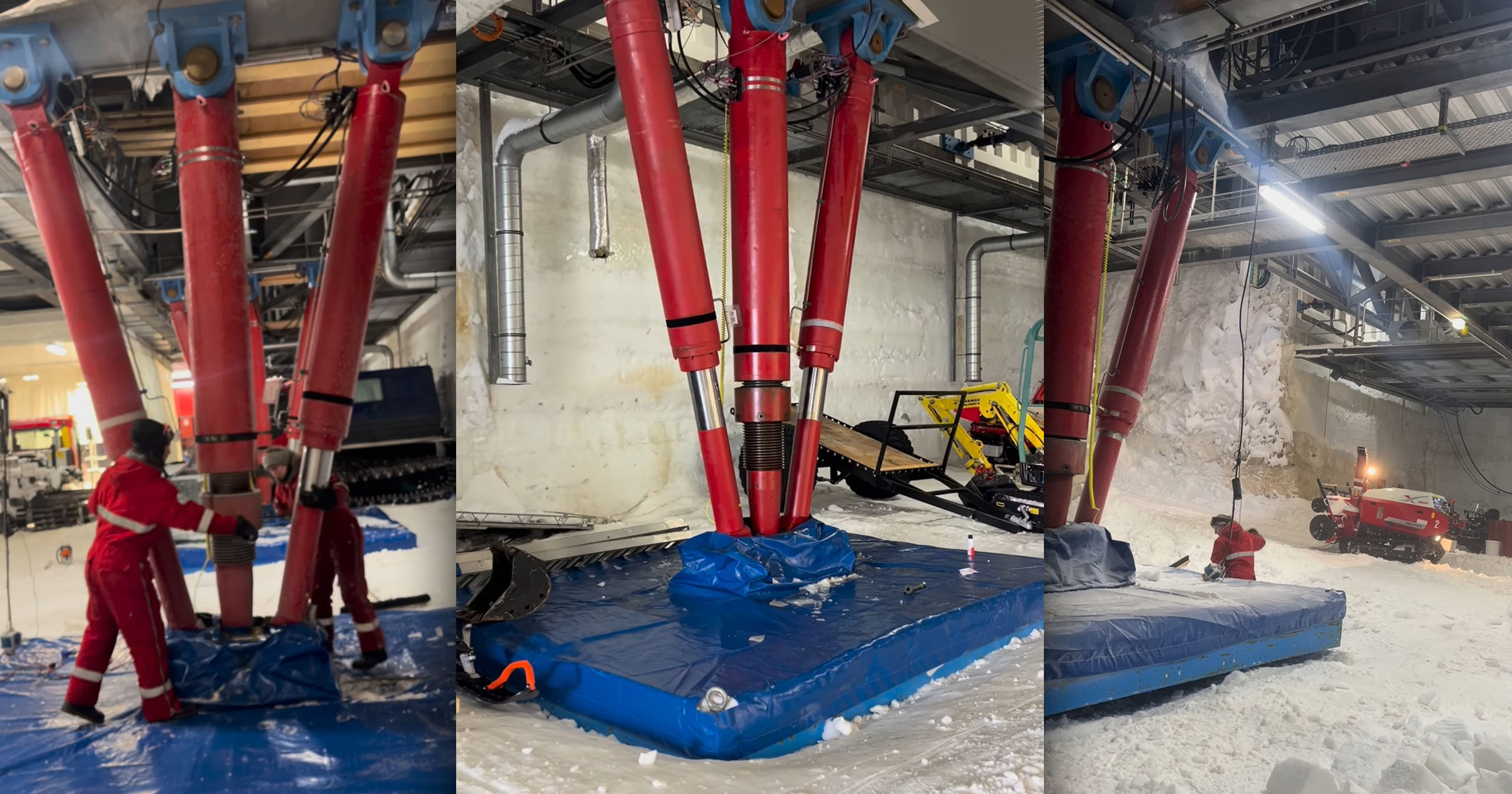
In the video, Schenk explains the necessity of keeping the station level. “Everything here in Antarctica that isn’t built on rock will inevitably sink into the snow sooner or later,” he stated. The hydraulic lifting system, developed by the German engineering firm IgH, allows the team to adjust the station’s stilts regularly to ensure its stability.
The process involves loosening horizontal brackets that brace the station and using hydraulic cylinders to lift each leg. Once elevated, fresh snow is blown beneath the bipod legs to provide a stable foundation. After transferring the station’s weight back onto the legs, the team checks its alignment to ensure ongoing stability. Schenk noted that the station is raised by approximately 6.5 feet each year during the summer season using similar procedures.
The Future of Antarctic Research
The efforts at Neumayer III exemplify the ingenuity required to maintain a permanent research presence in one of the most challenging environments on Earth. As climate change continues to impact polar regions, research stations like Neumayer III will play a critical role in understanding these changes and their global implications.
The ongoing work at the station not only highlights the resilience of human engineering but also underscores the importance of long-term scientific research in Antarctica. The viral video of Schenk’s demonstration has captured public interest, illustrating the intricate balancing act required to sustain life and research in such an extreme locale.
As the Neumayer III base continues to adapt to its surroundings, it stands as a testament to the dedication of scientists and engineers committed to unlocking the mysteries of the Antarctic environment.