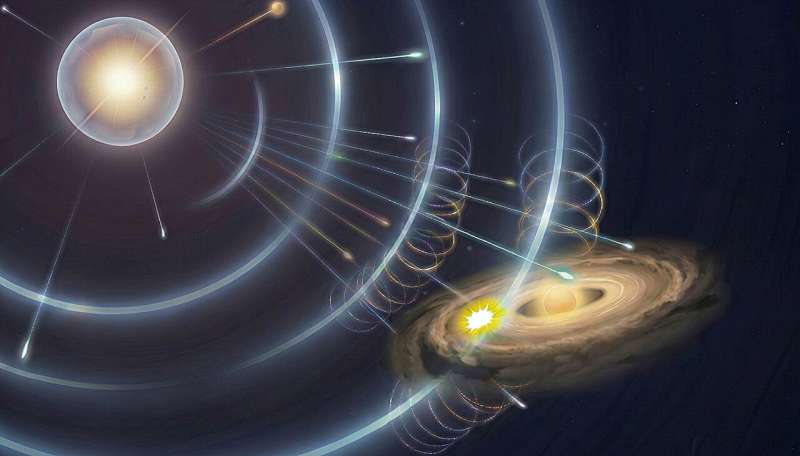
The search for extraterrestrial intelligence (SETI) has received a significant boost with the introduction of an improved machine learning technique designed to mitigate radio frequency interference (RFI) in survey data. This advancement is particularly crucial for the highly sensitive Five-hundred-meter Aperture Spherical radio Telescope (FAST), which plays a key role in scanning the sky for technosignatures.
RFI poses a considerable challenge for SETI researchers, as it can obscure potential signals from extraterrestrial sources. Initial measures to address RFI, including the removal of persistent narrowband signals, are essential. However, residual RFI often remains, complicating the search for genuine signals. A recent study proposes the use of the Density-Based Spatial Clustering of Applications with Noise (DBSCAN) algorithm to tackle this issue effectively.
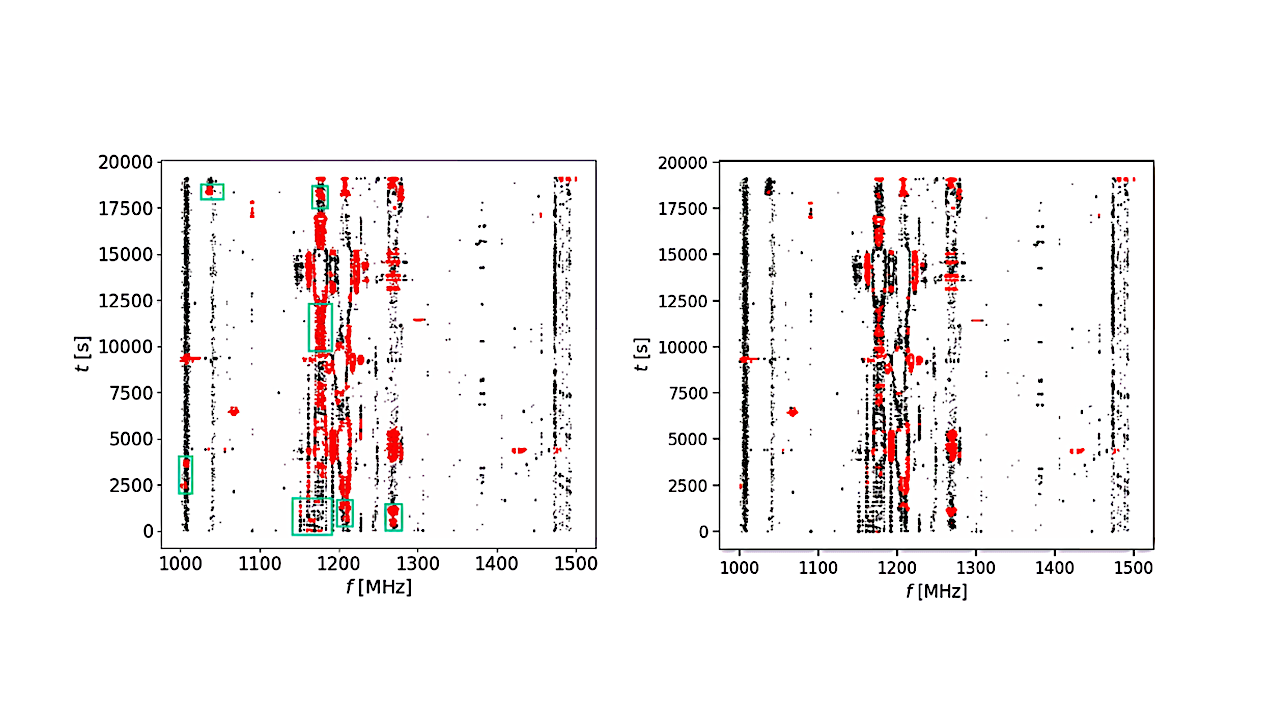
In research conducted by Li-Li Zhao and colleagues, the DBSCAN algorithm was applied to archival data from FAST-SETI surveys conducted in July 2019. The results were promising: after initial RFI mitigation efforts, the algorithm successfully identified and removed 36,977 residual RFIs, accounting for approximately 77.87% of the interference. This swift removal occurred within about 1.678 seconds, showcasing the algorithm’s efficiency.
The findings indicate a significant improvement over previous machine learning techniques, achieving a 7.44% higher removal rate and a 24.85% reduction in execution time. This enhanced capability allows for more effective isolation of candidate signals that could potentially indicate extraterrestrial life.
The research team also noted the identification of intriguing candidate signals that align with previous studies. Following an extensive analysis, they were able to retain one candidate signal, underscoring the effectiveness of the DBSCAN algorithm in filtering out unwanted interference while preserving valuable data.
This work, which includes contributions from researchers such as Xiao-Hang Luan, Xin Chao, Yu-Chen Wang, Jian-Kang Li, Zhen-Zhao Tao, Tong-Jie Zhang, Hong-Feng Wang, and Dan Werthimer, has been accepted for publication in The Astronomical Journal. It highlights the potential for machine learning to revolutionize the field of astrophysics, particularly in the ongoing quest to understand our universe and the possibility of life beyond Earth.
The study is documented in detail, comprising 14 pages with 2 tables and 8 figures, providing a comprehensive overview of the methodology and results. This research not only enhances RFI mitigation but also propels the SETI initiative forward, paving the way for future explorations and discoveries in the field of astrobiology.
Researchers and interested parties can access the complete study via the arXiv repository, with the citation available as arXiv:2512.15809 [astro-ph.IM]. As the search for extraterrestrial life continues, advancements like these demonstrate the critical intersection of technology and exploration, promising a new era of discovery in our understanding of the cosmos.