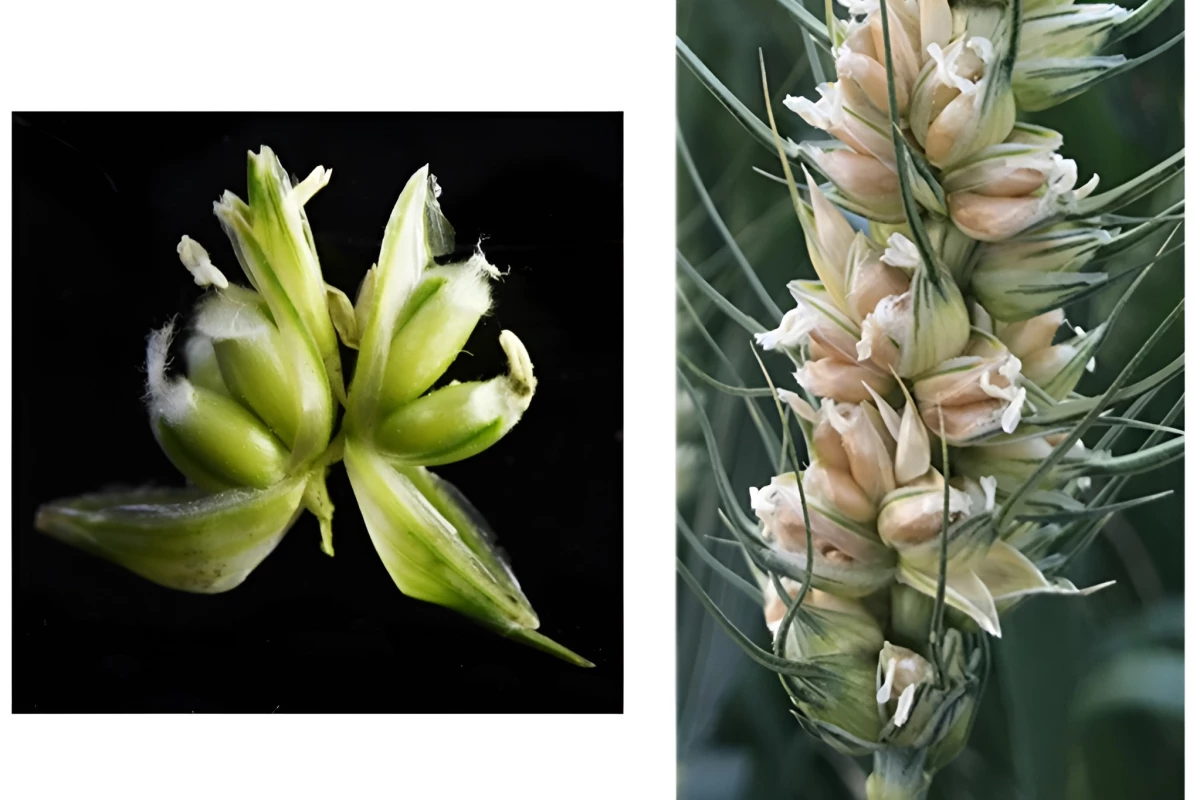
A recent genetic discovery at the University of Maryland has the potential to significantly increase wheat grain yields, possibly tripling the amount of grain produced from the same area of farmland. Researchers have identified a genetic mechanism in a rare mutant wheat variety, known as multi-ovary (MOV) wheat, which could revolutionize wheat cultivation.
Understanding the Genetic Mechanism
Typically, each floret in a conventional wheat plant produces one ovary, resulting in a single grain. However, MOV wheat can produce up to three ovaries per floret, allowing for the potential of three grains instead of one. Until now, the genetic basis for this phenomenon remained largely unknown.
In their study, scientists at the University of Maryland mapped the DNA of MOV wheat and compared it with that of regular bread wheat. This comparison revealed the activation of a dormant gene called WUSCHEL-D1 (WUS-D1) in MOV wheat. This gene plays a crucial role in enhancing the development of female flower parts, such as pistils and ovaries, which are essential for grain production.
Implications for Wheat Breeding
The findings, recently published in the Proceedings of the National Academy of Sciences, offer a promising pathway for breeders looking to develop higher-yielding wheat varieties. According to Associate Professor Vijay Tiwari, a co-author of the study, “Pinpointing the genetic basis of this trait offers a path for breeders to incorporate it into new wheat varieties, potentially increasing the number of grains per spike and overall yield.”
The researchers believe that by employing advanced gene editing techniques, they can activate the WUS-D1 gene in cultivated wheat plants, leading to increased grain production. This development could have significant implications for food security, especially in regions where wheat is a staple crop.
As the global population continues to grow, innovations in agricultural practices become increasingly vital. The ability to enhance crop yields without requiring additional land, water, or fertilizer could play a key role in sustainable farming efforts. The ongoing research at the University of Maryland is a step toward making this vision a reality.
The study highlights the importance of genetic research in addressing food production challenges and demonstrates the potential of modern biotechnology in agriculture. As scientists continue to explore the genetic underpinnings of plant traits, the agricultural sector may soon experience transformative changes that could help feed the world more efficiently.