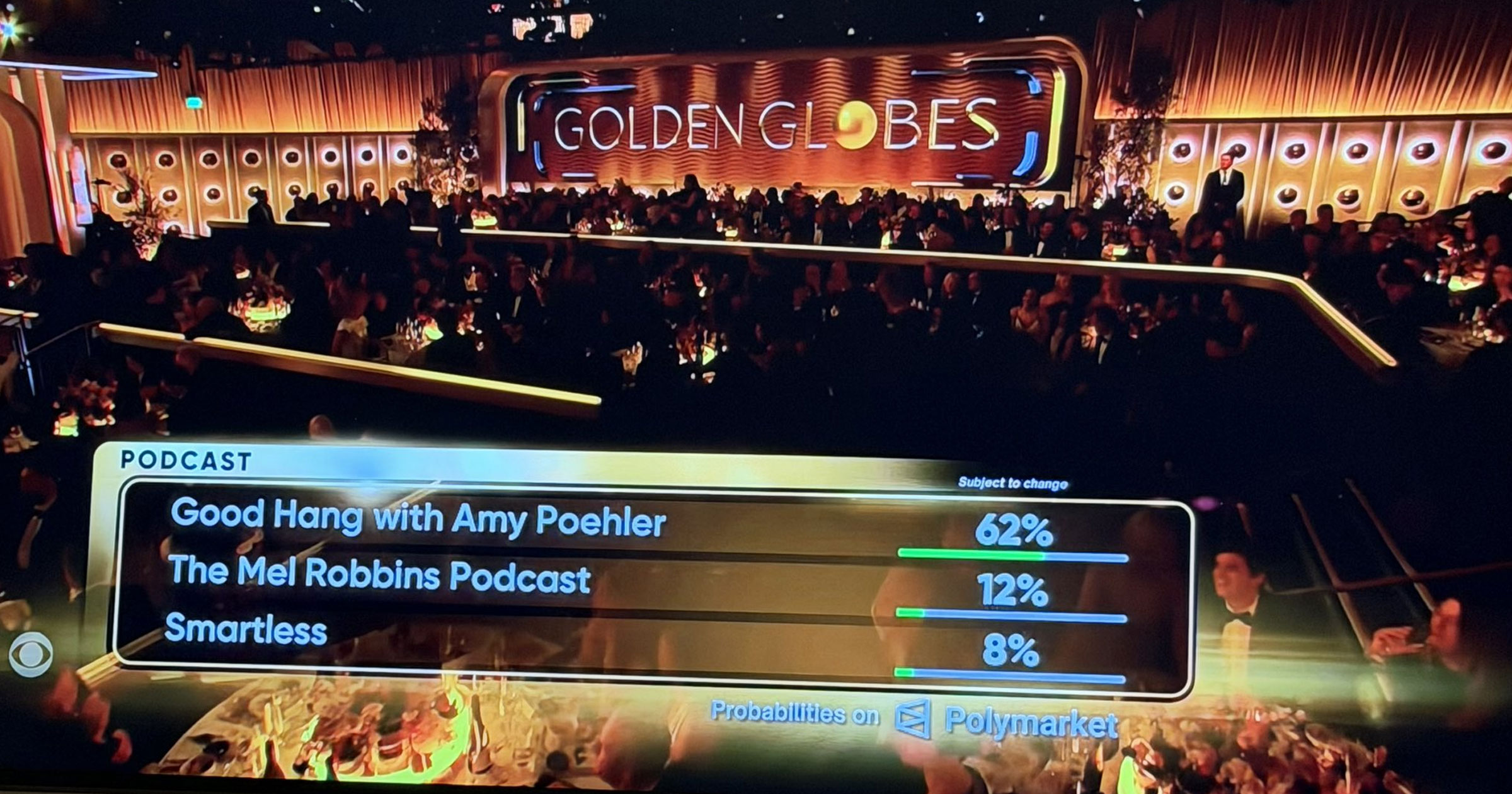
The 83rd Golden Globes, broadcast on CBS, ignited a significant backlash after prominently featuring betting odds from the online prediction platform Polymarket. This innovative yet controversial move encouraged viewers to place bets on award outcomes, raising alarms about the normalization of gambling during a prestigious event.
The integration of Polymarket into the Golden Globes was a bold step aimed at engaging audiences in new ways. During the live broadcast, a ticker displayed predictions for various awards, with some viewers expressing dismay at the event’s transformation into a gambling showcase. Predictions varied widely, with “Sinners” leading the betting for Best Drama, but ultimately losing out to “Hamnet.” Conversely, many correctly wagered on Paul Thomas Anderson winning Best Director for his film “One Battle After Another.”
The betting window on Polymarket closed early at 7:00 AM on March 12, 2024, preventing live viewers from participating in gambling during the ceremony. Critics were vocal about the implications of promoting a betting platform during a traditional awards show. Concerns were heightened due to the Golden Globes’ recent struggles with viewership, marred by scandals related to corruption and discrimination.
Social media reactions were swift and harsh. Semafor senior social media editor Josh Billinson tweeted, “The Golden Globes Best Podcast odds presented by Polymarket is a new low for this humiliating awards show.” Online influencer Matt Bernstein echoed this sentiment, calling the broadcast’s inclusion of betting odds “genuinely disgusting.” Many users lamented the pervasive nature of gambling in modern culture, with comments reflecting a sense of resignation to the commercialization of entertainment.
The partnership between Penske Media Corp., the owner of the Golden Globes, and Polymarket was officially announced just days before the event. In a statement, Craig Perreault, president of Penske Media, described the collaboration as a way to “unlock a groundbreaking new frontier” that enhances viewer engagement. However, this partnership came under scrutiny following a recent insider trading scandal involving Polymarket, where a trader reportedly profited over $400,000 through timely bets linked to U.S. military actions in Venezuela.
Critics assert that the integration of gambling into the Golden Globes reflects broader societal trends, where entertainment and risk-taking increasingly collide. As some viewers noted, the event has historically faced allegations of favoritism and corruption, making the promotion of betting seem particularly inappropriate.
This incident illustrates the growing intersection of entertainment and gambling, raising questions about the future of award shows in an era where financial stakes are becoming more pronounced. As one user remarked, “This is like watching a car crash in real time,” capturing the unsettling nature of the event’s new direction.
As the Golden Globes continues to adapt to changing viewer expectations, the inclusion of platforms like Polymarket may signify a shift in how audiences engage with awards shows. The fallout from this decision will likely resonate beyond this year’s ceremony, potentially influencing future programming decisions in the entertainment industry.