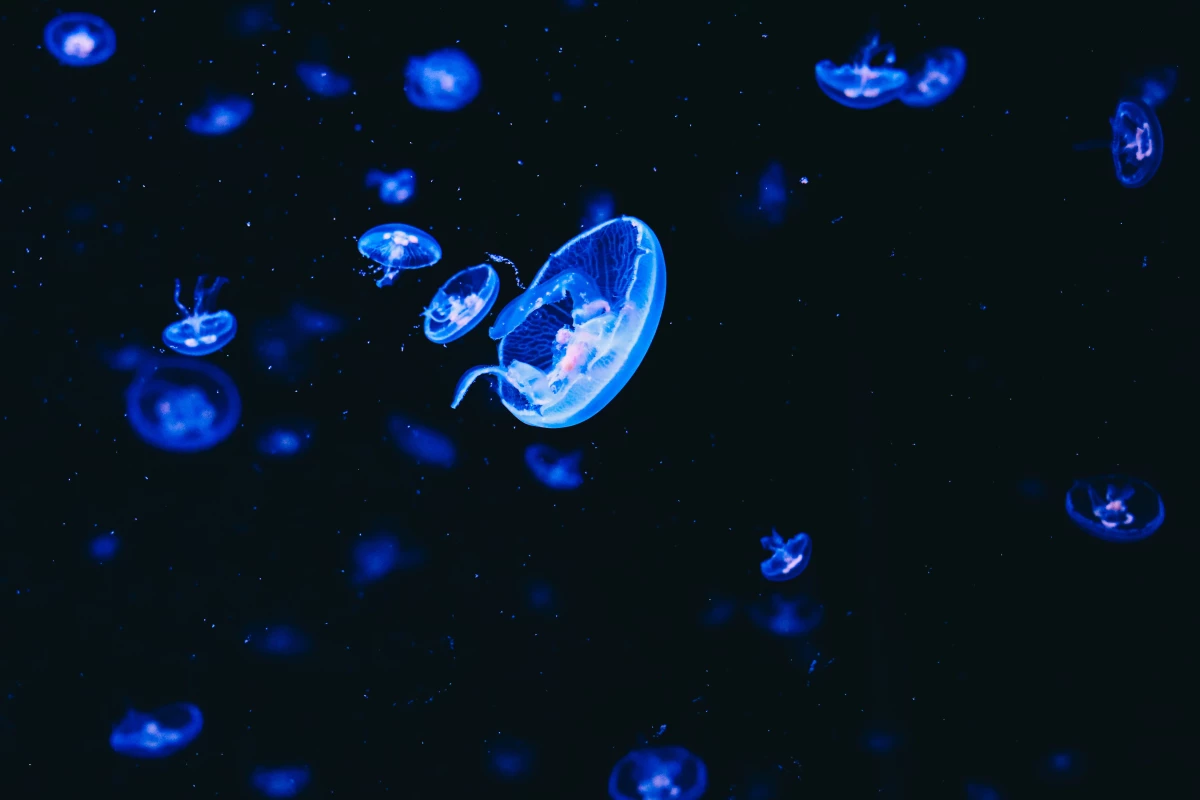
A recent study published in Nature Communications has revealed that jellyfish and sea anemones exhibit sleep patterns remarkably similar to those of humans. Researchers found that these ancient creatures, which have a nervous system but lack a brain, spend about one-third of their day sleeping. This discovery not only confirms that these animals sleep but also suggests that the evolutionary origins of sleep predate the development of the brain.
Neurobiologist Lior Appelbaum from Bar-Ilan University emphasized the significance of sleep for these simple organisms. In an interview, he stated, “Sleep is important even for animals without a brain. It helps them recover from cellular stress and carry out cellular maintenance.” The question of why sleep exists has puzzled scientists for years, especially considering that sleep often leaves animals more vulnerable to predators.
To investigate the evolutionary purpose of sleep, Appelbaum and his team focused on two species: the upside-down jellyfish, Cassiopea andromeda, and the starlet sea anemone, Nematostella vectensis. They utilized infrared cameras and movement-tracking software to monitor the active and inactive periods of these cnidarians over a typical 24-hour cycle of 12 hours of light and 12 hours of darkness.
The results showed that jellyfish are diurnal, remaining active during daylight hours while primarily sleeping at night. Interestingly, they also take midday naps, paralleling the post-lunch rest some humans enjoy. In contrast, sea anemones are largely nocturnal, showing increased activity during the night and resting more during early morning hours.
To confirm that the observed inactivity was indeed sleep and not just rest, the researchers measured the animals’ responses to various stimuli, such as light or food. Appelbaum defined a sleep-like state in jellyfish as a reduction in pulsing to fewer than 37 times per minute for over three minutes, while sea anemones exhibited periods of stillness lasting eight minutes or longer. He noted, “What was surprising was that both animals sleep approximately eight hours, which is interesting because we also sleep approximately one-third of our lives.”
The study also delved into the mechanisms driving sleep in these animals. Previous research has shown that an increase in DNA damage in nerve cells can trigger sleep in zebrafish. Building on this foundation, Appelbaum’s team exposed jellyfish and sea anemones to ultraviolet (UV) radiation and specific chemicals that induce DNA damage. They also disrupted sleep through gentle water pulses.
The findings indicated that DNA damage increased during periods of wakefulness and diminished during nighttime sleep. The jellyfish and sea anemones responded to this DNA damage by sleeping more, reinforcing the idea that sleep is vital for cellular repair. Appelbaum concluded, “Sleep evolved way before the brain – it’s essential for cells, cellular maintenance, and neurons.”
This groundbreaking study sheds light on the fundamental biological importance of sleep across various forms of life, suggesting that the need for rest and recovery is deeply rooted in evolutionary history.