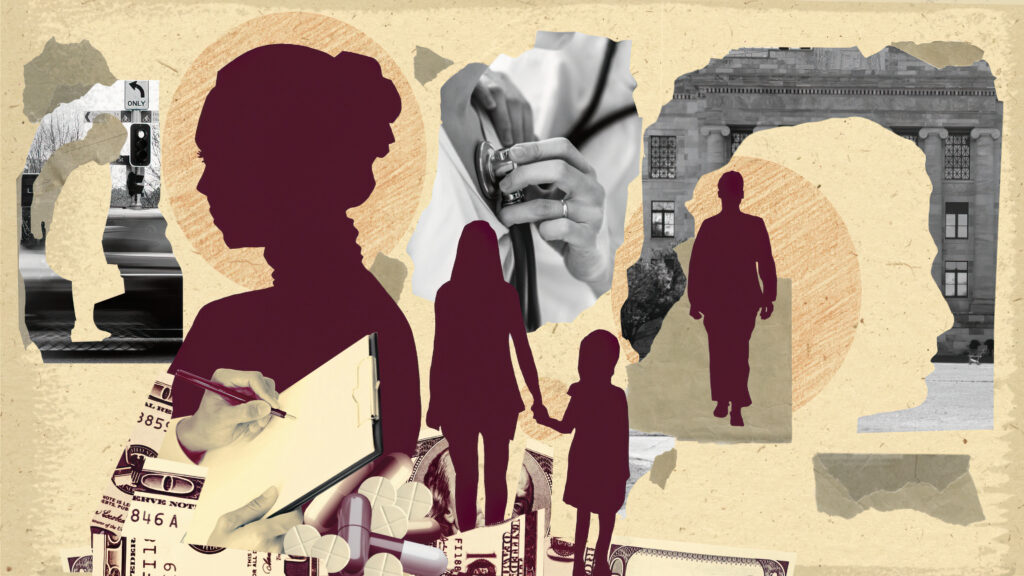
The impact of budget cuts and grant terminations during the Trump administration continues to resonate among scientists, patients, and health professionals. In a series of interviews conducted by STAT throughout 2025, individuals who experienced significant disruptions in their work and lives shared their stories of resilience and adaptation. These narratives highlight the human cost associated with cuts to science and health funding.
Veteran Finds New Purpose After FDA Job Loss
Karen Hollitt, an Air Force veteran, faced a challenging transition after losing her position at the Food and Drug Administration (FDA) on April 1, 2025. The impending job loss exacerbated her post-traumatic stress disorder (PTSD) symptoms, prompting concerns about her mental health and future. Despite the difficulties, Hollitt secured a position as a trainer for a credit union that serves military families. Although her new role has significantly lower pay—almost half of her previous salary—Hollitt finds fulfillment in her work culture and her contributions to supporting veterans. She remains one of only two out of eight colleagues who managed to find new employment after the cuts.
Epidemiologist Tracks NIH Grant Losses
Scott Delaney, a former epidemiologist at Harvard University, observed the extensive termination of research projects funded by the National Institutes of Health (NIH). A lawyer by training, Delaney recognized the necessity of documenting these losses for historical accuracy and potential legal action. After being laid off due to grant cuts, he shifted his focus to developing Grant Witness, a database cataloging canceled NIH grants. This initiative has secured private funding, allowing Delaney to continue advocating for scientific integrity and public health through a new consulting business.
Patient Battles Cancer Amid Treatment Delays
Brooke Kajdy, a young mother diagnosed with stage 4 diffuse large B cell lymphoma, struggled with treatment delays stemming from changes in clinical trial protocols. Originally set to participate in a trial at the NIH, her treatment was postponed due to an executive order related to gender ideology. Eventually, her physician in Alberta, Canada, arranged for her to receive the experimental drugs off-label. After initially showing promise, the treatment’s effectiveness waned, and Kajdy sought alternative options in the United States, Mexico, and Germany. Tragically, she passed away on September 19, 2025, leaving behind a lasting impression on those who knew her for her unwavering spirit.
University Administrator Faces Uncertainty
Andrew Read, senior vice president for research at Pennsylvania State University, remains deeply concerned about the future of American science amidst federal funding cuts. He described the atmosphere of uncertainty as a “huge wet blanket” over research initiatives, leading to hiring freezes and stalled investments in critical areas such as quantum computing. Despite these challenges, Read noted a slight increase in NIH funding for Penn State, rising from $165 million to $182 million between the 2024 and 2025 fiscal years, providing a glimmer of hope in a tough landscape.
Former NIH Physician Seeks New Direction
Josh Fessel, a physician who previously led efforts to translate research into practical treatments at the NIH, resigned on moral grounds during the second Trump administration. Frustrated with the cancellation of grants and the dismissal of colleagues, he sought to align his career with his values. Fessel has found job hunting particularly challenging in the current market, which he describes as the most difficult he has encountered. He is exploring opportunities within the pharmaceutical sector while aiming to broaden his skills for future roles that will contribute to rebuilding the NIH.
Postdoctoral Researcher Pursues New Opportunities
Sam Degregori’s aspirations for a career in academia faced significant obstacles when the NIH eliminated his postdoctoral grant program earlier in 2025. The Institutional Research and Academic Career Development Awards (IRACDA) program was designed to support postdocs in their path to professorships. Following the termination, Degregori has actively applied for fellowships and recently secured a Hartwell Foundation Fellowship, providing him with funding for the next two years. Although competition for faculty positions remains fierce, he expresses a renewed sense of purpose, stating that the challenges have fueled his productivity and commitment to science.
These stories reveal a complex tapestry of resilience and adaptation in the face of adversity. The repercussions of funding cuts extend far beyond the laboratory, affecting lives and careers in profound ways. As individuals navigate the aftermath of these changes, their experiences underscore the enduring importance of supporting science and health research for the benefit of society.