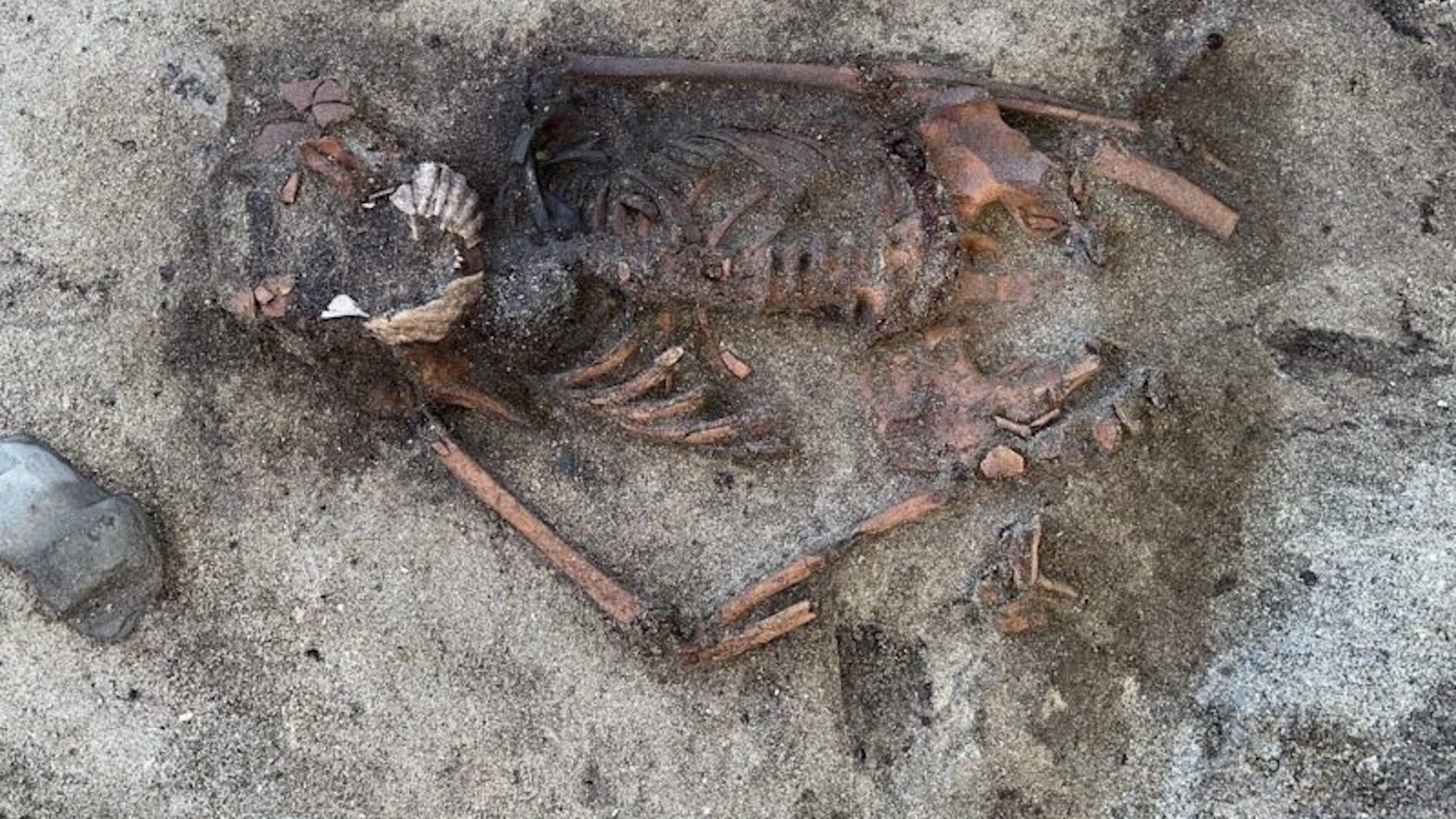
A significant archaeological discovery has emerged in Norway, where a metal detectorist, Roy Søreng, stumbled upon a Viking Age grave containing a wealth of artifacts and skeletal remains. The find, located in Trøndelag County, has attracted the attention of archaeologists from the NTNU Museum, who have since begun excavating the site to uncover its historical significance.
The excavation was initiated after Søreng discovered an oval brooch, a common item from the Viking Age, and contacted researchers for further investigation. This collaboration has allowed archaeologists to work discreetly to protect the site and its treasures from potential damage.
Insights from the Excavation
According to Raymond Sauvage, the head engineer at the NTNU Museum’s Department of Archaeology and Cultural History, the grave likely belongs to a woman who was buried with a distinctive Viking Age costume and jewelry set dated to the 800s. “This indicates that she was a free and probably married woman, perhaps the mistress of the farm,” Sauvage stated. The grave features two oval brooches, including the one found by Søreng, which were used to fasten a suspender dress, and a ring buckle for securing a petticoat.
One of the most intriguing elements of the burial is the presence of two scallop shells, which were found partially covering the deceased’s mouth. While scallop shells later became associated with Christianity and the cult of St. James, their appearance in pre-Christian graves is exceedingly rare. “This is a practice that is not previously known from pre-Christian graves in Norway. We don’t yet know what the symbolism means,” Sauvage added.
The excavation has also revealed bird bones, likely wing bones, which researchers believe may have held symbolic significance for those witnessing the burial.
Future Research and Analysis
This discovery follows another notable find this year in the same field, where a pristine skeleton was previously recorded. Hanne Bryn, field supervisor at the NTNU Museum, noted that the newly discovered individual is likely one to three generations younger than the earlier skeleton. “During the inspection, we quickly realized that we were facing a new skeletal grave that was in acute danger of being damaged during the next ploughing,” Bryn explained. The landowner, Arve Innstrand, generously allowed the excavation to proceed to ensure the site’s protection.
Next, the research team will analyze the skeleton, preserve the artifacts, and conduct samples for dating and DNA analysis. “The goal is to learn more about the person and about possible kinship to the previous find from the same place,” Sauvage stated. This analysis will include investigations into body height, gender-defining traits, and any potential traces of disease.
As archaeologists delve deeper into this remarkable find, it promises to shed light on the lives of individuals during the Viking Age and expand our understanding of burial practices in pre-Christian Norway. The collaboration between metal detectorists and professional archaeologists continues to unveil the rich tapestry of history hidden beneath the soil of Norway.