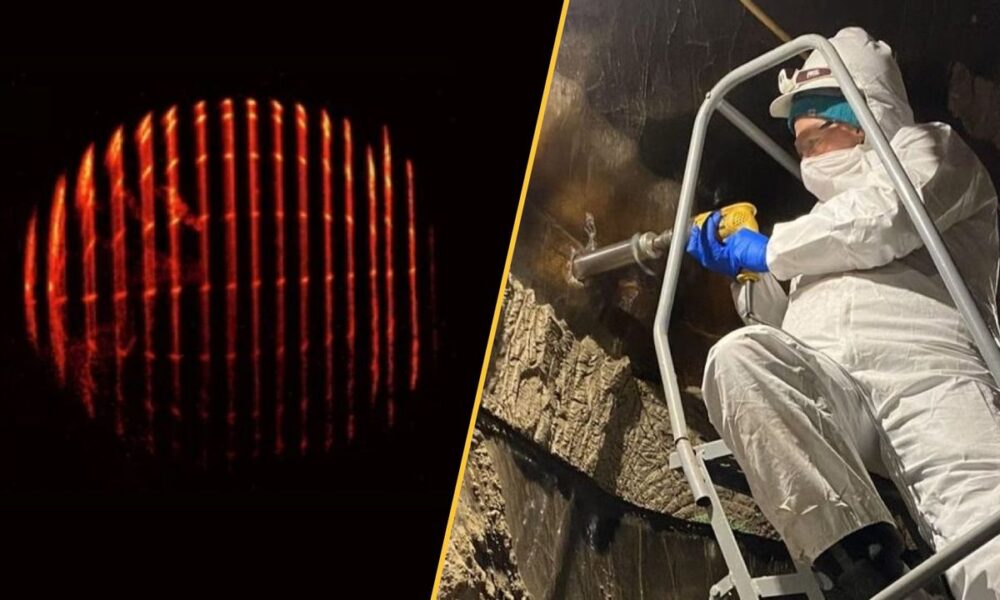
This week in science has brought a mix of alarming climate developments and intriguing discoveries in astrophysics and biology. Notably, scientists have revived ancient microbes from the Alaskan permafrost, dormant for up to 40,000 years, which have begun emitting carbon dioxide (CO2), raising concerns about potential climate feedback loops.
As global temperatures continue to rise, the thawing of permafrost could unleash dormant microbes, creating a cycle that exacerbates climate change. A recent report indicates that CO2 levels in the Earth’s atmosphere have surged by a record amount in 2024. This spike is attributed not only to increased fossil fuel combustion but also to an uptick in wildfires and diminished carbon absorption by Earth’s natural sinks. The situation is compounded by reports of methane leaks beneath the Antarctic Ocean, a greenhouse gas significantly more potent than CO2, which may lead to extreme weather events and ecological instability.
Breakthrough in Astrophysics: Simulating Relativity
In a remarkable advancement in physics, researchers have successfully simulated the Terrell-Penrose effect, an optical illusion that occurs when an object moves at speeds approaching that of light. By employing advanced laser techniques and specialized camera setups, scientists demonstrated how an object, instead of appearing distorted as per Einstein’s theory of special relativity, presents a unique visual perspective due to varying light travel times across its surface.
While the experiment did not physically accelerate an object to light speed, the simulated results provide a striking depiction of how relativistic speeds can alter perception. This groundbreaking study opens new avenues for understanding fundamental principles of physics and could reshape our comprehension of high-speed motion.
James Webb Telescope Reveals Unprecedented Details of M87*
The James Webb Space Telescope has delivered stunning new images of the black hole M87*, the first black hole ever imaged, revealing its colossal jets in exceptional detail. The latest findings highlight not just a single jet but also a massive counter-jet, both projecting material at near-light speeds. This unprecedented clarity allows astrophysicists to explore the mechanisms behind such jets and their influence on the surrounding cosmic environment.
The images captured by JWST provide insights into how these jets interact with their surroundings and the broader universe, paving the way for deeper investigations into the dynamics of black holes and their role in cosmic structure formation.
In other science news, researchers are exploring the potential of liquid biopsies to revolutionize cancer detection. A new blood test called Shield, involving early detection techniques, has shown promise in identifying cancer at a much earlier stage, as demonstrated in the case of John Gormly, who was diagnosed with colon cancer following a routine test.
In the realm of wildlife photography, the 2025 Wildlife Photographer of the Year competition recognized the work of Wim van den Heever, whose haunting image of a rare brown hyena in a deserted Namibian mining town captivated judges. This photograph is a testament to the patience and dedication of wildlife photographers pushing boundaries to capture the beauty and fragility of nature.
As we delve into the mysteries of our universe, from ancient microbes to the depths of black holes, this week has reminded us of the intricate connections between life, science, and the environment.