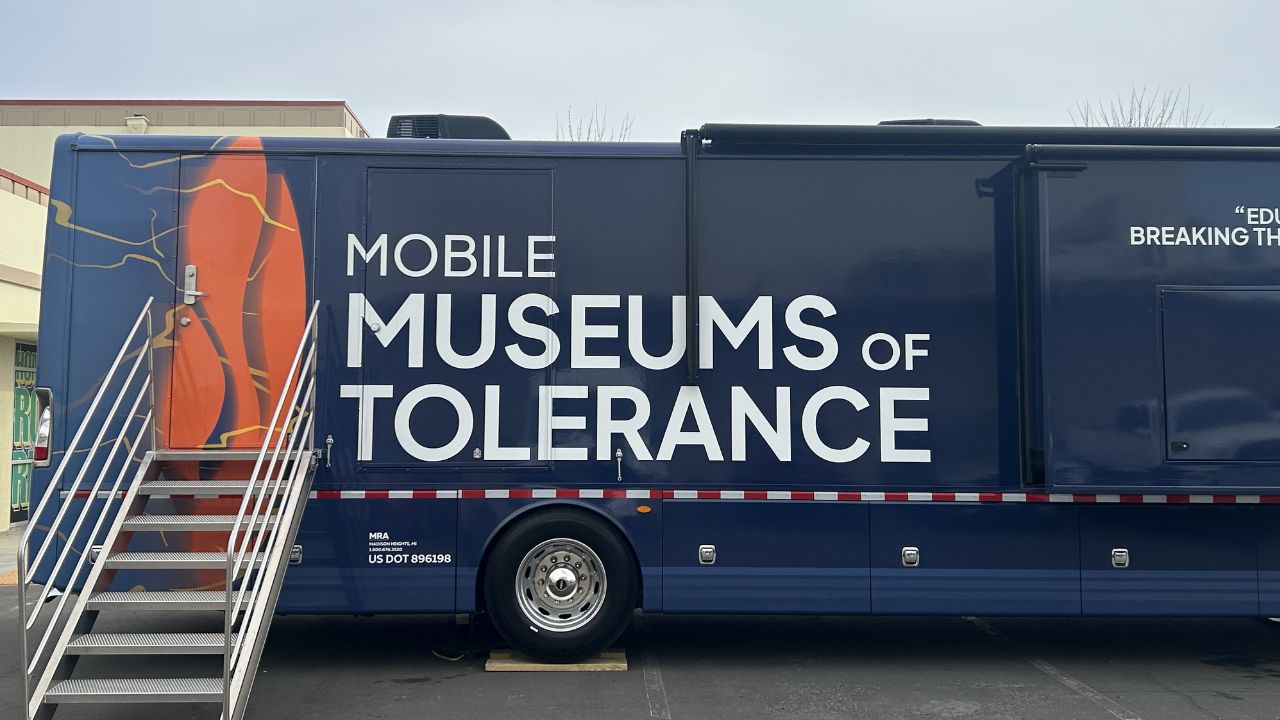
The Mobile Museum of Tolerance is making a significant impact in the Fresno Unified School District by conducting educational workshops aimed at combating hate and intolerance. Recently, the museum set up its mobile facility at Roosevelt High School, where students engaged with immersive presentations covering vital historical topics, including the Civil Rights Movement and the Holocaust.
During these workshops, educators presented powerful lessons designed to promote empathy and understanding among diverse groups. Eva Geisler, an educator with the Mobile Museum of Tolerance, emphasized the importance of community, stating, “At the end of the day we’re all human beings. If we let down our prejudice and break our biases, then we’ll realize that we have way more in common with each other than we have different.”
The museum, equipped with large screens, surround sound, and seating, effectively fosters open discussions. Geisler noted that these presentations help students articulate their feelings and experiences, creating a safe space for dialogue. The traveling museum aims to inspire students not only to learn about history but also to take action against current issues, including antisemitism and online hate.
Misty Her, the Superintendent of Fresno Unified, praised the museum’s efforts, stating, “We are grateful to the Mobile Museum of Tolerance for providing our community with this meaningful opportunity to engage in powerful lessons that inspire empathy.” The museum will be open to the public on February 15, 2024, from 16:00 to 17:30 in the Browning Avenue parking lot of Bullard High School.
Empowering Students Through Historical Lessons
The interactive nature of the presentations has garnered positive feedback from educators. Ofelia Jimenez, a social science teacher at Roosevelt, highlighted the relevance of the museum’s teachings to her curriculum, particularly regarding the Jim Crow era. She noted that the museum visit provided a foundation for future lessons on the Civil Rights Movement.
During one of the presentations, students were encouraged to reflect on the lessons from the Civil Rights Movement. One student responded, “Our voices matter,” encapsulating the essence of the museum’s mission to empower young people. Jimenez hopes that such experiences will resonate with students, deepening their understanding of history while fostering a sense of community.
The Mobile Museum of Tolerance’s approach aligns with current student activism seen within Fresno Unified. Recently, hundreds of students participated in protests against ICE (Immigration and Customs Enforcement), emphasizing their commitment to social justice. Jimenez remarked on the timely significance of the museum’s presence during this period of heightened student activism.
Connecting History to Activism
The museum’s presentations coincided with a recent protest by students from Roosevelt High School, who marched to Fresno City Hall to voice their concerns regarding ICE’s immigration enforcement policies. Jimenez described the protests as an organic response from students, highlighting the importance of community engagement and activism in their lives.
Geisler pointed out that the museum’s role is to remind students of the impact they can have when they use their voices. She explained that by learning about peaceful protests from the past, students can draw inspiration to effect change in their own communities.
One student, Sofia Suarez, expressed her motivation for participating in protests, stating, “I’m protesting for future generations, just like past generations protested for our rights today.” Such sentiments reflect the museum’s goal of linking historical lessons with contemporary issues, encouraging students to see themselves as part of a larger narrative of social change.
The Mobile Museum of Tolerance continues to play a crucial role in fostering dialogue and understanding among young people in Fresno. By connecting historical lessons to current social issues, it empowers students to become advocates for change and champions of tolerance in their communities.