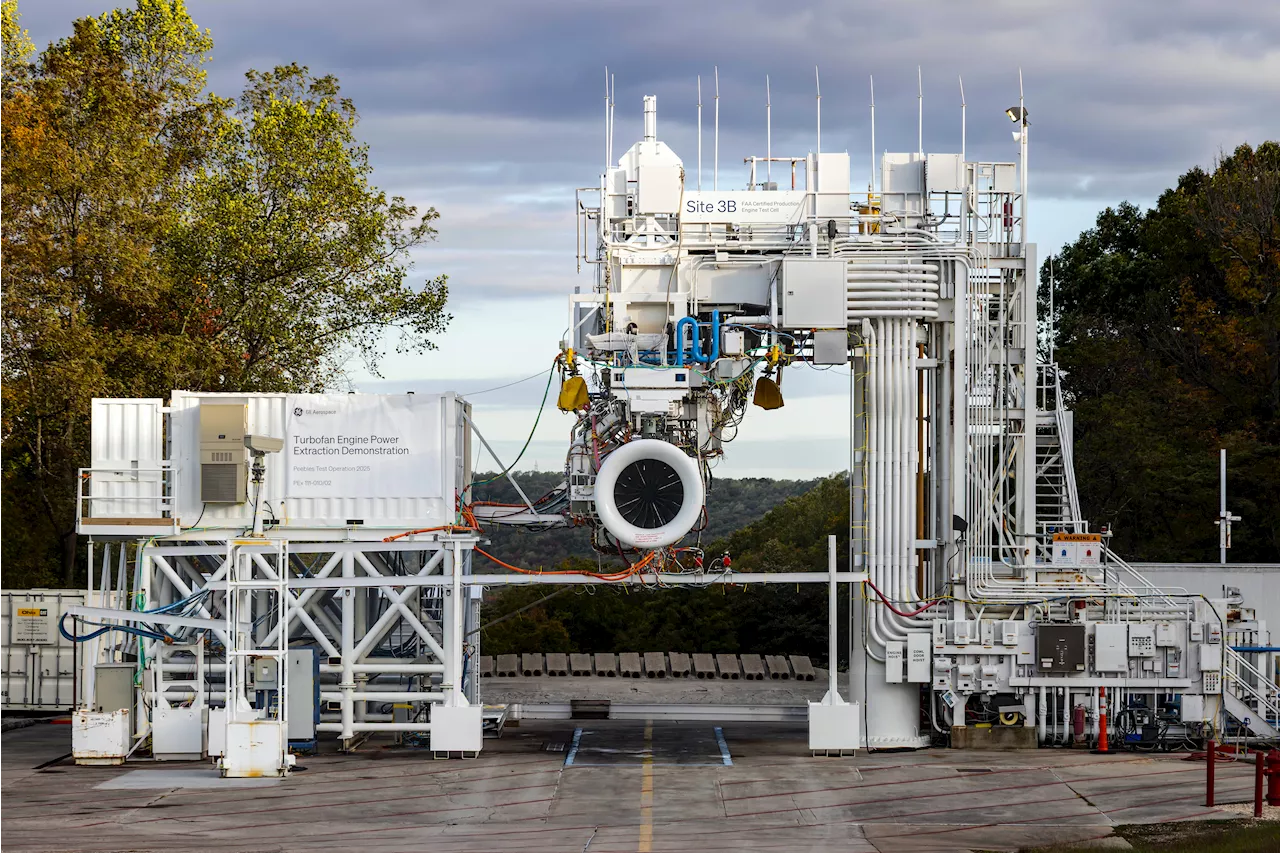
NASA and GE Aerospace have accomplished a significant milestone by successfully testing a hybrid jet engine that could one day power commercial airliners. This demonstration took place in December 2023 at GE Aerospace’s Peebles Test Operation site in Ohio, showcasing the potential of hybrid technology in aviation.
The engine tested is a modified version of the GE Aerospace Passport, designed to operate using both jet fuel and electric power. While the external appearance of the engine may resemble conventional hardware, the internal advancements represent a leap forward in aviation technology. According to Anthony Nerone, project manager at NASA, “Turbines already exist. Compressors already exist. But there is no hybrid-electric engine flying today. And that’s what we were able to see.”
This test marked the first time an integrated hybrid engine system was put through its paces, following prior tests of individual components such as power system controls and electric motors. The demonstration is a product of a collaborative effort under the HyTEC contract, which aims to advance hybrid engine technology. The hybrid engine functions by extracting energy from its operations and redistributing that power to other systems, illustrating a complex integration of technology that had never been attempted before.
The complexity of the testing was underscored by Laura Evans, acting project manager for HyTEC at Glenn Research Center, who noted, “They had to integrate equipment they’ve never needed for previous tests like this.” This power extraction test was one of the most challenging conducted by GE Aerospace, demonstrating the engine’s capability to perform multiple functions similar to those required in an actual aircraft setting.
As the aviation industry increasingly seeks to enhance efficiency and reduce fuel costs, this development comes at a crucial time. The goal is to create a hybrid engine that consumes up to 10% less fuel compared to current leading models. NASA’s long-term objective is to fast-track the commercialization of this technology, responding to industry demands for more sustainable aviation solutions.
The recent demonstration not only provided valuable data but also marked a significant step towards a compact engine test expected within this decade. Both NASA and GE Aerospace are currently analyzing results from this test and previous research to refine the technology further.
The potential benefits of hybrid engines extend beyond fuel efficiency. By integrating electric motors, the aviation sector could see reduced emissions, contributing to global efforts to combat climate change. The successful test signifies that NASA and GE Aerospace are closer than ever to making hybrid propulsion a reality in commercial aviation.