NASA’s Perseverance rover has made a groundbreaking discovery by recording the sounds of electrical discharges, commonly referred to as sparks, during dust devil events on Mars. This phenomenon, long theorized but never confirmed until now, was documented through audio and electromagnetic recordings by the rover’s SuperCam microphone. The findings, published on November 26 in the journal Nature, have significant implications for understanding Martian atmospheric chemistry, climate, and habitability, potentially shaping future robotic and human missions to the Red Planet.
Dust devils, which frequently occur on Mars, are formed by rising and rotating columns of warm air. As the warm air near the surface heats up and rises through cooler, denser air, it creates a rotating vortex. This process is akin to what happens when ice skaters pull their arms in to spin faster. The incoming air not only accelerates the rotation but also picks up dust, leading to the formation of a dust devil.
On October 12, 2024, the SuperCam microphone aboard Perseverance captured the sounds of electrical discharges as a dust devil passed over the rover. The recordings showcase three distinct crackles interspersed with the sounds of the dust devil’s front and trailing walls. Since the mission began, the SuperCam has recorded a total of 55 unique electrical events, with 16 of these occurring when dust devils directly passed over the rover.
Prior to Perseverance’s landing, scientists theorized that the friction from tiny dust grains swirling against each other in Martian dust devils could generate sufficient electrical charge to create sparks, a phenomenon known as the triboelectric effect. This is similar to the static electricity produced when a person walks on a carpet in socks and then touches a metal doorknob. According to Baptiste Chide, a planetary scientist with the Perseverance science team, “On Mars, the thin atmosphere makes the phenomenon far more likely, as the amount of charge required to generate sparks is much lower than what is required in Earth’s near-surface atmosphere.”
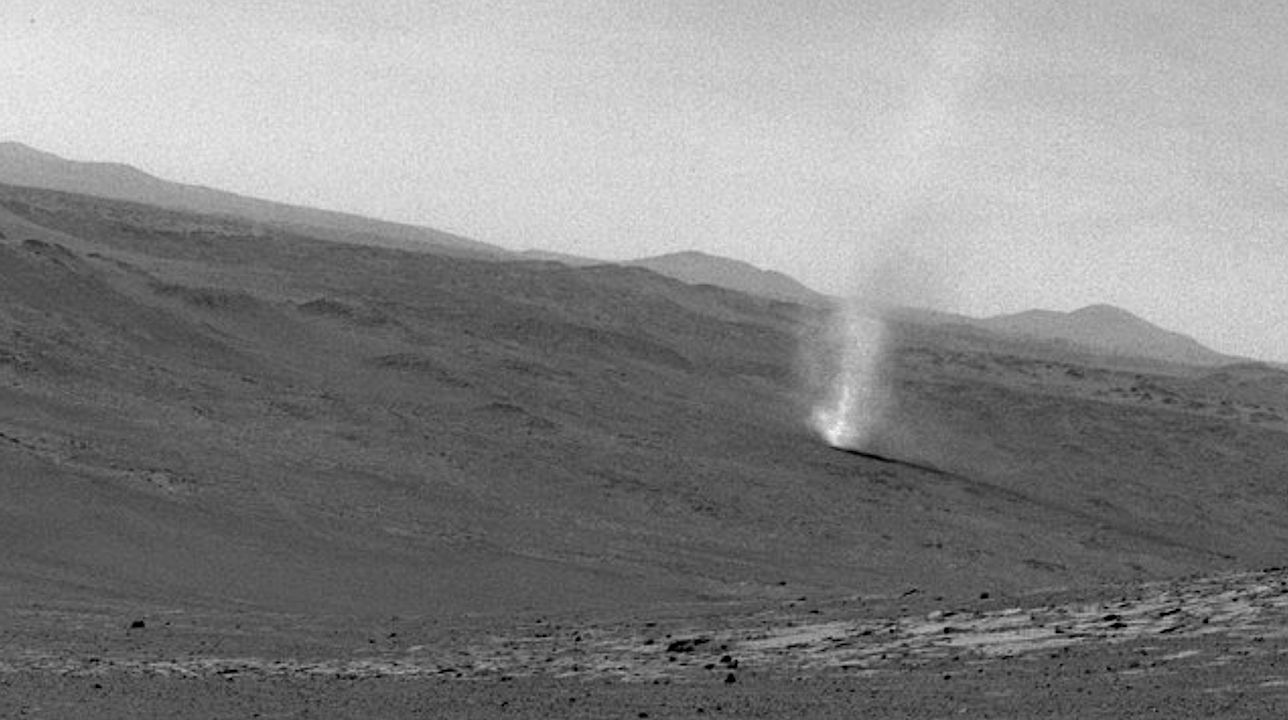
As Perseverance explores the rim of Jezero Crater, it has captured new images of numerous dust devils, which have been documented by NASA’s robotic explorers for decades. The SuperCam’s microphone, initially designed to analyze sounds from the rover’s laser zapping rocks, has also recorded the sounds of wind and even the first audio of a Martian dust devil. Initially uncertain whether the rover would be able to record electrical discharges, scientists began to analyze data from the mission and found clear evidence of electrical activity.
Co-author Ralph Lorenz, a scientist at the Johns Hopkins Applied Physics Laboratory, stated, “We got some good ones where you can clearly hear the ‘snap’ sound of the spark.” The recordings not only captured the electrical sounds but also the movement of the dust devil over the rover. In one notable recording from the 215th sol, the electrical sound is accompanied by the noise of particles impacting the microphone.
In addition to dust devils, 35 other electrical discharges were linked to convective fronts during regional dust storms on Mars. These fronts, characterized by intense turbulence, enhance triboelectric charging and charge separation, which occurs when two objects touch and transfer electrons. Interestingly, researchers noted that electrical discharges did not seem to increase during the seasons when dust storms are more prevalent, suggesting that the electrical buildup is more closely related to localized turbulence rather than the overall density of atmospheric dust.
The confirmation of these electrical discharges fundamentally alters our understanding of Mars. Their existence indicates that the Martian atmosphere can become charged enough to trigger chemical reactions. This could lead to the formation of highly oxidizing compounds, such as chlorates and perchlorates, which have the potential to destroy organic molecules that are essential for life and could significantly impact the chemical balance of the Martian atmosphere.
Moreover, this discovery may explain the rapid disappearance of Martian methane, providing insights into the challenges life might have faced on the planet and its potential for habitability. Given the abundance of dust on Mars, the presence of electrical charges generated by colliding particles is likely to influence dust transport, a crucial aspect of the planet’s climate that remains poorly understood.
Understanding these electrostatic discharges will also help NASA assess potential risks to the electronic systems of current robotic missions. The absence of reported adverse effects from electrical discharges during decades of operations on Mars suggests that careful grounding practices have been effective. This knowledge will be essential for developing safety measures for future astronauts exploring the Martian surface.
NASA’s Perseverance rover is managed by Caltech and operated by the Jet Propulsion Laboratory in Southern California as part of the agency’s Mars Exploration Program. For more information about Perseverance, visit NASA’s dedicated page.