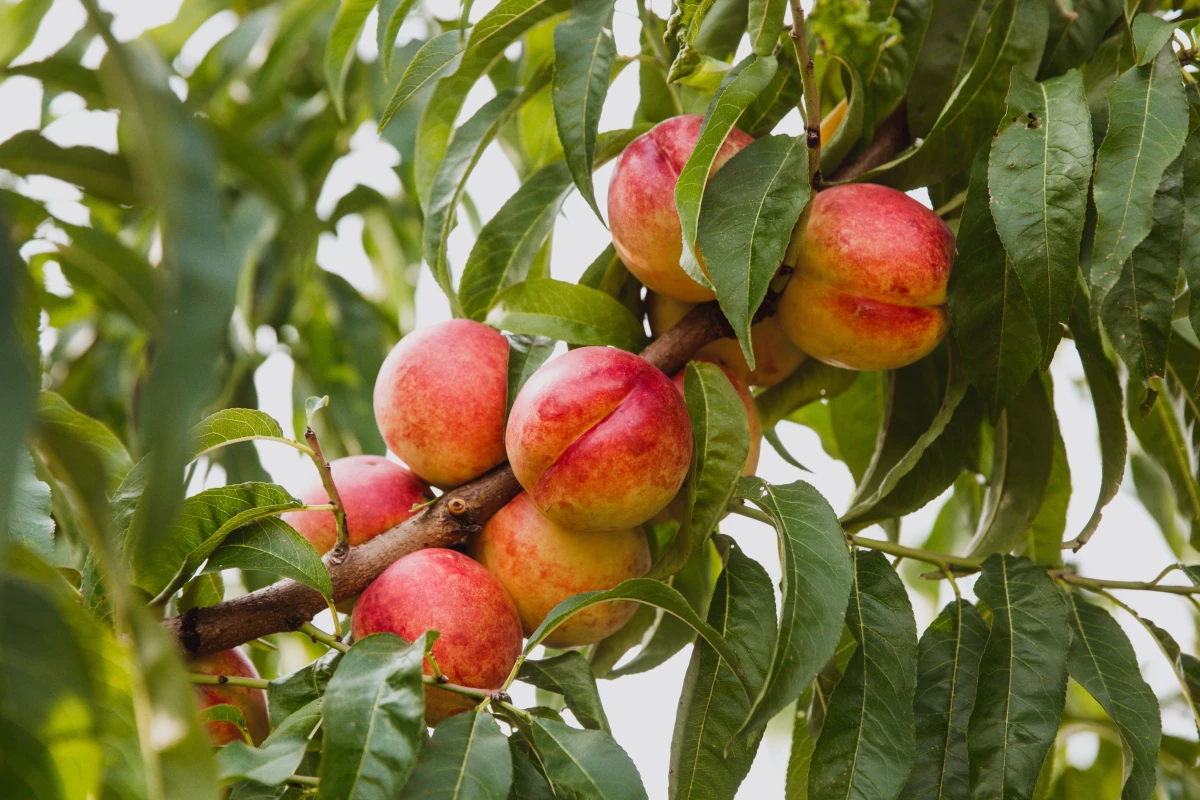
Farmers may soon be able to determine the ripeness of their fruit without picking it, thanks to innovative research from scientists at Universitat Rovira i Virgili in Spain. This new technique allows farmers to analyze the leaves of fruit trees, leaving the fruit intact and potentially increasing yields.
Over an 11-week study, researchers tested this method on 12 nectarine trees in a commercial orchard. The technology employs two spectrometers that perform near-infrared and mid-infrared scans on the upper and lower surfaces of leaves adjacent to the fruit. By analyzing how these leaves absorb or reflect light, scientists can accurately assess the ripeness of the fruit.
Dr. Daniel Schorn, a member of the research team, explains, “The leaves undergo physiological and biochemical changes as the fruit ripens, due to the direct connection between the metabolism of the leaves and that of the fruit. These changes are reflected in their spectral fingerprint.” This relationship forms the basis for the technology’s effectiveness.
The current iteration of the method has proven to be particularly reliable in indicating two important fruit characteristics: weight and firmness. While other ripeness-related attributes, such as sugar content, pH, and acidity, are not as accurately measured at this stage, researchers are optimistic that further development will enhance these capabilities.
A significant advantage of this new scanning technique is that it avoids the potential damage associated with scanning the fruit directly. Traditional methods often leave marks on the skin, which can decrease the market value of the produce. This innovative approach could allow farmers to assess the ripeness of entire crops based on representative samples, enabling them to selectively harvest only the ripe fruit from individual trees while allowing the rest to continue ripening.
Looking ahead, the researchers envision deploying portable scanners in the field, making this technology accessible to farmers during harvest time. The findings of this study were published in the journal ACS Agricultural Science & Technology, marking a promising advancement in agricultural practices.
This development not only has the potential to improve crop yields but also reflects a significant step towards more sustainable farming practices. By minimizing fruit damage and optimizing harvests, this technology could significantly benefit farmers and the agricultural industry as a whole.