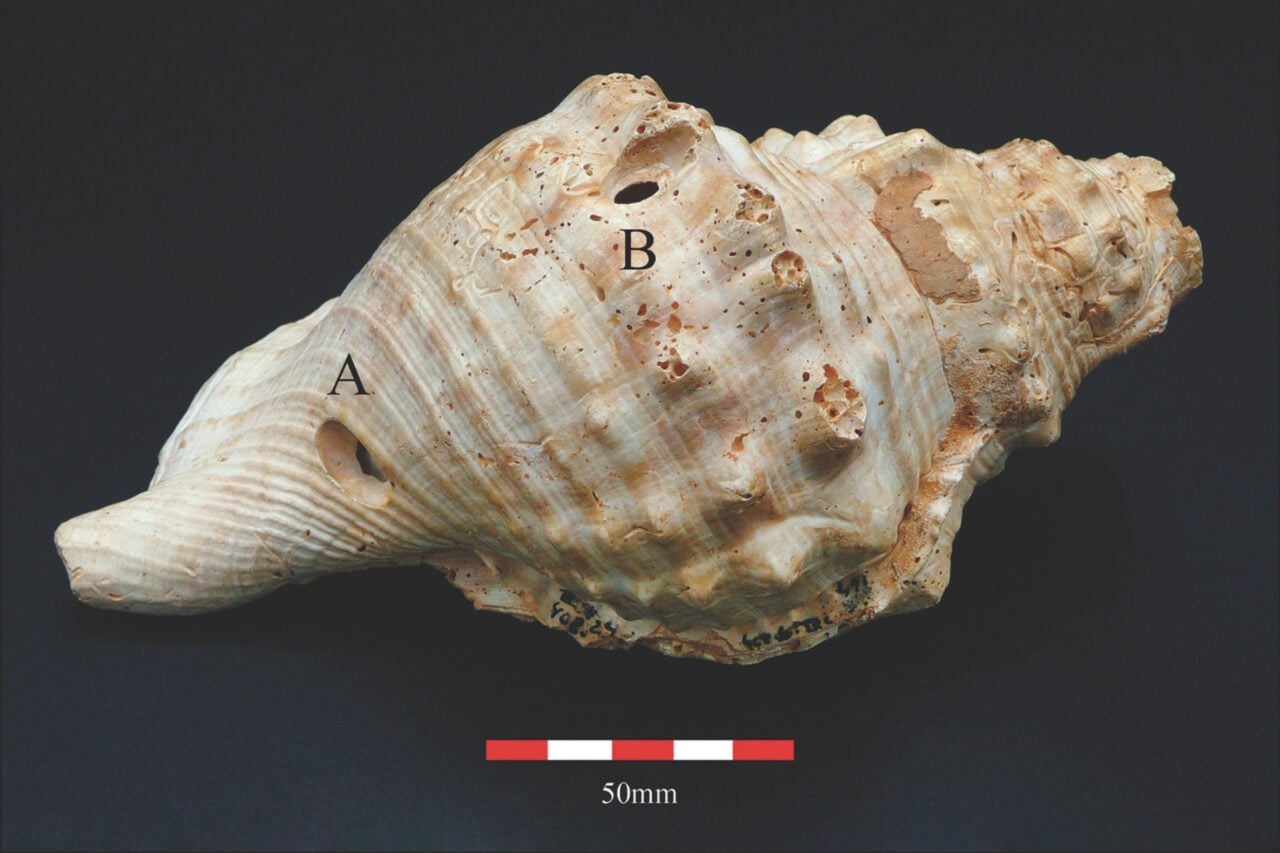
Prehistoric communities in modern-day Spain utilized large spiral seashells as trumpets, revealing a significant method of long-distance communication. A recent study published in the journal Antiquity details how researchers experimented with archaeological artifacts directly, focusing on conch shell trumpets from Neolithic sites in Catalonia. The findings suggest these instruments also served musical purposes, expanding our understanding of communication in ancient societies.
The shells, specifically from the species Charonia lampas, were discovered in a small area of Catalonia, particularly along the lower course of the Llobregat River and the pre-coastal depression of the Penedès region. According to Margarita Díaz-Andreu, co-author of the study and an archaeologist at the University of Barcelona, the apexes of these shells were removed, leading to the hypothesis that they may have functioned as musical instruments.
Evidence indicates that these shells were likely collected after the mollusks died, not for consumption but for their potential to produce sound. To investigate this further, Díaz-Andreu and her colleague, Miquel López-García, conducted tests on the shell trumpets to explore their acoustic properties. The shells studied are believed to be between 5,000 and 7,000 years old.
López-García, who is also a professional trumpet player, assessed the shells’ utility for long-distance communication and musical expression. His findings underscore that these shell trumpets can generate high-intensity sounds suitable for communication over significant distances. Moreover, they possess the ability to produce melodies through pitch modulation, suggesting they might have been used for musical purposes as well.
Impact on Neolithic Societies
The presence of shell trumpets across various Neolithic settlements in Catalonia indicates their role in facilitating communication within and between communities. These instruments likely played a crucial part in the region’s agricultural and mining activities. The study highlights that the use of shell trumpets may have influenced the social, spatial, and economic dynamics of these early societies.
“Our study reveals that Neolithic people used conch shells not only as musical instruments, but also as powerful tools for communication,” stated Professor Díaz-Andreu. This insight reshapes our understanding of sound and social connectivity in prehistoric communities, emphasizing the importance of auditory communication in shaping human interactions.
The implications of this research extend beyond the mere historical context of sound. By recognizing the dual functionality of these shell trumpets, we gain a richer perspective on how early humans engaged with their environment and each other through innovative means of communication.