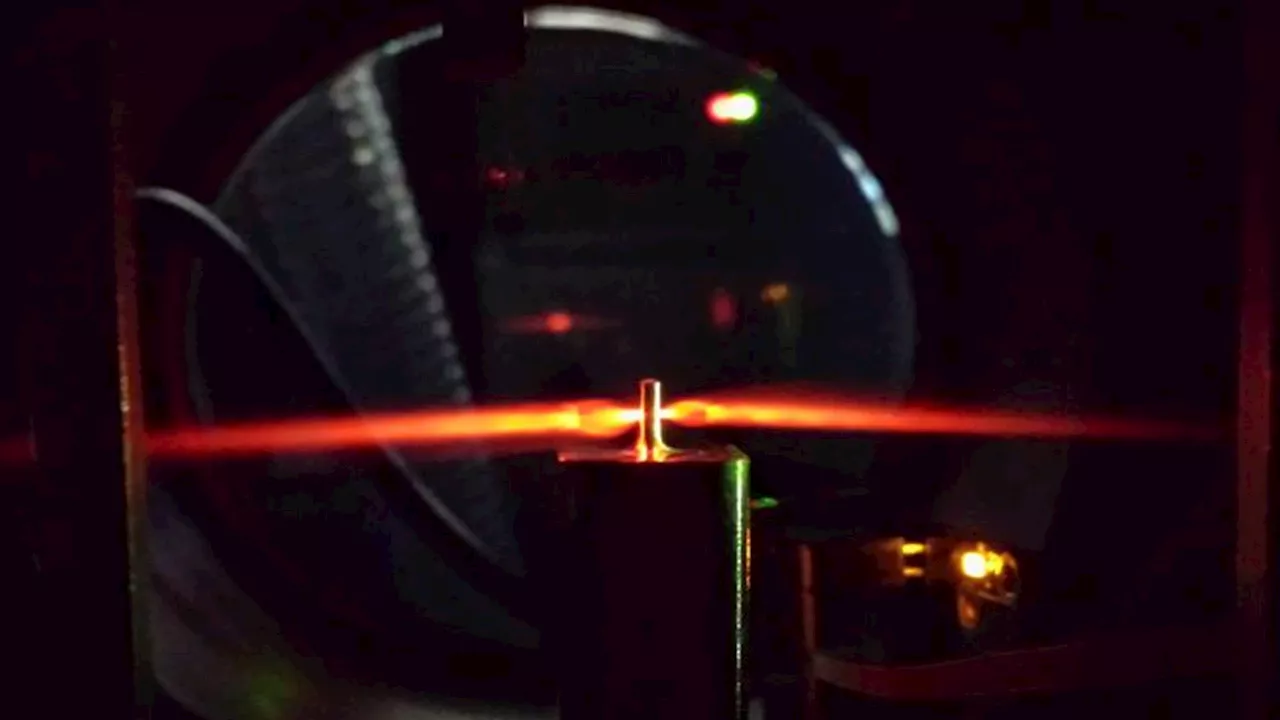
Researchers at the Institute of Photonic Sciences (ICFO) have set a new benchmark in ultrafast imaging by creating a 19.2-attosecond soft X-ray pulse. This groundbreaking achievement allows scientists to observe the movement of electrons in real time for the first time, fundamentally enhancing our understanding of various physical processes.
For decades, scientists have grappled with the challenge of visualizing electron dynamics, which occur on attosecond timescales—far beyond the capabilities of traditional imaging tools. Electrons play a critical role in numerous phenomena, including chemical reactions, electrical conductivity, and energy transfer in biological systems. The development of this ultrafast camera marks a significant step forward, breaking the barriers that have hindered real-time observation of these processes.
Advancements in X-Ray Technology
The newly developed pulse is the shortest and brightest soft X-ray flash ever produced. It enables researchers to directly observe electron behavior as chemical reactions unfold, phase transitions occur, and energy transfers take place. The ability to track how electrons reorganize around specific atomic sites provides profound insights into material properties and molecular transformations.
Creating such a brief and isolated pulse required significant advancements in several areas, including high-harmonic generation and advanced laser engineering. These innovations enabled the team to push measurement capabilities beyond previous limitations and confirm durations that were once estimated.
The journey toward this achievement began in 2015 when Prof. Jens Biegert and his team first succeeded in isolating attosecond pulses in the soft X-ray regime. Their earlier breakthroughs revealed how electrons interact with crystal lattices and how molecular structures evolve during processes like polymerization. Despite these successes, accurately measuring pulse duration remained problematic for nearly a decade.
The breakthrough came with the implementation of a new pulse retrieval method. “When I came to the group and saw the streaking traces, I had to look into this with a new pulse retrieval method,” said Dr. Fernando Ardana-Lamas, the first author of the study. “Finally, we can say that, to the best of our knowledge, we have confirmed the shortest pulse of light in the world!”
Implications for Science and Technology
This achievement not only sets a new record in attosecond science but also opens up new avenues for research across multiple disciplines. The capability to observe electron motion directly enhances our understanding of various fields, including photovoltaics, catalysis, and quantum devices.
Prof. Biegert emphasized the transformative potential of this technology, stating, “This new capability paves the way for breakthroughs in physics, chemistry, biology, and quantum science.” The ability to see how matter behaves at its most fundamental level is a game-changer for scientific inquiry.
The pulse is not just shorter but also brighter and cleaner, providing a precise tool that aligns with the natural timescale of electrons. With these advancements, the field is poised to shift from indirect inference to real-time observation, enabling a deeper exploration of the microscopic world.
As Prof. Biegert succinctly puts it, “Now that the groundwork has been laid, the sky is the limit.” This development heralds a new era in ultrafast imaging and electron dynamics, promising to unlock numerous scientific mysteries in the years to come.