Researchers from the National Autonomous University of Mexico (UNAM) have made a significant advancement by creating the first three-dimensional image of the interior of the Popocatepetl volcano. This groundbreaking achievement provides vital insights into magma accumulation and volcanic activity, enhancing understanding of a volcano that poses a threat to millions living nearby.
Situated in central Mexico, Popocatepetl, affectionately known as El Popo, has been under continuous scrutiny due to its potential to impact approximately 25 million people residing within a 62-mile radius. The implications of an eruption are profound, given the presence of urban infrastructure such as schools, hospitals, and five airports in the surrounding areas. Understanding the volcano’s inner workings is crucial for effective disaster preparedness.
The research team, led by geophysicist Marco Calo, focused on unraveling the complexities beneath the surface of one of the world’s most active volcanoes. Popocatepetl has exhibited continuous activity since 1994, with regular emissions of smoke, gas, and ash that lead to dome formation and occasional eruptions. Despite prior studies, a comprehensive map of the volcano’s interior was lacking, particularly regarding the locations of magma chambers.
To achieve this ambitious goal, Calo’s team expanded the number of seismographs from 12 to 22, significantly improving data collection. These instruments measure ground vibrations up to 100 times per second. The data collected was analyzed by doctoral student Karina Bernal, who employed artificial intelligence to refine algorithms for interpreting seismic signals. This meticulous approach allowed the team to identify and categorize various seismic activities, enabling them to infer the composition, state, temperature, and depth of materials within the volcano.
The resulting three-dimensional image extends 11 miles below the crater, revealing multiple magma pools at varying depths. This advanced imaging technique surpasses traditional representations of volcano interiors, offering a more detailed understanding of the volcanic structure.
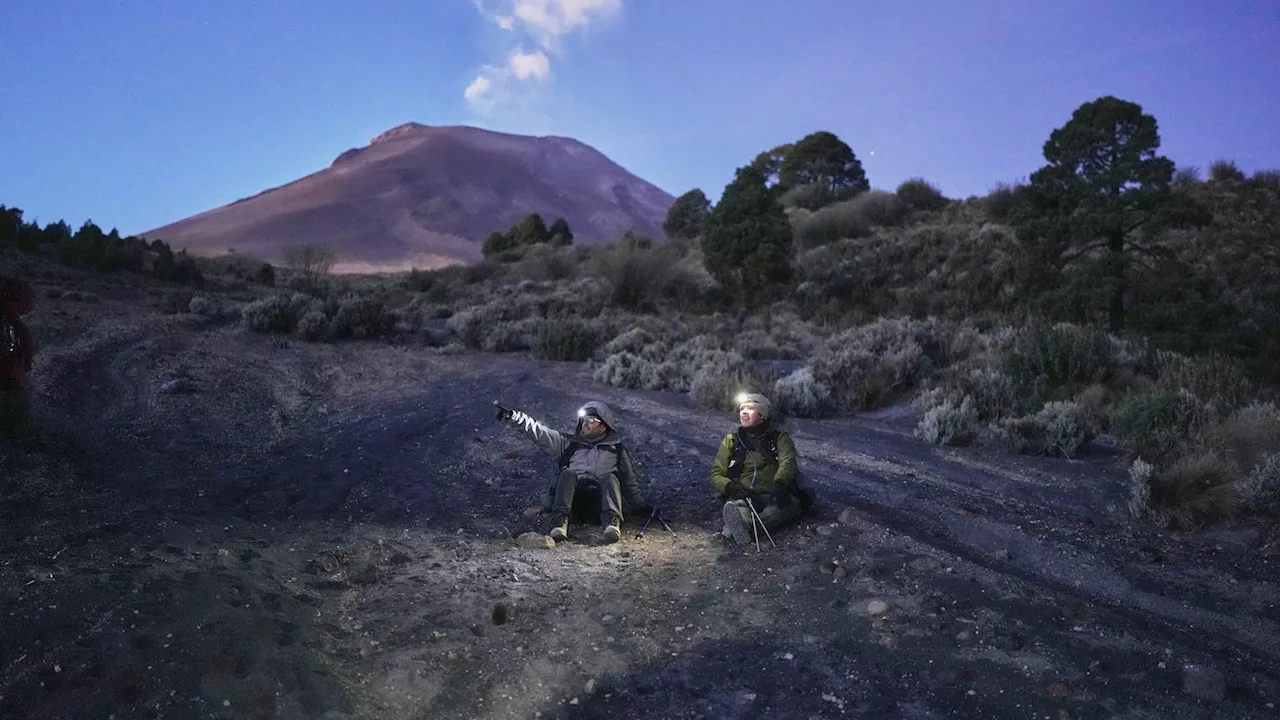
Calo emphasized the importance of hands-on experience in studying the volcano, stating that fieldwork is essential for gaining insights into its behavior. The team set up their research camp at 12,500 feet, providing a safe vantage point to observe the volcano’s activity. The site offers stunning views of nearby mountains and allows researchers to hear the subtle sounds of the volcano, including small tremors and ash falling.
This detailed internal mapping of Popocatepetl is critical for forecasting potential hazards. By understanding the volcano’s internal environment and composition, researchers can better anticipate eruptions and their potential impact on local communities. The findings will play a crucial role in enhancing safety measures for those living in the vicinity of the volcano and others who may be affected by its activity.
As researchers continue to analyze the data, the hope is that this groundbreaking work will contribute to more effective disaster management strategies, ultimately protecting lives in a region where the threat of volcanic activity looms large.