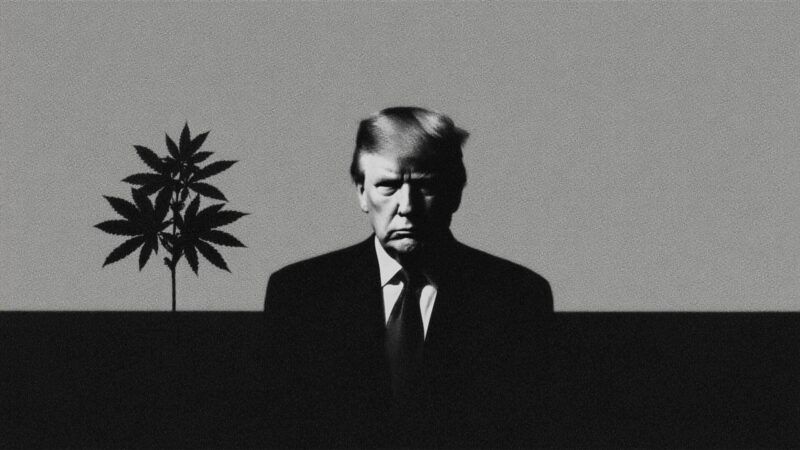
President Donald Trump has ordered the reclassification of marijuana, moving it from Schedule I to Schedule III of the Controlled Substances Act. This change, which aims for a “expeditious” process, marks a significant shift in federal policy regarding the classification of cannabis, historically viewed as one of the most dangerous substances.
The decision aligns with a long-standing critique of marijuana’s legal status, notably articulated nearly four decades ago by Francis Young, then chief administrative law judge at the Drug Enforcement Administration (DEA). Young concluded in 1988 that marijuana did not belong in Schedule I, which includes substances like heroin and LSD. His views were ultimately overruled by John Lawn, the DEA Administrator at that time.
Under the new executive order, marijuana will join Schedule III, which encompasses prescription drugs such as ketamine and anabolic steroids. While this does not equate to full legalization, it acknowledges that the federal government has overstated the risks associated with marijuana and overlooked its therapeutic benefits for over 50 years.
Since the enactment of the Controlled Substances Act in 1970, marijuana has been classified as a Schedule I drug, reserved for substances deemed to have a high potential for abuse and no accepted medical use. Despite numerous petitions for reconsideration, the DEA consistently maintained this classification until recently.
In March 2024, the Department of Health and Human Services (HHS) conducted a review, which found “credible scientific support” for marijuana’s efficacy in treating various conditions, including pain and nausea. The review pointed out that the majority of marijuana users do so in a manner that does not lead to dangerous outcomes. HHS concluded that marijuana’s risks do not warrant its continued classification as a Schedule I substance.
Following this review, Attorney General Merrick Garland endorsed HHS’s recommendations, suggesting a transition to Schedule III. Trump’s order aims to expedite this process, highlighting its potential benefits for “American patients suffering from extreme pain, incurable diseases, aggressive cancers, seizure disorders, neurological problems, and more.”
While the reclassification will facilitate medical research by removing stringent regulations, it does not legalize medical marijuana outright. The Food and Drug Administration must approve specific cannabis-based products as prescription medicines for that to occur. Additionally, state-licensed marijuana businesses will remain illegal under federal law, although penalties may be less severe.
Nevertheless, the rescheduling offers some advantages for these businesses. They will be able to claim standard deductions on their income tax returns, addressing a significant financial burden that has resulted in high effective tax rates. Trump’s administration has previously expressed support for cannabis reforms, especially in states like Florida, which have legalized recreational use.
Currently, 40 states have legalized marijuana for medical purposes, with 24 allowing recreational use as well. This widespread acceptance creates a notable conflict with federal prohibition, a stance that has increasingly become unpopular among the American public.
While Trump emphasizes that his order “doesn’t legalize marijuana in any way, shape, or form,” the implications of this policy shift are evident. The federal government’s evolving stance on marijuana reflects changing societal attitudes and the increasing recognition of its medical benefits.