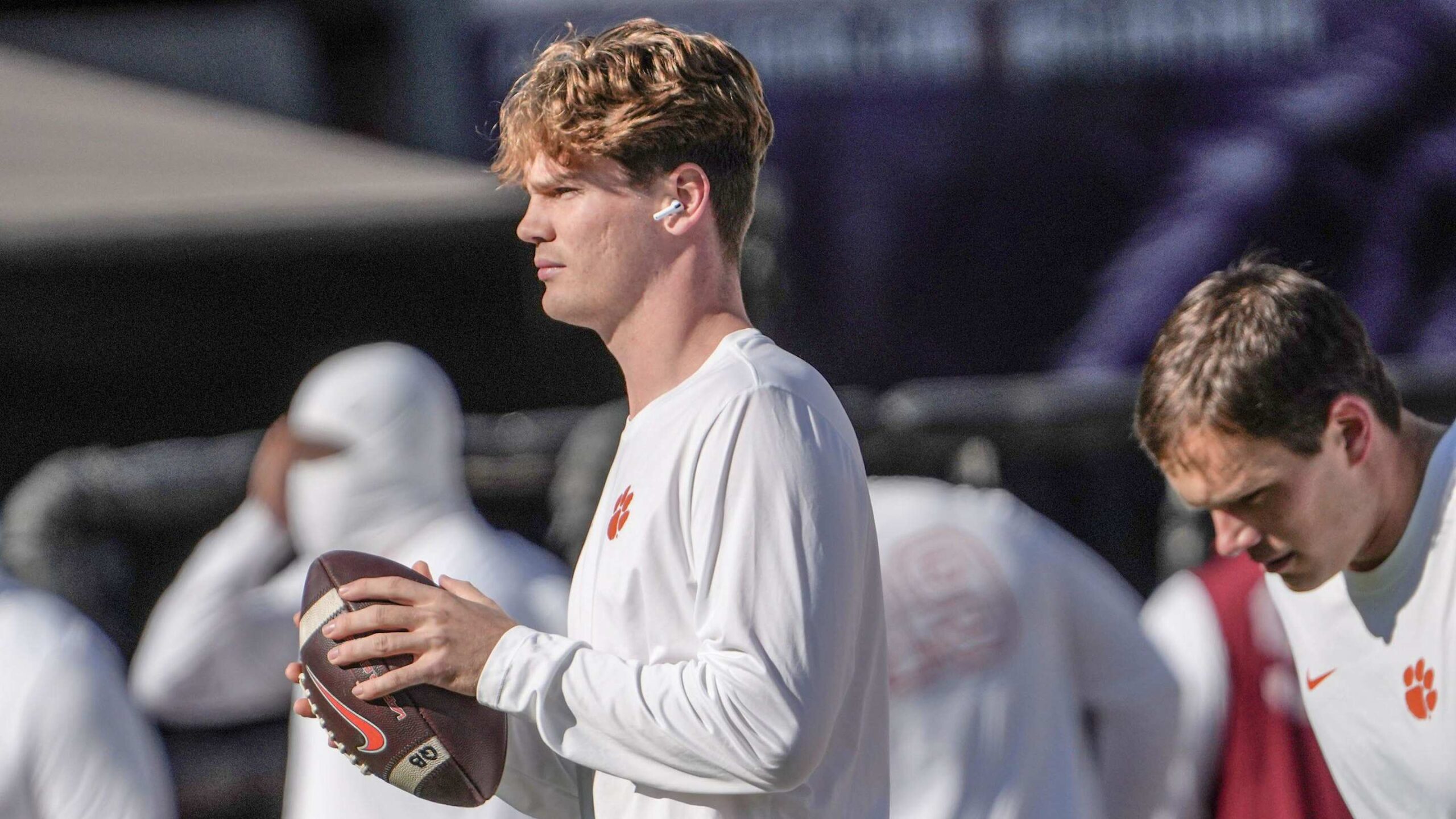
The Clemson Tigers are entering the 2026 season with a new starting quarterback for the first time in three years, raising significant questions about the program’s direction. ESPN analyst Greg McIlroy discussed the implications of this change on his podcast, “Always College Football,” suggesting that the upcoming season could serve as a pivotal moment for the Tigers and their approach to quarterback recruitment.
McIlroy pointed to the potential for a shift in playstyle, moving away from former starter Cade Klubnik. He anticipates that Christopher Vizzina, a longtime backup, will take over as the starting quarterback this season. Yet, he raises a crucial question regarding the program’s choice to prioritize homegrown talent over transfers. “The 2026 quarterback story for Clemson is one of the most philosophical case studies in the sport,” McIlroy stated, emphasizing that the Tigers are not just selecting a starter but defending a broader strategy.
Head coach Dabo Swinney has expressed confidence in Vizzina, having noted back in January that the only other quarterback he considered during Vizzina’s recruiting cycle was Arch Manning from Texas. However, McIlroy highlighted a trend among successful programs, such as the previous national champions Ohio State and Indiana, which have benefited from acquiring top transfer quarterbacks. The question remains whether Clemson can maintain its competitive edge without following suit.
As McIlroy pointed out, “In a sport where most of the top programs are out shopping for quarterbacks, can Clemson still win at the highest level with a homegrown quarterback pipeline?” The challenge intensifies with formidable opponents like LSU and Miami likely to field strong transfer quarterbacks, such as Sam Leavitt and Darian Mensah, respectively.
Despite these concerns, McIlroy praised the Tigers’ defense, which is expected to rank among the best in the Atlantic Coast Conference (ACC). He noted that while Vizzina may not need to carry the team singlehandedly, he must deliver a solid performance. “Clemson’s defense is often good enough to win games,” he said. “If the offense is functional and high-level, those might be the moments that decide the outcome.”
The pressure is on Vizzina to deliver, particularly given the challenges posed by new offensive coordinator Chad Morris. McIlroy cautioned that if Vizzina struggles to establish a productive offense, it might prompt Swinney to reconsider his strategy in the current football landscape.
For Clemson to contend for the ACC Championship in December, Vizzina must demonstrate consistency, especially in critical situations such as third downs and the red zone. McIlroy emphasized that while Vizzina does not need to become a Heisman finalist, he must avoid costly mistakes against top competition. “Defense travels and quarterback elevates,” he remarked.
Ultimately, the Tiger’s success in conference play will be crucial. If Vizzina can effectively lead the team during this transitional period, he will position Clemson favorably for a shot at the College Football Playoff. “That’s how they’ve won championships in the past,” McIlroy concluded, underscoring the significance of this season in shaping Clemson’s future trajectory.