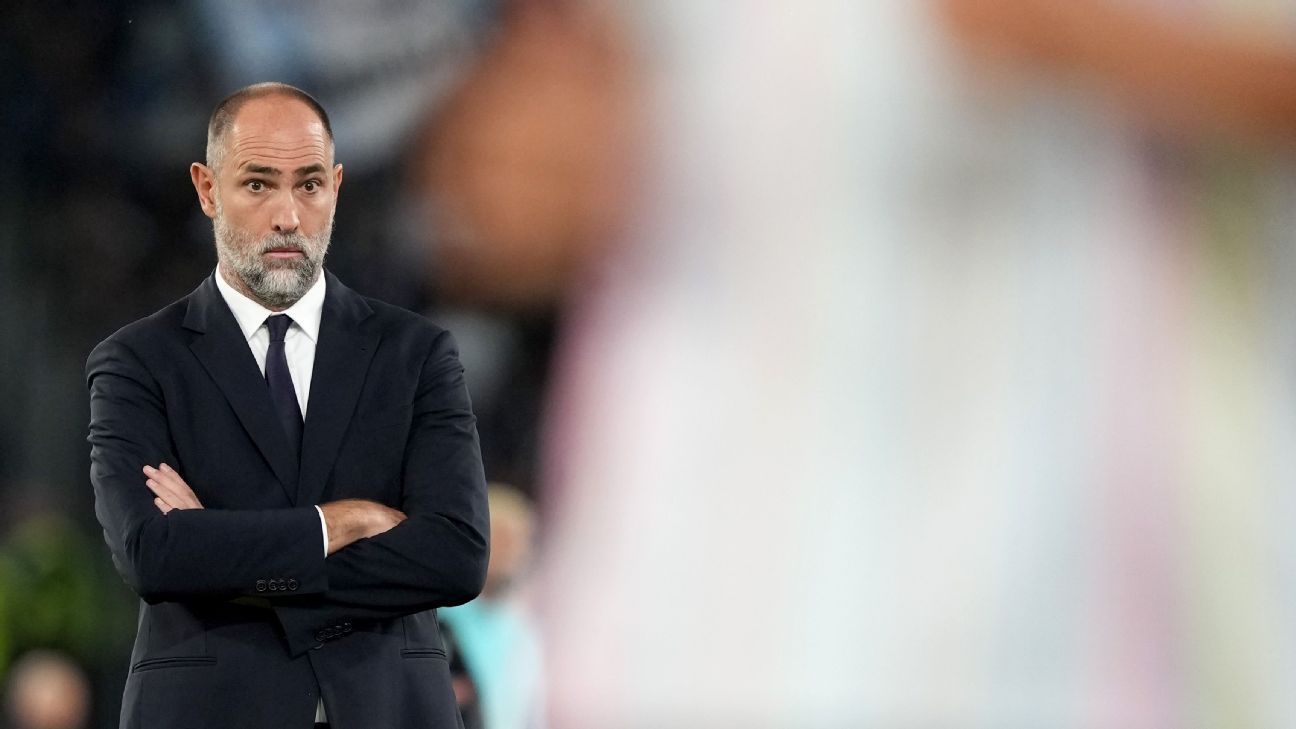
Juventus has parted ways with manager Igor Tudor following a disappointing 1-0 defeat against Lazio this past weekend. The decision comes as the club struggles to find stability, marking a significant moment in a tumultuous period for the storied Italian football team. Currently, there is no immediate replacement, although former Italy manager Luciano Spalletti and Raffaele Palladino, who previously led Fiorentina to a sixth-place finish in Serie A, are under consideration.
The sacking of Tudor represents the latest chapter in a series of managerial changes for Juventus, with Tudor becoming the sixth permanent manager in just six years. This ongoing instability raises questions about the club’s current direction and its ability to recover from past errors that have accumulated over time. Tudor’s dismissal is not solely a result of his own decisions; it reflects a broader pattern of mismanagement involving previous coaches, sporting directors, and executives.
Tudor was appointed as an interim manager in March 2023, succeeding Thiago Motta, who had been criticized for his performance. At the time, Juventus was a mere point away from securing a spot in the UEFA Champions League. Tudor managed to achieve that goal, steering the team into the top four. However, the club’s leadership was already in disarray, with chief decision-maker Cristiano Giuntoli set to leave less than two years into his five-year contract. His successor, Damien Comolli, took over on June 1, and opted to retain Tudor for the upcoming season, citing insufficient time to find a long-term replacement.
In hindsight, this decision has proven problematic as the club now faces an urgent need to appoint a new manager with the season well underway. Comolli and his recruitment team have been active in the transfer market, spending approximately €137 million ($160 million) on player acquisitions. However, much of this expenditure was directed toward making loans permanent, leaving limited funds for new signings.
The financial constraints reflect a broader trend of mismanagement that has left Juventus struggling to recover from significant losses, exceeding half a billion Euros over the past five seasons. This situation has resulted in a team that lacks depth and balance. For example, the club’s decision to allocate a substantial portion of its wage bill to a limited number of forwards has raised concerns about resource allocation. With Dusan Vlahovic remaining as a primary center forward, the team has struggled to maximize its attacking potential.
Tudor’s tactical preferences further complicated matters. His commitment to a 3-4-2-1 formation, while effective at times, limited the opportunities for new forwards to make an impact. The recent signings of wide players Eden Zhegrova and João Mário resulted in minimal contributions, with only two league starts between them. The other signings, Jonathan David and Loïs Openda, combined for just one goal across six league starts.
Looking at the broader context, Juventus has also struggled to retain homegrown talent. In the last 18 months, several promising players, including Matìas Soulé and Nicolo’ Fagioli, were allowed to leave for a total of less than €85 million. Their current valuations are significantly higher, highlighting the missed opportunities for player development within the club.
Juventus finds itself at a crossroads. There is a core group of young talent, including players like Kenan Yildiz and Khephren Thuram, under long-term contracts that could form the foundation for future success. However, the club must address the lingering issues stemming from past decisions that have burdened its current operations.
The upcoming appointment of a new manager will be crucial. The choice of a veteran like Spalletti, who has had mixed results in his previous roles, may not address the need for a fresh approach. Juventus must learn from its past while navigating the challenging landscape of modern football. The path forward will require careful planning and a commitment to long-term stability to restore the club’s former glory.