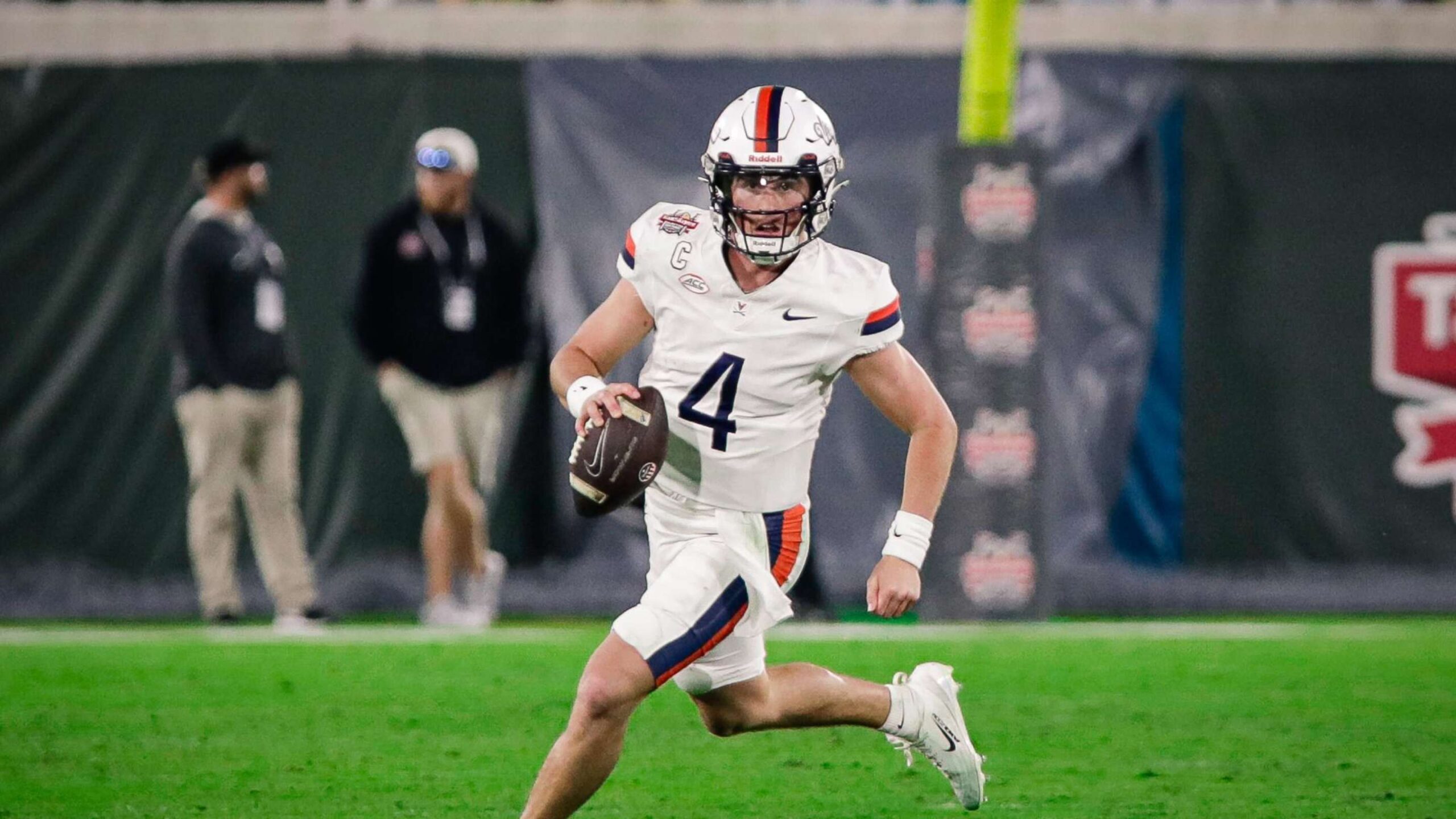
The status of Chandler Morris, the starting quarterback for the Virginia Cavaliers, has taken a significant turn as the NCAA has denied his request for an additional year of eligibility. This decision effectively ends his time at Virginia, following a notable 2025 season in which he led the team to the highly anticipated ACC Championship Game.
During the 2025 campaign, Morris demonstrated impressive performance, completing 282 of 436 passes for a total of 3,000 yards, achieving a completion rate of 64.7%. He recorded 16 touchdowns against 9 interceptions, showcasing both his skill and leadership on the field. His presence at Scott Stadium was pivotal, providing the Cavaliers with experience and determination.
Virginia’s Quarterback Situation Worsens
As the news of Morris’s eligibility denial spreads, Virginia’s quarterback situation has become increasingly precarious. Just days prior, two other quarterbacks, Daniel Kaelin and Grady Brosterhous, entered the transfer portal, leaving the Cavaliers in a challenging predicament. The coaching staff, led by head coach Tony Elliott, had hoped for Morris’s return and had been preparing contingencies in case he was not able to play.
In a press conference during the early signing period in December, Elliott addressed the uncertainty surrounding Morris. “Yeah, there’s been some talks with Chandler, that’s still to be determined,” he stated. “So we’re planning as if it’s not. We want to continue to bring in guys.” This sentiment illustrated the precarious nature of the Cavaliers’ plans as they navigated a transition period.
The Impact of Morris’s Departure
The NCAA’s recent decision leaves Virginia in a difficult position as they approach the next season. With Morris now officially out and both Kaelin and Brosterhous in the transfer portal, the Cavaliers face the potential of starting from scratch at quarterback. The urgency for Elliott to address this situation is compounded by criticism regarding his lack of movement in the transfer market, as other programs successfully recruit top talent across the nation.
As the clock ticks down to the next season, the pressure mounts for Elliott to quickly fill these gaps. While the NCAA’s decision has added to the Cavaliers’ troubles, the potential for new recruits remains. The question now is whether this setback will motivate the coaching staff to make decisive moves in recruiting or if they will continue to struggle with a depleted roster.
The future of the Virginia Cavaliers hinges on Elliott’s ability to adapt and secure new talent, particularly at the quarterback position, as they look to rebuild and reestablish themselves in the competitive landscape of college football.