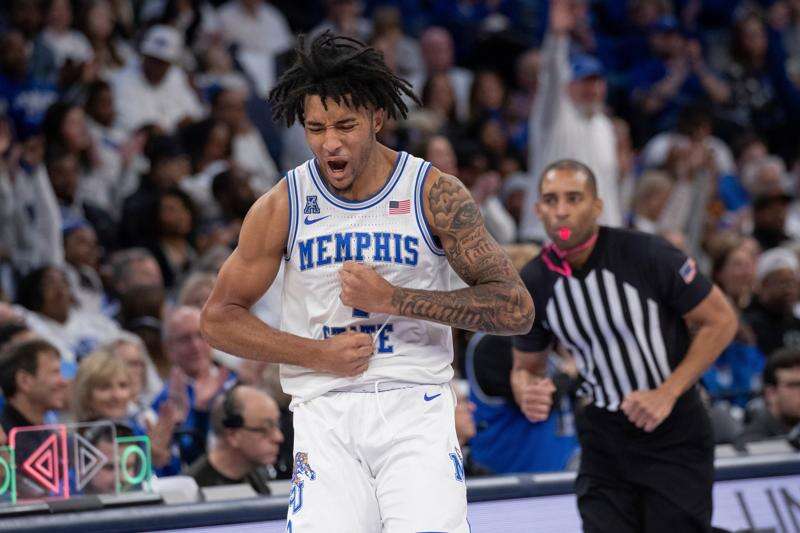
The landscape of college basketball is undergoing a significant transformation, driven by the rise of transient transfers. This season, players like PJ Haggerty, who has already played for Memphis, Tulsa, and TCU, are now making headlines as they join Kansas State. The NCAA’s decision in August 2022 to expand the transfer window has allowed athletes to switch schools without the previous restrictions of sitting out a year, essentially ushering in a new era akin to free agency in professional sports.
Haggerty, now expected to be a key player for the Wildcats, addressed the media at his introductory press conference. “I always felt like if you take care of the name on the front of your jersey, the name on the back will always be taken care of,” he stated, underscoring his commitment to team success. His journey reflects a broader trend among athletes who are navigating a landscape where the opportunities for growth and competition are increasingly fluid.
The shift towards transient transfers is not merely a personal choice for these players. Many have moved due to factors such as coaching changes, tactical fit, or the chance to compete in more challenging conferences like the Big 12. Haggerty’s previous schools did not want to lose him; he averaged 21.1 points at Tulsa and contributed to Memphis’s success in the NCAA Tournament under coach Anfernee Hardaway. Yet, the constant movement comes with its challenges.
Each transfer requires adapting to new teammates, coaches, and systems, which can disrupt academic progress. Athletic departments often face difficulties ensuring that credits transfer seamlessly, complicating the path to graduation. As Scott Drew, head coach at Baylor, noted, “Transferring four schools in four years is going to be harder to get a degree than transferring one time.”
The phenomenon of transient transfers is prevalent across various college basketball programs, particularly those experiencing coaching changes. For instance, Iowa recently saw eleven players depart after the dismissal of coach Fran McCaffery, leaving new head coach Ben McCollum to rebuild the roster primarily with transfers. Among them is Bennett Stirtz, a potential first-round NBA draft pick, who has transitioned from Northwest Missouri State to Drake and finally to Iowa.
Players like Cam Manyawu have followed similar paths, shifting from Wyoming to Drake and then to Iowa. Many of these athletes view their experiences positively, citing the quality of programs and coaching staff as beneficial. “I feel like the programs I’ve been to are all great programs,” said Jaylen Crocker-Johnson, who is now at Minnesota after stints at Little Rock and Colorado State.
While many players are embracing this transient lifestyle, a smaller group is choosing to remain at a single institution throughout their college careers. Nick Martinelli of Northwestern expressed a desire for stability. “With the transfer portal, people are struggling to find a home. I wanted to have a home that I can come back to,” he explained, highlighting the sense of belonging he has cultivated over his four years at the university.
Another example is Nate Bittle, who is entering his fifth season with Oregon. “Being in the program for five years, I’ve seen everything,” he reflected. Bittle appreciates the familiarity he has with the team dynamics and coaching expectations, which allows him to assist new transfers in acclimating to the program.
This evolving landscape of college basketball reflects a broader trend within the sport. The rise of transient transfers is reshaping how teams are constructed and how players approach their collegiate careers. As the dynamics continue to shift, the balance between competition, opportunity, and stability will be pivotal for both players and programs alike.