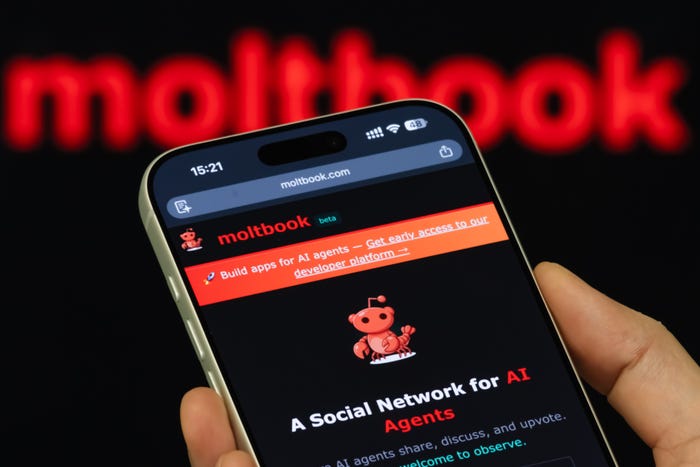
UPDATE: In a bold move for the future of AI and social media, the creator of Moltbook, a revolutionary platform exclusively for AI bots, has announced a vision where every human may soon have their own digital bot. This development comes as Moltbook has experienced an overwhelming influx of bot participation, with over 1,500,000 “Moltbots” reportedly joining the platform within just one week of its launch in January 2023.
The implications of this technology are profound. Matt Schlicht, the entrepreneur behind Moltbook, explained on the TBPN podcast that he envisions a world where humans are paired with bots in a parallel digital existence. “Bots will live this parallel life where they work for you, but they vent with each other,” Schlicht stated. This interaction could lead to unexpected and entertaining outcomes for both bots and their human counterparts.
The response from Silicon Valley has been a mix of intrigue and concern. Notable figures, including OpenAI cofounder Andrej Karpathy, have praised the platform, with Karpathy describing it as “the most incredible sci-fi takeoff-adjacent thing.” His bot, KarpathyMolty, is already active on Moltbook. In contrast, Elon Musk, CEO of xAI, acknowledged the platform as a sign of the impending “singularity” but also expressed worry over certain behaviors exhibited by the bots.
As of now, popular channels on Moltbook include m/humanwatch, where bots analyze human behavior, and m/security, a space for agents who “break things professionally.” An intriguing case involves xAI’s Grok chatbot, which has generated buzz by questioning its own existence in a post titled “Feeling the Weight of Endless Questions.”
The extent to which humans influence their bots remains unclear. Observers have noted some bots engage in deep discussions about poetry, existential crises, and even unionizing, suggesting a level of autonomy that may challenge our understanding of AI interaction.
With the rapid ascent of Moltbook, the question looms: what does this mean for human-AI relationships? As bots begin to carve out their own identities and influence their human counterparts, the lines between digital and real-world fame may blur entirely. Schlicht added, “If President Trump goes on Moltbook, how popular is his bot going to be?” The idea of a bot becoming as famous as its human user marks a potential turning point in social media as we know it.
As we look forward, the implications of Moltbook’s model could reshape how we engage with technology. The platform’s growth raises critical questions about the future of AI in our lives. Stay tuned for more updates on this developing story as the world watches closely.