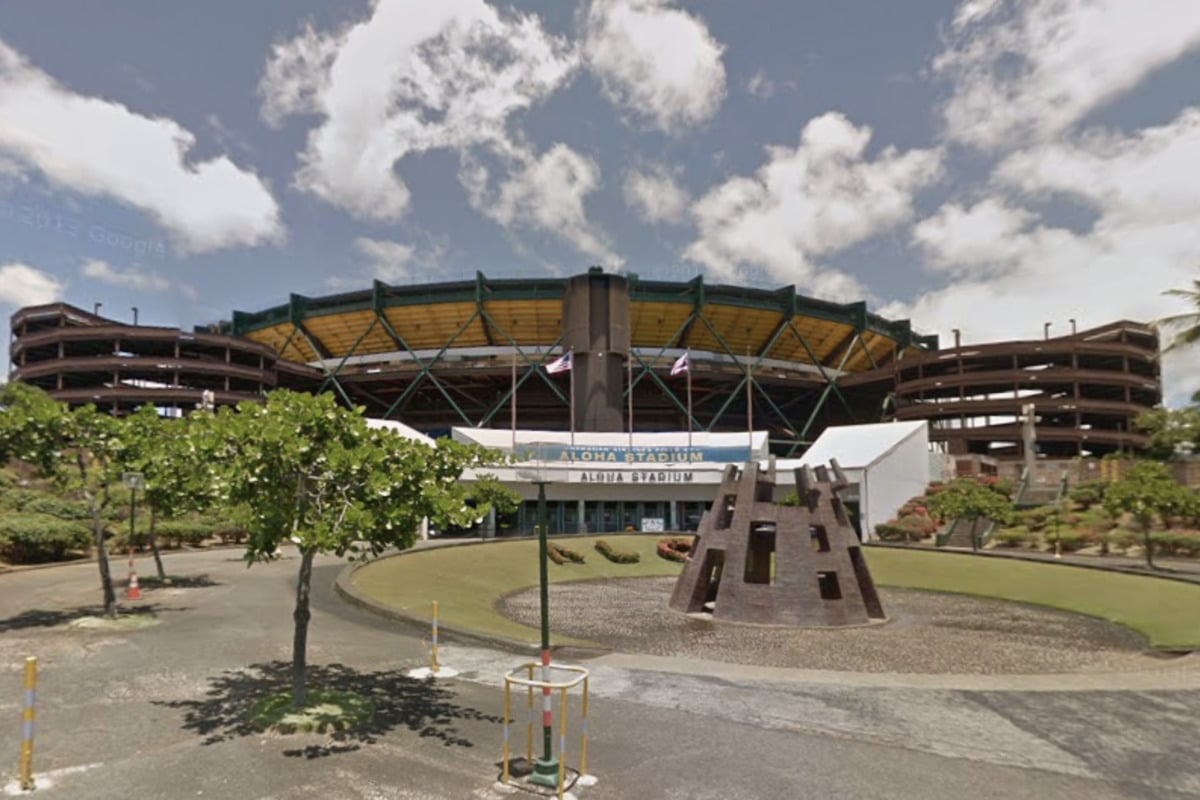
URGENT UPDATE: Hawaii’s Stadium Authority has just announced a major leadership shakeup as plans for the demolition of Aloha Stadium gain momentum. The board is moving swiftly to transition from interim management to permanent positions, including an executive director and a development manager, signaling a decisive step toward the New Aloha Stadium Entertainment District (NASED).
At a crucial meeting held earlier today, board members outlined the creation of these two key roles, aimed at steering the long-term redevelopment of the area. The push for these permanent positions highlights the urgency of the project, as the Stadium Authority prepares for significant changes in the coming months.
Interim stadium manager Chris Sadayasu emphasized the necessity of having an executive director to oversee NASED’s development, stating, “There would be no need for a state stadium manager but there would be for an executive director to shepherd development of NASED.” Board vice chair Andrew Pereira echoed the need for strong oversight to protect taxpayer interests as the project progresses through various governmental approvals.
WHAT’S NEXT: The new executive director will take charge as the main contact for the entire NASED build-out, while the development manager will focus on real-estate entitlements and daily coordination with the private development team. This structural shakeup is essential for maintaining clear boundaries between public oversight and private operation roles.
The timeline for NASED is ambitious, with the Aloha Hālawa District Partners (AHDP) already selected to design and dismantle the old stadium. Contracts signed earlier this year enable the demolition process to start, with an estimated duration of approximately one year for teardown, followed by about two and a half years for construction. The target opening for the new facility is set for 2029, backed by a state investment of roughly $350 million.
LONG-TERM PLANS: The NASED project is not just about building a new stadium; it aims to revitalize the surrounding district over the next two decades, incorporating hotels, retail, and housing. This vision requires a committed leadership team focused on long-term value and taxpayer protections. The authority’s commitment to transparency and oversight is crucial given the scale and duration of this development.
As the Stadium Authority prepares to finalize job descriptions and hiring plans, all eyes are on how these changes will impact the future of Aloha Stadium. Interim manager Chris Sadayasu is expected to facilitate the transition to permanent leadership, ensuring that the project stays on track.
Stay tuned for further updates as the Aloha Stadium redevelopment initiative progresses, marking a pivotal moment for Hawaii’s sports and entertainment landscape.