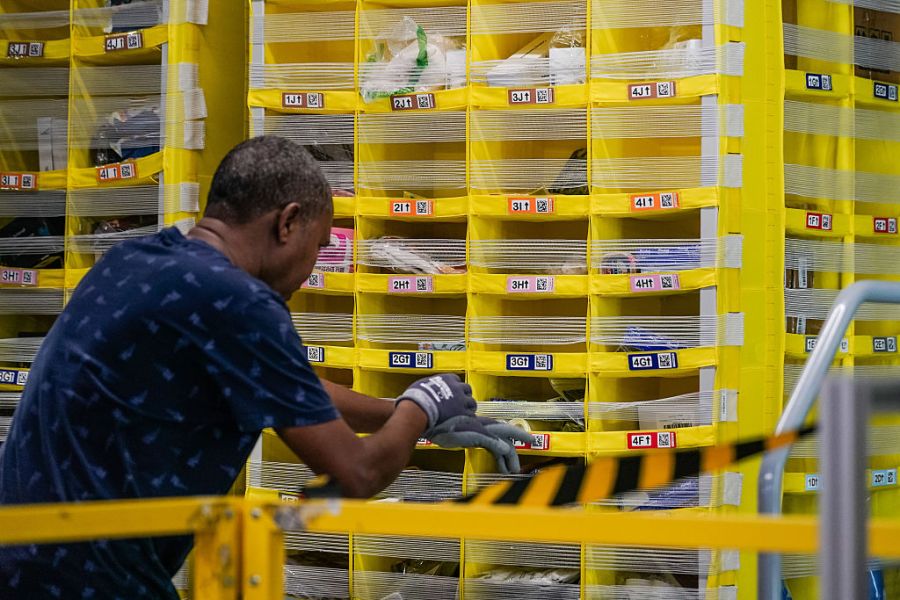
UPDATE: New reports confirm that Amazon is actively pursuing automation as a strategy to replace over 600,000 U.S. jobs by 2033. According to The New York Times, internal documents reveal that Amazon’s robotics team anticipates avoiding the need for more than 160,000 hires by 2027. This shift could save the e-commerce giant approximately 30 cents on every item it processes.
The leaked documents suggest that Amazon aims to automate 75% of its operations, with plans already underway to increase its robotic workforce significantly. This strategy positions robots to potentially outnumber human workers in Amazon’s warehouses, raising urgent questions about the future of employment in the tech and retail sectors.
On June 1, Amazon celebrated a significant milestone by deploying its 1 millionth robot across its facilities, emphasizing its commitment to automation. CEO Andy Jassy has indicated that advancements in artificial intelligence (AI) will contribute to a reduction in Amazon’s overall workforce due to increased efficiency.
In response to the report, Amazon spokesperson Kelly Nantel labeled the documents as presenting an “incomplete” and “misleading picture” of the company’s hiring strategies. She stated, “These materials reflect the perspective of just one team and don’t represent our overall hiring strategy across our various operations business lines.” Nantel highlighted that Amazon has created more jobs in the U.S. over the past decade than any other company and announced plans to fill 250,000 positions for the upcoming holiday season.
However, the urgency of this transition has drawn significant public concern. Senator Bernie Sanders reacted to the Times report, asserting on social media that “Big Tech oligarchs are coming for your job.” Sanders has previously warned that AI and automation could threaten nearly 100 million U.S. jobs over the next decade.
While some studies indicate that the anticipated job losses from AI may not have arrived yet, the rhetoric surrounding the issue has intensified. Research from the Yale University Budget Lab and the Brookings Institution suggests that generative AI has not dramatically altered employment since the launch of ChatGPT in November 2022.
As Amazon moves forward with these ambitious plans, the implications for the workforce and the broader economy are profound. Stakeholders and communities will be watching closely as Amazon navigates this pivotal moment in its operational strategy.
WHAT TO WATCH FOR: As Amazon rolls out its automation strategy, observers should pay attention to potential public backlash, corporate communication adjustments, and the ongoing discourse around job security in the face of rapid technological advancements.