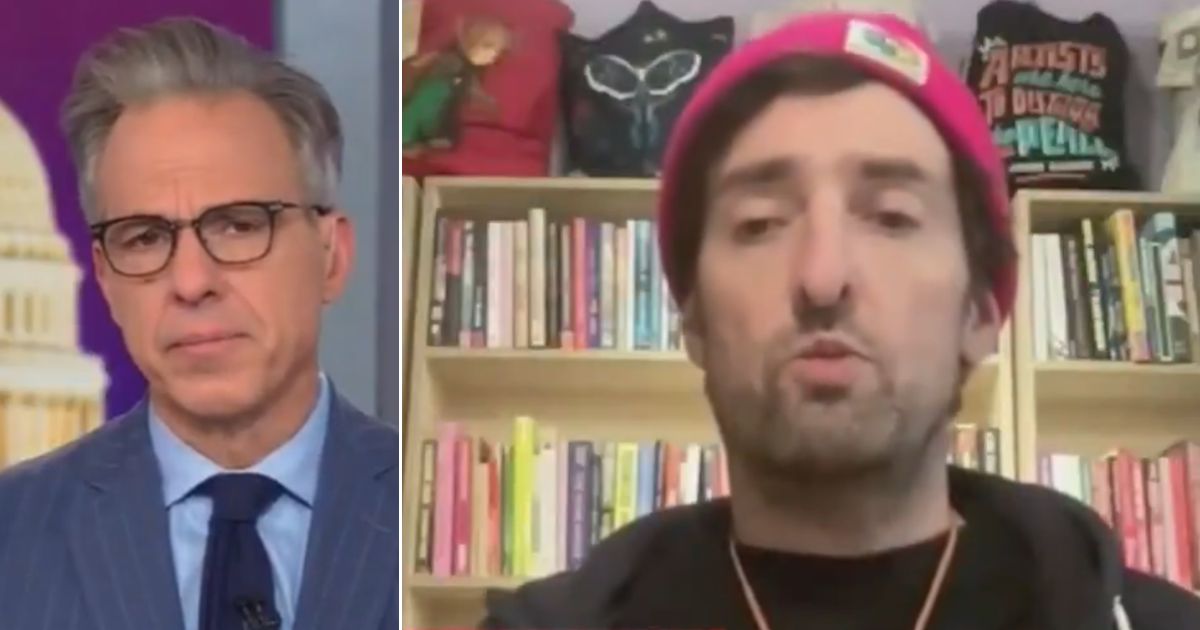
BREAKING: A shocking segment aired on CNN’s “The Lead with Jake Tapper” on October 20, 2023, where guest Jamie Schwesnedl suggested that Immigration and Customs Enforcement (ICE) could soon start “putting people in ovens.” This alarming statement, part of a broader and controversial Holocaust reference, has ignited outrage and debate across social media.
In a clip shared widely on platforms like X, Schwesnedl, a co-owner of a Minnesota bookstore, linked ICE actions to historical atrocities, claiming facilities like Fort Snelling are akin to “concentration camps.” He further stated, “Not saying they’re Dachau… But, these are concentration camps.” This comparison, made without any official context, has drawn severe backlash from both sides of the political spectrum.
Why This Matters NOW: Schwesnedl’s remarks come amidst heightened tensions regarding immigration policies and enforcement in the United States. The implications of such incendiary language could escalate an already volatile situation, as communities grapple with safety and security concerns. Tapper, while appearing to object to the terminology used by Schwesnedl, allowed the guest to continue uninterrupted, raising questions about media responsibility in framing these discussions.
The segment drew immediate criticism, with many accusing CNN of providing a platform for dangerous rhetoric. A social media user remarked how Tapper, despite his discomfort, seemed to facilitate the discussion rather than challenge its premises directly. The conversation has since sparked widespread discussion about the portrayal of ICE and the broader implications of inflammatory language in public discourse.
In response to the segment, many are calling for a reassessment of how media outlets handle sensitive topics. The historical context invoked by Schwesnedl, including references to Fort Snelling’s past as a military base involved in the Dred Scott case, adds layers of complexity to the current narrative. Fort Snelling, now a decommissioned base near the Twin Cities, has a controversial legacy that people are discussing in light of these comments.
Next Steps: As the fallout from this segment continues, observers are watching closely to see how media organizations will respond to criticism of their coverage. Will there be a shift in how sensitive issues are reported? Will public figures and officials address these comparisons in a meaningful way? The urgency of the situation calls for immediate dialogue and action from both media and policymakers.
With the political climate increasingly polarized, the implications of Schwesnedl’s comments and the media’s role in amplifying such rhetoric cannot be understated. The national conversation around immigration policies is evolving rapidly, and how this narrative unfolds will be crucial in shaping future discussions.
Stay tuned for more updates as this story develops, and join the conversation about the impact of media statements on public perception and policy.