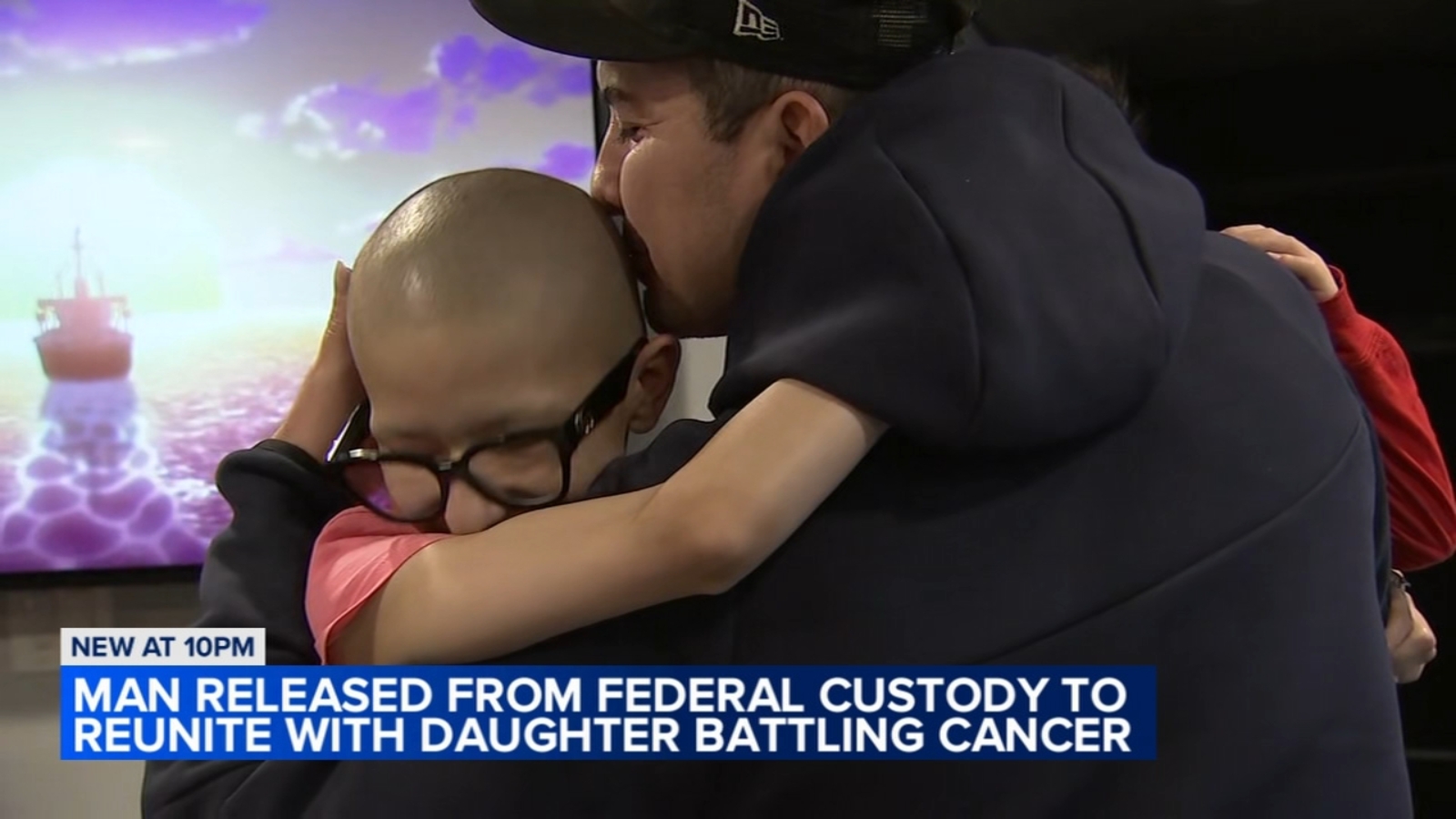
UPDATE: Ruben Torres Maldonado, father of a teenage cancer patient, has spoken out about the inhumane conditions he endured at the ICE facility in Broadview, Chicago. Just one week after his release, he shared his emotional journey with ABC7, revealing the shocking reality faced by detainees.
Torres was detained by federal agents on October 18, 2023, outside a Home Depot in Niles, Illinois, shortly after his 16-year-old daughter, Ofelia, returned home from the hospital where she is battling stage 4 cancer. He described feeling a deep sense of helplessness as his American dream slipped away while in DHS custody.
“I’m so happy… thanks to the people who support my family in this situation,” Torres said, reflecting on his recent return to the Northwest Side of Chicago.
A federal judge ruled last month that Torres’s detention was unlawful, demanding a prompt bond hearing. Despite this, DHS officials maintain that they were justified in detaining him, citing his history of reckless driving and alleged non-compliance during his arrest.
During the emotional interview, Torres recounted the appalling conditions he faced at the ICE facility, stating, “It’s inhumane because the conditions are bad. There’s a lot of people in a room and there were only two bathrooms.” He described a facility where showers were malfunctioning and detainees had to sleep on top of garbage.
“I heard him testify and I just saw his face, his facial expressions,” Ofelia said, recalling her father’s testimony about the trauma he experienced. “He was reliving everything. It’s horrible. No one deserves to be there.”
Following Torres’s testimony in a federal hearing, a judge mandated that DHS implement critical changes to improve hygiene and sleeping arrangements within the facility. “I’m glad over the judge’s ruling to improve the conditions for the detainees because we are not criminals to receive this type of treatment,” he stated.
Despite the ruling, Torres is now required to wear an ankle monitor and faces restrictions on his ability to work in the paint and construction industry, which he has done since arriving in the U.S. in 2003. “All I could think of was my daughter, my wife, and my family because I knew that if I were deported, it would be very difficult for my wife to carry the family’s burden, especially with my daughter’s condition,” he said.
Ofelia continues to fight her cancer, with more treatments scheduled in the coming days. She shared how much easier it is now that her father is back. “We spend time together just being lazy honestly, just watching movies and eating together—just simple things. I am so happy to have him back. Those two weeks without him were really hard,” she expressed.
With a judge’s ruling allowing Torres to apply for cancellation of removal, his family’s future remains uncertain but hopeful. “My lawyers are working on that process now,” Torres confirmed.
The community continues to rally around the Torres family, highlighting the urgent need for reform within DHS and ICE facilities. This developing story raises critical questions about the treatment of detainees and the impact on families facing medical crises.