BREAKING: A female mouse has given birth after a historic space mission, raising crucial questions about life beyond Earth. This significant event unfolded on December 10, 2023, following a 14-day journey aboard China’s Shenzhou-21 mission, which launched on October 31, and orbited approximately 400 kilometers above Earth.
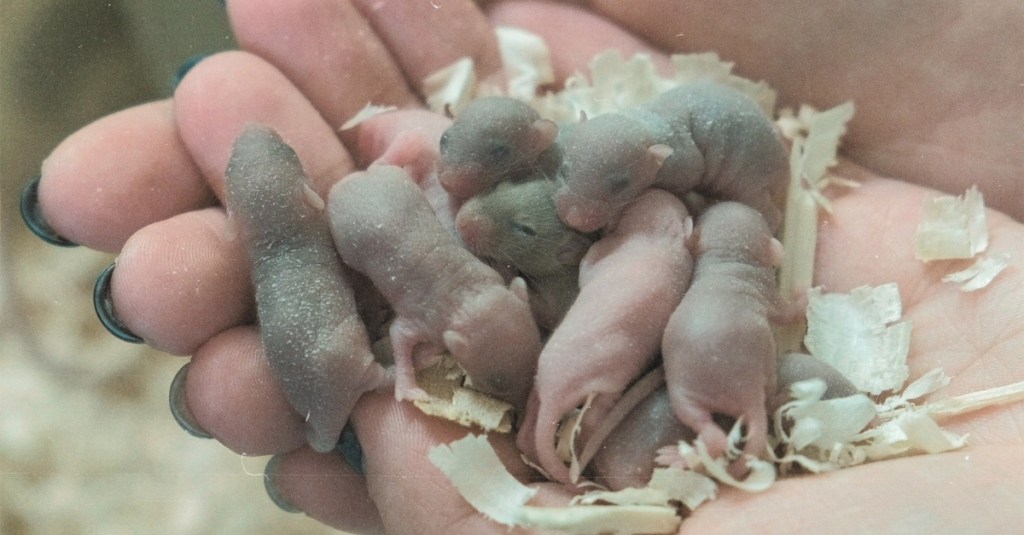
During their time in space, four mice were subjected to microgravity, space radiation, and the physiological challenges of orbital life. They returned safely on November 14, but the real breakthrough came when one female mouse delivered a litter of nine pups, six of which survived—a normal outcome by laboratory standards confirmed by researchers at the Chinese Academy of Sciences.
Wang Hongmei, a lead researcher at the Institute of Zoology, states that this birth suggests that short-term spaceflight did not impair the mouse’s reproductive capabilities. This finding is critical as scientists grapple with the implications for human reproduction in space, particularly for long-duration missions to Mars and potential off-world settlements.
The mission was not without its challenges. Changes to the return schedule raised concerns about food supplies, prompting ground teams to test emergency rations, including compressed biscuits and soy milk. An AI system monitored the mice’s behavior throughout the mission, ensuring they followed a strict Earth-based day-night cycle.
Now, researchers are closely observing the newborn pups, tracking their growth, and monitoring for any physiological changes. They aim to assess whether these mice can reproduce normally, potentially uncovering issues that may not become apparent until later generations.
While this one successful birth does not conclusively prove that mammals can conceive, gestate, and give birth in reduced gravity, it rules out one concerning possibility. The implications are profound: as humanity prepares for long-term space travel, maintaining reproductive viability is essential.
This small but significant event highlights the resilience of life beyond Earth. It offers a glimmer of hope for future space exploration, suggesting that, at least for now, space does not immediately disrupt fundamental biological processes. As researchers continue to study these pups, the findings could have lasting impacts on our understanding of life in space.
The developments from this study are urgent and compelling, capturing the interest of scientists and the public alike. The implications for human space travel are immense, making this discovery one that deserves immediate attention and discussion.