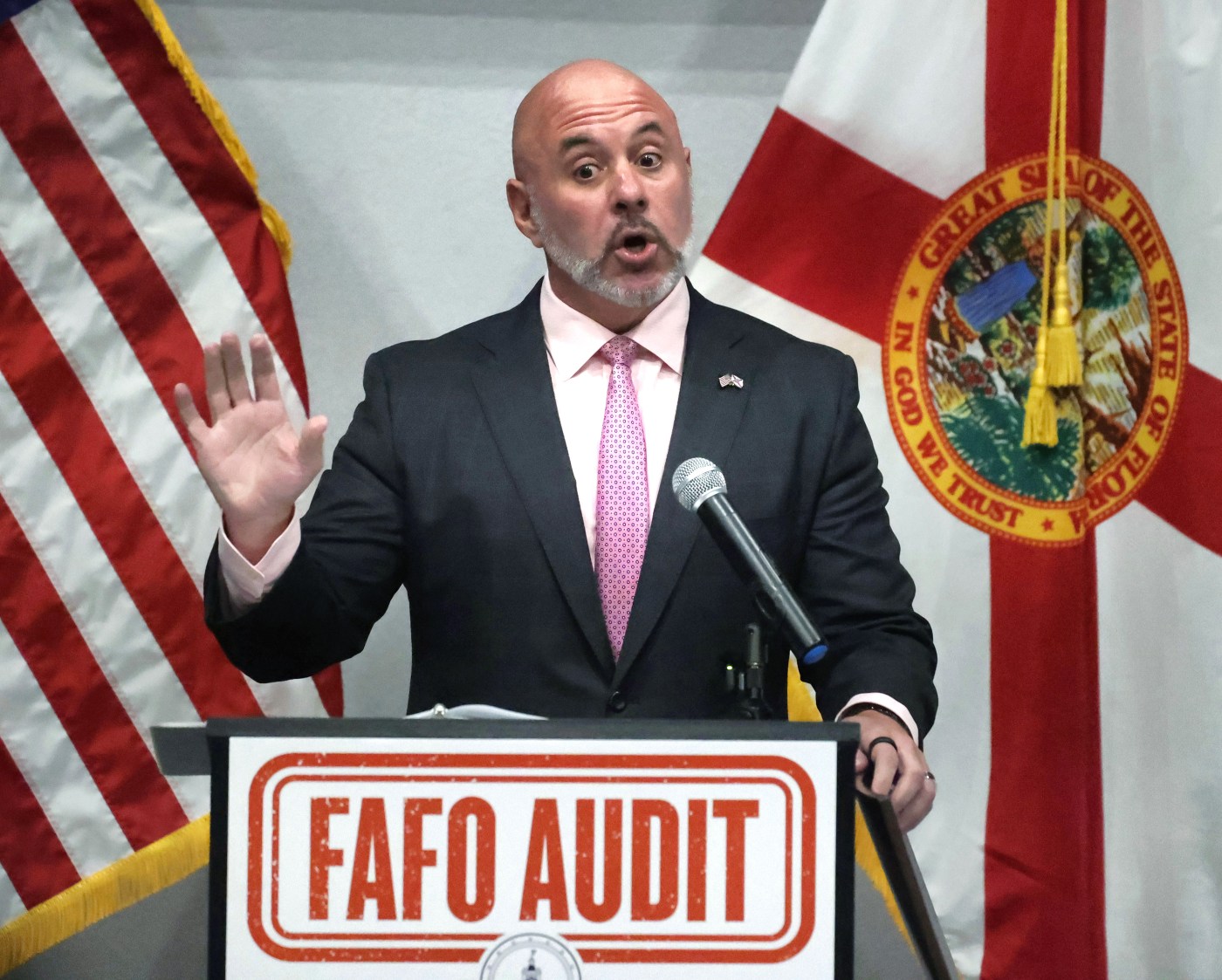
URGENT UPDATE: Florida Chief Financial Officer Blaise Ingoglia is demanding immediate reforms to local government budgeting practices, calling for lawmakers to implement standardized requirements that enhance public transparency. Speaking at the Winter Park offices of Americans for Prosperity earlier today, Ingoglia proposed legislation that would require cities and counties to post their budgets online at least 14 days before public hearings and keep those documents available for five years.
His bold proposal also mandates local governments to identify 10% of their budgets that could be cut, although it does not require actual cuts to be made. “What we noticed is that…only some of them keep historical budget information on their website,” Ingoglia stated. “We think it should be standard and transparent.”
Recent findings from an Orlando Sentinel review revealed that while many local budgets are available online, some of the smallest municipalities do not post their budgets for public scrutiny. Rep. Yvette Benarroch, a Republican from Collier County, will file the bill, emphasizing that “too often, local budgets are passed in a way that regular people cannot follow.” She added, “The information is hard to find, hard to read … that’s not transparency. This bill is gonna fix that.”
Ingoglia’s comments come amid his statewide tour criticizing local spending. He claims that Orange County overtaxes residents by $148 each and overspends by $200 million annually. “To date, we have exposed more than $1.86 billion in wasteful, excessive spending in just 11 local governments,” Ingoglia asserted, urging citizens to demand accountability and transparency from their local leaders.
The CFO’s latest audit targeted Orlando, which he says is relatively responsible with taxpayer money, misallocating only about $22 million. In contrast, Palm Beach County’s spending has reportedly exceeded inflation and population growth by over $344 million this year, marking the largest alleged overspending in Florida to date. Broward County, according to Ingoglia, has overspent by about $190 million in the same timeframe.
Ingoglia’s methodology for evaluating local budgets adjusts spending growth since 2019 based on the Consumer Price Index and population growth. However, local officials have challenged his calculations, arguing that they do not account for mandatory state-funded initiatives. For instance, in Seminole County, such mandates have increased by 71% since 2020.
In response to these claims, Orange County Mayor Jerry Demings highlighted that being the nation’s most-visited tourism destination places a significant strain on the county’s budget. Local leaders also cite rising salaries for public safety personnel and increasing costs of construction materials as key factors contributing to budget challenges.
As Ingoglia pushes for these reforms, the proposed legislation represents a pivotal moment for local governance in Florida. Citizens are urged to pay attention to the changes that could reshape how their communities manage and disclose public funds.
Watch for further developments as this story unfolds and the legislative session progresses. The call for accountability in local government spending is gaining momentum, and public engagement will be crucial in shaping the future of budgeting transparency in Florida.