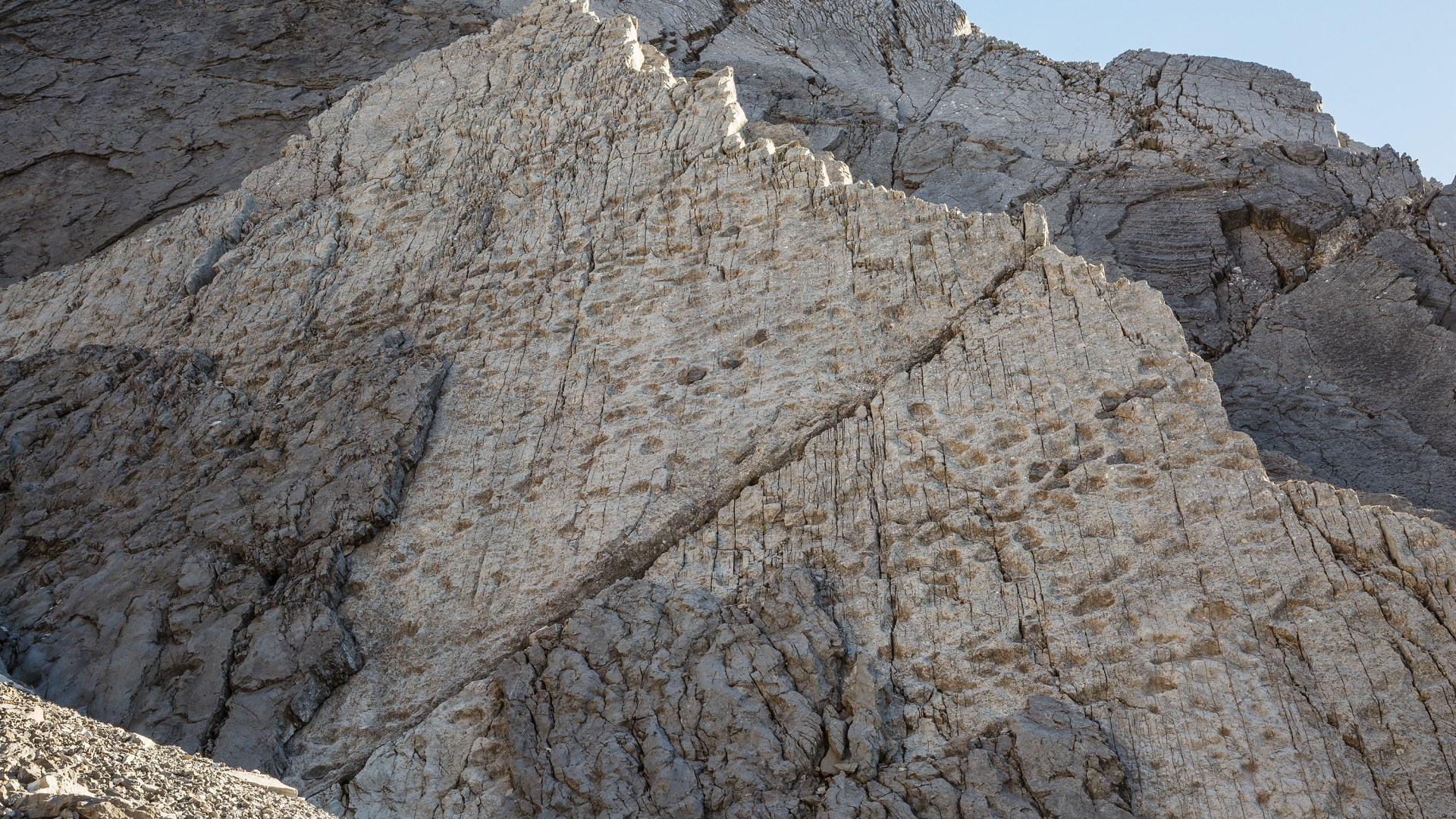
BREAKING: Thousands of dinosaur footprints, dating back 210 million years, have just been discovered in Stelvio National Park, just a stone’s throw from the upcoming 2026 Winter Olympics. This extraordinary find, revealed by the Milan Natural History Museum (MNHM), is being hailed as “one of the most important deposits of Triassic trace fossils in the world.”
The astonishing footprints were uncovered in the Fraele Valley, located between Livigno and Bormio, key venues for the Olympic Games scheduled from February 6 to 22, 2026. MNHM officials report that an estimated 20,000 footprints span across a remarkable area of about three miles, showcasing the traces of long-necked, bipedal herbivores that measured up to 33 feet in length and weighed around four tons.
“This site is unprecedented, revealing a vast quantity of footprints never before reported or studied,” said Dr. Dal Sasso of MNHM, who noted the tracks were found in excellent condition despite the challenging altitude. “The huge surprise was not just in the discovery of the footprints, but in the astonishing number—tens of thousands of prints.”
The discovery is significant not only for paleontologists but also for the public, as it is located merely a mile from where the men’s alpine skiing competition will occur. The MNHM emphasized the need for advanced technology, including drones, to access and study this remote area, which has remained largely untouched due to its inaccessibility.
Local authorities are already recognizing the potential impact of this find. Lombardy regional governor, Attilio Fontana, dubbed it the “gift of the Olympics,” with plans to make the site accessible to the public in the future. “This largest site in the Alps could engage geologists and paleontologists for decades,” stated MNHM.
The timing of this remarkable discovery is fortuitous, aligning perfectly with the global spotlight on the Winter Olympics. As excitement builds for the Games, this finding adds a unique layer of historical significance to the region.
Stay tuned for further updates on this groundbreaking discovery and its ongoing impact on both the scientific community and the Olympic festivities.