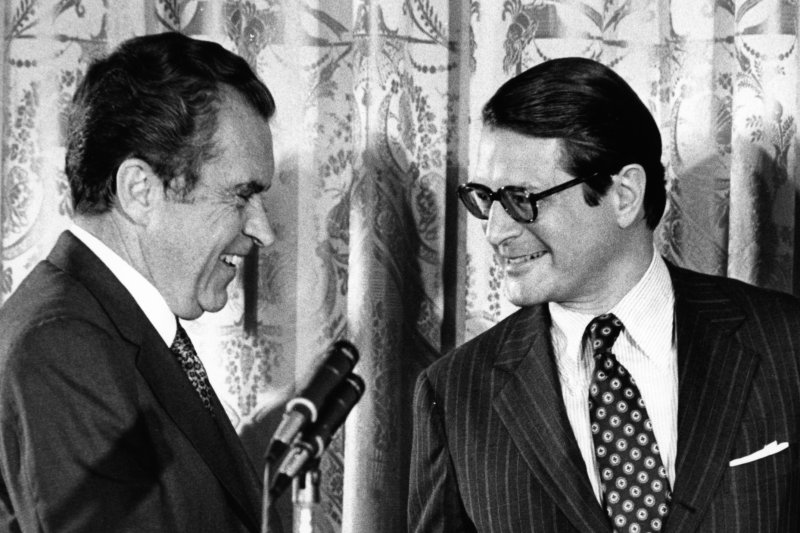
UPDATE: On this day, October 20, 1973, the United States witnessed a pivotal moment in political history as two top Justice Department officials resigned during the infamous “Saturday Night Massacre.” In an unprecedented turn of events, Attorney General Elliot Richardson and Deputy Attorney General William Ruckelshaus stepped down after President Richard Nixon ordered them to fire special prosecutor Archibald Cox amidst the escalating Watergate scandal.
This significant development, which occurred just over fifty years ago, sent shockwaves through the nation and altered the course of Nixon’s presidency. The resignations were a direct response to Nixon’s insistence on silencing Cox, who was investigating the Watergate break-in and subsequent cover-up. After Richardson and Ruckelshaus refused to carry out the order, Solicitor General Robert Bork ultimately executed Nixon’s directive, leading to a public outcry and intensified scrutiny of the administration.
The implications were profound, as the incident highlighted the constitutional crisis unfolding within the U.S. government. Citizens were left grappling with the consequences of executive power and accountability, igniting protests and calls for reform that would reshape American politics.
Other notable events on this date include significant milestones in history, from the establishment of the U.S.-Canada border in 1818 to the tragic 1977 plane crash that claimed the lives of several members of rock band Lynyrd Skynyrd. Each of these events, including the resignation of key officials, serves as a reminder of the complex tapestry of U.S. history.
As we reflect on these historical moments, it’s essential to consider what they mean for today. The ongoing discussions surrounding government transparency, accountability, and the rule of law are as relevant now as they were during the Watergate scandal.
Stay tuned for further developments on this and other significant anniversaries, as we continue to explore the impact of these events on contemporary society. Share your thoughts on how history shapes our present and future in the comments below.