The field of robotics and automation is undergoing transformative changes, driven significantly by cross-cultural engineering practices. Engineers from diverse backgrounds are shaping technological advancements through collaborative efforts that transcend borders. Their experiences in different educational and professional environments provide unique insights into problem-solving, design, and risk assessment.
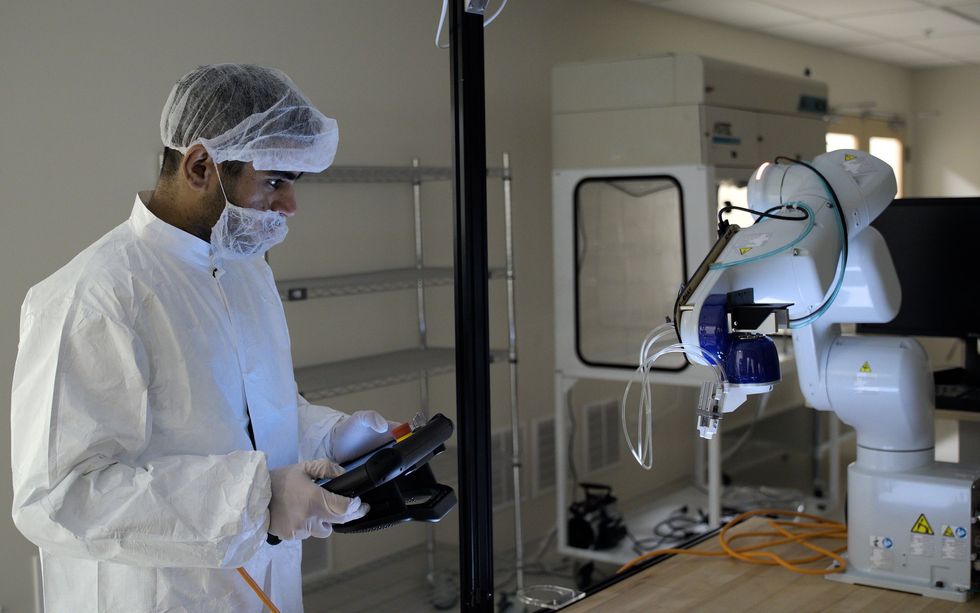
Ravi Kumar, a mechanical engineer at Re:Build Fikst in Wilmington, Massachusetts, highlights how his background profoundly influences his work. Originally from Noida, India, where he studied electrical and electronics engineering at Amity University, Kumar emphasizes the importance of diversity in the engineering disciplines. “It’s not just about representation; it’s a technical advantage that directly impacts how systems are designed and deployed,” he states.
Cross-Cultural Experiences Enhance Problem-Solving
Kumar’s journey into engineering began in India, where he developed a solid foundation in problem-framing and adaptability. At Amity University, students were encouraged to focus on essential system behaviors and prioritize critical variables impacting technology performance. This training fostered a mindset rooted in first-principles thinking, which emphasizes starting from fundamental behaviors rather than relying on established solutions.
After completing his undergraduate degree, Kumar moved to the United States in 2021 to pursue a master’s degree in robotics and autonomous systems at Arizona State University. This transition introduced him to a different engineering culture, where rigor and meticulous validation are essential. In the U.S. research and development sector, systems must perform reliably across various conditions, which requires comprehensive documentation and safety reviews.
Kumar explains the necessity of balancing efficiency with a structured approach. In the United States, design choices require more justification, and collaboration often involves aligning priorities among scientists, software engineers, and technicians. “Over time, I learned that the value of my experiences lies not in choosing one culture over the other, but in knowing when to apply each,” he notes.
The Role of Diversity in Engineering Design
The interplay between distinct engineering cultures reveals the significant benefits of having diverse teams. Engineers trained in different environments bring varying approaches to problem-solving. Some may emphasize rapid iteration, while others focus on verification and robustness. When these perspectives converge, teams can ask more insightful questions and challenge conventional norms, leading to designs that are more resilient to real-world variations.
Kumar points out that engineers with cross-cultural experiences often exhibit a heightened awareness of variability, which enhances design decisions. In fields like robotics and automation, understanding user interactions with technology and accounting for potential errors is crucial. Such insights are instrumental in creating systems that function effectively in real-world scenarios.
Additionally, engineers from outside the United States play a vital role in the national research and development landscape, especially in interdisciplinary fields. They act as bridges, connecting different problem-solving strategies and design philosophies. “We help translate not just language but also engineering intent, facilitating the transition from theoretical concepts to practical applications,” Kumar explains.
As robotics and automation evolve, the challenges—such as scaling experimentation and integrating intelligent systems into diverse environments—will demand engineers who can navigate across boundaries. The complexity of the engineering ecosystems in both India and the United States requires professionals to adapt and embrace various mindsets.
Kumar concludes that innovation in today’s interconnected world relies on engineers capable of leveraging their diverse experiences. “Being a strong engineer is not about adopting a single mindset; it’s about knowing how to adapt, turning differences into strengths,” he asserts.
In this rapidly changing landscape, the collaboration across cultures not only enriches the engineering process but also drives significant advancements in technology that serve a global audience.