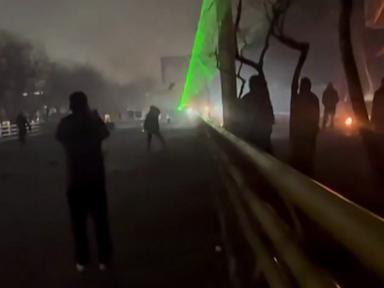
URGENT UPDATE: The death toll from ongoing anti-government protests in Iran has reached a staggering 646 as of Monday, according to the U.S.-based Human Rights Activists News Agency (HRANA). The 16 days of unrest have seen at least 10,721 arrests across 606 locations in 187 cities nationwide, highlighting the escalating violence.
Among the deceased are 505 protesters and nine children, as reported by HRANA, which relies on activists both inside and outside Iran. The Iranian government has not released any official death tolls during these protests, while state-aligned media claim over 100 security personnel have also been killed. HRANA notes that 133 military and security officials are included in the death toll.
In response to the unrest, U.S. President Donald Trump has announced a 25% tariff on any country engaging in business with Iran. “Effective immediately, any country doing business with the Islamic Republic of Iran will pay a Tariff of 25% on any and all business being done with the United States of America,” Trump stated in a social media post. This action is part of a broader strategy, as Trump’s national security team prepares to meet on Tuesday to discuss potential military intervention.
White House Press Secretary Karoline Leavitt indicated that military options remain on the table, stating, “The president is always keeping all of his options on the table.” As protests escalate, the U.S. State Department has advised Americans in Iran to leave immediately, citing increasing security measures and ongoing internet outages. The latest security alert suggests that U.S. citizens consider exiting by land to Armenia or Turkey.
Protests began in late December, initially sparked by economic grievances, including rising inflation and a plummeting national currency, the rial. As unrest intensified, the Iranian government, led by Supreme Leader Ayatollah Ali Khamenei, has deployed security forces using tear gas and live ammunition to disperse crowds. The situation is dire, with online monitoring group NetBlocks reporting a nationwide internet shutdown lasting over 108 hours.
Khamenei and government officials have framed the protests as acts of terrorism driven by foreign influence, particularly from the U.S. and Israel. On Monday, Iranian Foreign Minister Abbas Araghchi labeled the unrest a “terrorist war” in remarks to foreign diplomats, while state television aired footage of pro-government rallies, depicting them as a fight against “American-Zionist terrorism.”
Internationally, dissenting voices are calling for action. Iranian exiled Crown Prince Reza Pahlavi has urged Trump to support the protesters, stating, “I have called the people to the streets to fight for their freedom.” He emphasized the urgency of intervention, declaring, “Time is of the essence.”
As this critical situation unfolds, the world watches closely. The protests in Iran are not just a fight for political freedom but a vivid display of human rights struggles that resonates globally. Stay tuned for updates as this story develops.