URGENT UPDATE: New research reveals that the act of kissing predates modern humans by 21 million years, tracing back to a shared ancestor of humans and large apes. The study, published on November 19 in the journal Evolution and Human Behavior, suggests that kissing may have even occurred between Neanderthals and early humans.
This groundbreaking study sheds light on the origins of kissing, suggesting that it is not merely a human behavior but a trait rooted deep in our evolutionary history. Researchers from the University of Oxford utilized advanced modeling techniques to analyze the evolutionary lineage of kissing behaviors in primates, indicating that kissing may have evolved around 21.5 million to 16.9 million years ago.
The implications of this research are significant. It highlights the complexity of social interactions among our ancestors and raises questions about how kissing may have influenced bonding and reproductive success. According to study lead author Matilda Brindle, this work enhances our understanding of the diverse sexual behaviors exhibited by primates.
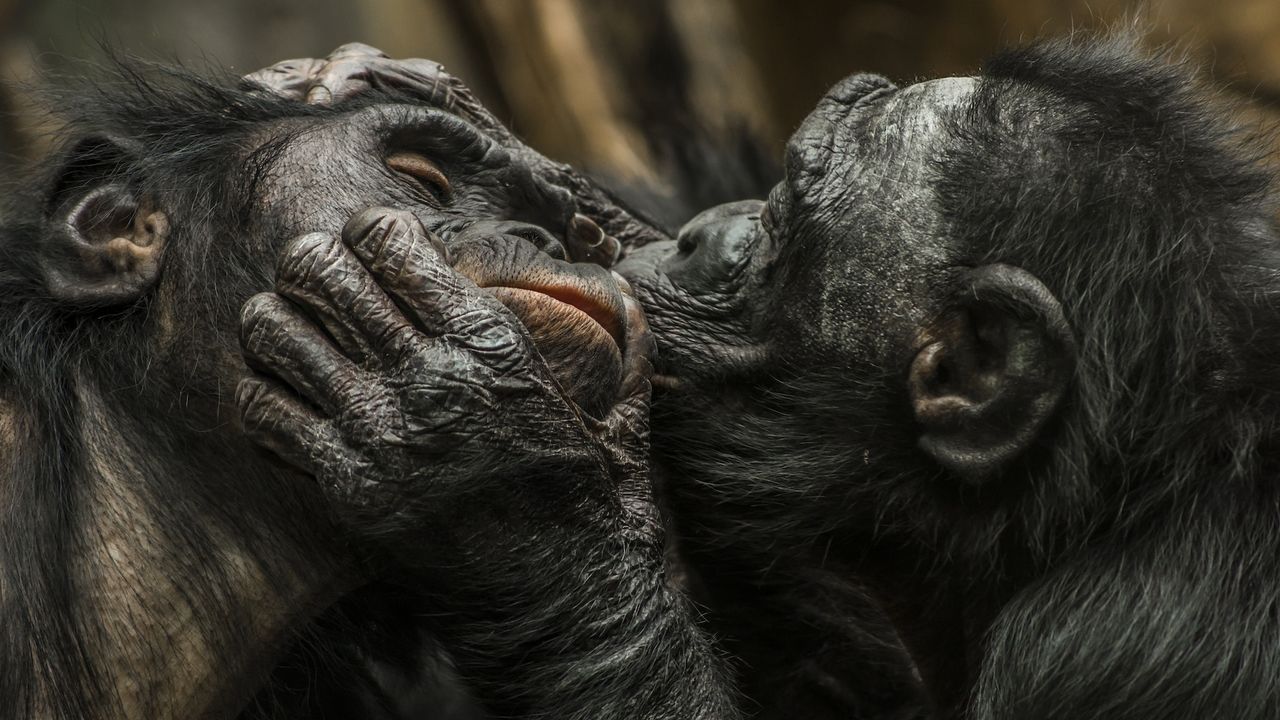
The researchers defined kissing as “non-aggressive, mouth-to-mouth contact that did not involve food transfer.” This definition distinguishes it from other behaviors observed in animals, such as food-sharing among orangutans. By examining modern primate behaviors, including those of bonobos and chimpanzees, the team applied a statistical method called Bayesian modeling to reconstruct the evolutionary history of kissing.
Interestingly, the findings suggest that while kissing is present in several primate species, it may have evolved independently among different groups, such as macaques and baboons. This complexity indicates that kissing’s evolutionary journey is intricate and layered.
Experts note that the idea of Neanderthals kissing modern humans aligns with previous studies. For instance, a 2017 study found microbial similarities in the dental plaque of a Neanderthal and modern humans, hinting at possible intimate contact. Furthermore, anthropologist April Nowell, who was not involved in the current study, remarked that while the new findings may not be entirely revolutionary, they contribute to a growing body of evidence regarding Neanderthal behaviors.
The researchers also speculate on the evolutionary advantages of kissing. It could serve to strengthen social bonds or enhance reproductive prospects by allowing individuals to assess a partner’s health and genetic compatibility through subtle chemical signals exchanged during kissing.
Despite its prevalence across many species, kissing is not universal among modern human cultures, with only about half engaging in the practice. This variability could reflect historical differences among human ancestors as well.
As the study opens new avenues for understanding our shared past with Neanderthals and other primates, it invites further research into the evolutionary significance of kissing. What remains to be explored is how this ancient behavior continues to impact social interactions and relationships today.
With these revelations, the study not only highlights a long-standing human practice but also enriches our understanding of the deep connections we share with our primate relatives. As researchers continue to unravel the complexities of our evolutionary history, the story of kissing remains a fascinating chapter in the narrative of human behavior.