UPDATE: Urgent questions are intensifying in Congress regarding the Trump administration’s strategy and exit plan for the escalating conflict with Iran. Lawmakers are demanding clarity on the costs, risks, and implications for American lives and resources as tensions rise in the Middle East.
Today, Trump officials faced a barrage of inquiries during closed-door briefings at the U.S. Capitol, marking a critical moment in the unfolding situation. The administration is striving to avoid a looming vote on a war powers resolution that would limit President Trump’s ability to continue military actions in Iran, especially amid ongoing operations alongside Israel.
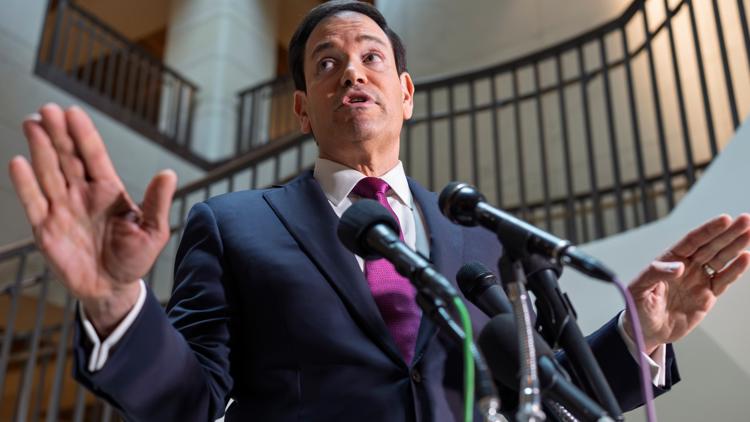
Secretary of State Marco Rubio stated, “The president determined we were not going to get hit first. It’s that simple.” This comes after a weekend decision to launch strikes targeting Iran’s military capabilities, following the death of Ayatollah Ali Khamenei. The conflict has already cost the lives of at least six U.S. military personnel, raising significant alarm among lawmakers.
Congressional leaders are expressing deep concern over the possibility of a prolonged military engagement. Senate Democratic Leader Chuck Schumer warned of “mission creep” as he exited a closed briefing, underscoring the urgent need for clarity from the administration.
During a heated Armed Services Committee hearing, senators challenged Rubio on his claim that Trump acted preemptively due to Israeli pressure. Sen. Angus King (I-ME) remarked, “It’s very disturbing that Trump took the U.S. into the conflict because Prime Minister Benjamin Netanyahu wanted to bomb Iran.”
The administration has indicated that supplemental funding will be needed to sustain the military campaign, coinciding with an increasingly competitive midterm election season that will test Trump’s slim Republican majority in Congress.
Senator Elizabeth Warren (D-MA) questioned how the conflict aligns with Trump’s “America First” promise, as the president has hinted that troop deployment to Iran may not be off the table. “America First and peace through strength are served by rolling back the threats,” countered defense official Elbridge Colby, emphasizing the military’s goal of preventing Iran from obtaining nuclear weapons.
As discussions continue, lawmakers are increasingly wary of the potential for U.S. troops to be deployed in Iran after two decades of conflict in Iraq and Afghanistan. “I am more fearful than ever we may be putting boots on the ground,” cautioned Sen. Richard Blumenthal (D-CT).
Both chambers of Congress are preparing to vote on war powers resolutions that would restrict Trump’s military actions without their approval. “Why are we spending billions of dollars to bomb Iran?” posed House Democratic Leader Hakeem Jeffries, revealing a strong sentiment among Democrats for the resolution.
House Speaker Mike Johnson expressed concern that limiting the president’s powers now, while combat is ongoing, could be detrimental. Lawmakers are also contemplating an Authorization of the Use of Military Force, which would require a formal vote to support military operations against Iran.
The future leadership of Iran remains uncertain following Khamenei’s death, raising fears of a leadership vacuum and unrest. Trump has urged the Iranian people to seize this moment to reclaim their country, acknowledging the risks involved.
As the situation develops, Congress faces a pivotal moment that could redefine U.S. military engagement in the region. Lawmakers are now at a crossroads, balancing national security interests with the constitutional mandate that requires congressional approval for acts of war.
Stay tuned for the latest updates on this urgent and evolving story.