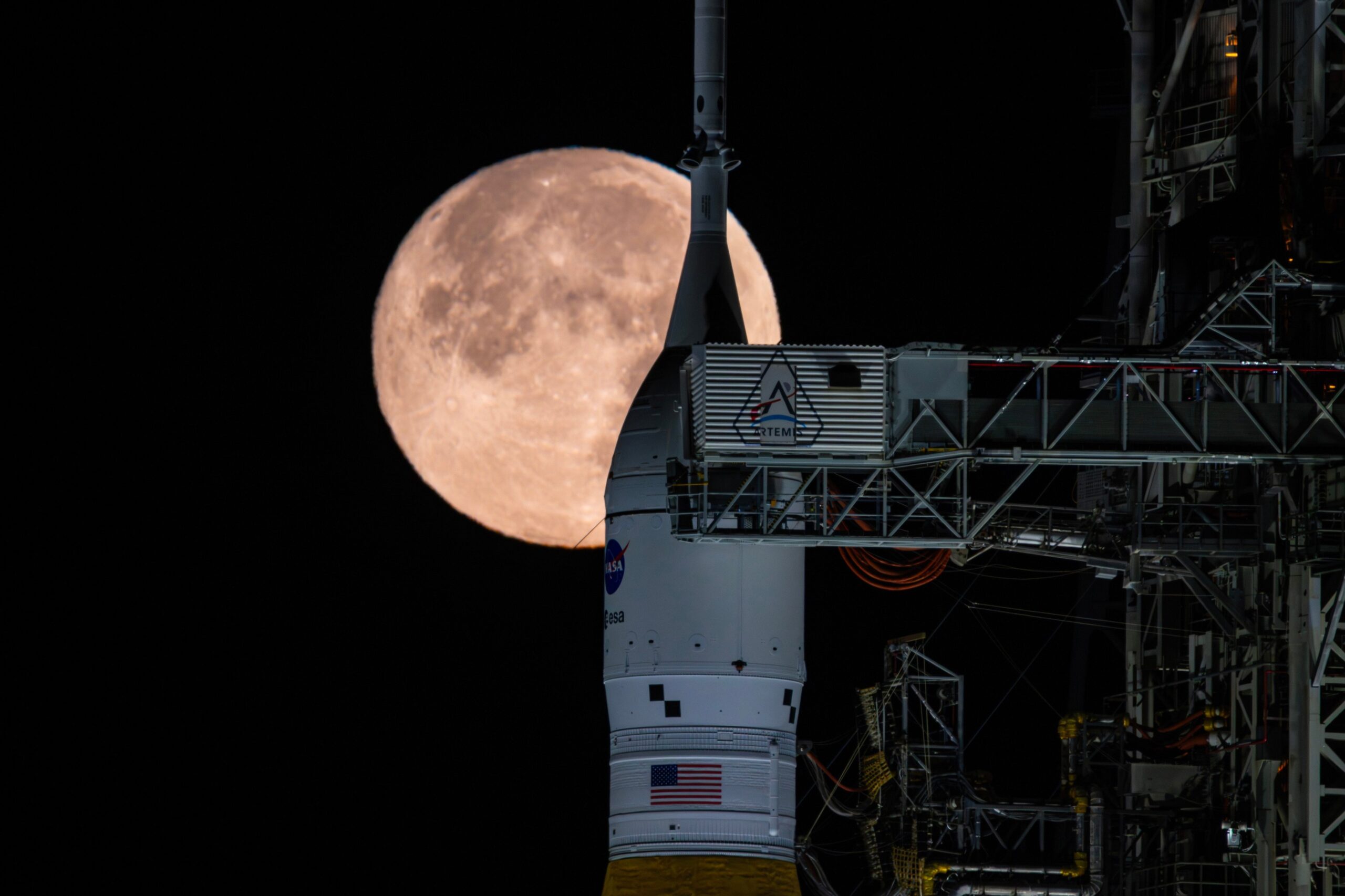
URGENT UPDATE: NASA has officially postponed its much-anticipated moon rocket launch, pushing it back until at least March 6, 2024, due to critical hydrogen fuel leaks that were uncovered during a recent test run. This setback comes just days before what was expected to be the first crewed mission to the moon in over fifty years.
The announcement, made shortly after the fuel test concluded at Kennedy Space Center in Florida, highlights a recurring issue with the Space Launch System (SLS) rocket. Similar hydrogen leaks delayed its debut flight three years ago, causing frustration among agency officials and space enthusiasts alike.
NASA had initially targeted a launch as early as this weekend, but the leaks, which began during the loading operation, halted countdown clocks at just five minutes. “As always, safety remains our top priority,” stated NASA Administrator Jared Isaacman via social media platform X, emphasizing the agency’s commitment to readiness before embarking on this historic mission.
The monthlong delay will provide the launch team with additional time to perform another fueling test to address the leaks before committing the crew. Astronauts Reid Wiseman and his team, including three U.S. members and one Canadian, were given the green light to exit quarantine in Houston, but will re-enter two weeks prior to the next scheduled launch attempt.
NASA’s Artemis program aims to explore new territories, specifically the moon’s south polar region, and prepare for longer stays on the lunar surface. Although this mission will not land on the moon or enter lunar orbit, it is crucial for testing life support systems and other essential capsule functions ahead of future lunar landings planned for the coming years.
With only a limited number of days in each month available for lunar missions, this delay raises questions about the timeline for returning humans to the moon. The last crewed moon landing occurred in 1972, making this upcoming mission a significant milestone in space exploration history.
As NASA works to resolve the issues, space enthusiasts and potential future lunar explorers await further updates. The urgency of this mission, combined with the historical significance of the Artemis program, keeps the world captivated as we approach a new era of space exploration.
Stay tuned for more developments as NASA endeavors to overcome these challenges and prepare for humanity’s next giant leap back to the moon.