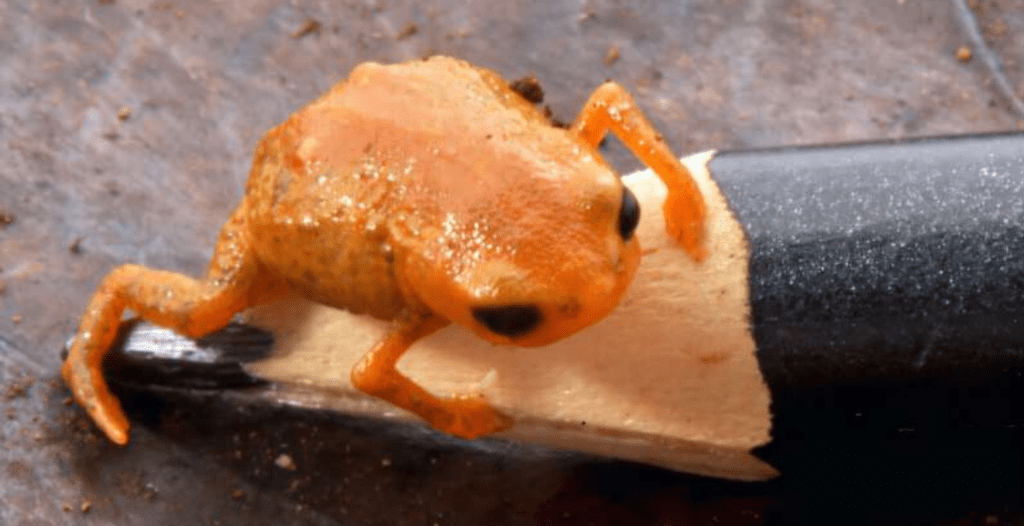
BREAKING: Researchers have just unveiled a new species of pumpkin toadlet in the mountains of southern Brazil, a discovery that could reshape conservation efforts for this unique amphibian. The Brachycephalus lulai, measuring less than a Tic Tac, glows like a traffic cone and thrives in the leaf litter of the Serra do Quiriri range in Santa Catarina at an elevation of over 750 meters (2,460 feet).
This discovery, announced in a PLOS One study, highlights the urgent need for conservation initiatives in Brazil’s increasingly threatened Atlantic rainforest. Researchers have been surveying these mountains for the past seven years, aiming to categorize the region’s vibrant yet vulnerable amphibian population. The tiny toadlet was identified by tracking the distinct mating calls of the males, while the females were collected through more haphazard methods.
The team confirmed that B. lulai represents a unique lineage, not merely a variation of a known species. In a nod to Brazilian President Luiz Inácio Lula da Silva, the species was named to advocate for enhanced conservation support for the rainforest and its inhabitants. This adorable new species is currently classified as “least concern,” but researchers warn that its habitat is under constant threat from activities such as grazing, deforestation, and invasive plant species.
“If researchers miss them, no one will know they ever existed,”
stated lead researcher, highlighting the critical importance of ongoing fieldwork in these remote areas. The study underscores the peril faced by many amphibians, which are among the most threatened vertebrates globally.
As discussions for creating a federal conservation unit for the region intensify, officials emphasize the need for protection measures that do not require the acquisition of private land. The challenges of fieldwork in these mountains are immense, with rugged terrain and limited resources complicating research efforts.
With the discovery of B. lulai, there is renewed hope for amphibian conservation in Brazil. The survival of this and other species hinges on immediate action to protect their habitats from escalating environmental threats.
Stay tuned for more updates on the ongoing research and conservation efforts in Brazil as this story develops. This discovery not only reveals a new species but also serves as a poignant reminder of the fragility of biodiversity in our world today.