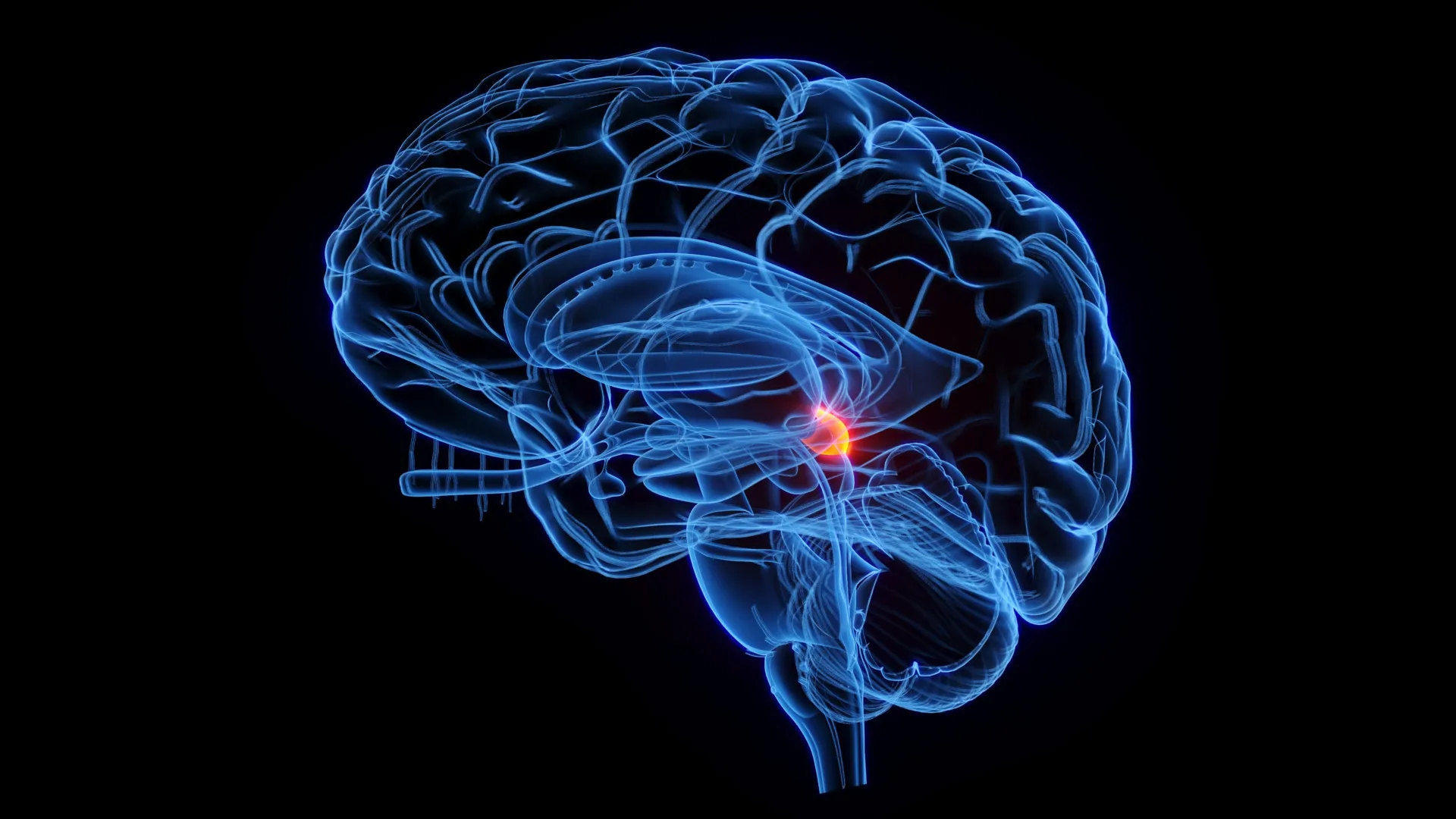
UPDATE: A groundbreaking study published in PLOS Biology confirms that a 500-million-year-old brain region, known as the superior colliculus, plays a crucial role in how we perceive the world. This urgent finding challenges long-standing beliefs that only the cortex is responsible for complex visual processing.
Researchers from the Universidad Miguel Hernandez de Elche and international collaborators have demonstrated that this ancient part of the brain can independently interpret visual information, fundamentally shaping our attention and perception. The implications of this research are significant, impacting our understanding of how we react to visual stimuli in our environment.
The superior colliculus functions like a built-in radar, receiving direct signals from the retina before they reach the cortex. It quickly identifies important visual cues—such as movement or sudden changes—guiding our eyes to focus on what matters most. This mechanism is essential for survival, helping organisms detect threats and navigate their surroundings.
The research team utilized advanced methods, including patterned optogenetics and electrophysiology, to investigate how the superior colliculus operates. They found that it can actively filter visual information, enhancing contrasts while suppressing uniform stimuli. “This demonstrates that the ability to select or prioritize visual information is embedded in the oldest subcortical circuits of the brain,” said Kuisong Song, co-first author of the study.
For decades, scientists believed that complex visual computations were exclusive to the cortex. “We have shown that the superior colliculus, a much older structure in evolutionary terms, can also perform them autonomously,” explained Andreas Kardamakis, head of the Neural Circuits in Vision for Action Laboratory. “This means that the ability to analyze what we see and decide what deserves our attention is not a recent invention of the human brain, but a mechanism that appeared more than half a billion years ago.”
This discovery not only sheds light on how our brains function but also raises questions about attention-related disorders. Understanding how these ancient structures contribute to visual attention could provide insights into conditions like attention deficit disorder or sensory hypersensitivity.
The research team is now expanding their studies to live animal models to explore how the superior colliculus shapes attention and manages distractions during goal-directed activities. This could reveal how visual overload impacts our modern lives and the neurological basis of attention.
The collaboration included notable institutions such as Karolinska Institutet, KTH Royal Institute of Technology, and the Massachusetts Institute of Technology (MIT). The study highlights the evolutionary significance of the superior colliculus, which is found in various species, sharing a common purpose of merging sensory and motor information to guide attention.
“This ancient brain organization, conserved for over 500 million years, became the foundation upon which the cortex later evolved its higher cognitive functions,” Kardamakis stated. “Evolution did not replace these ancient systems; it built upon them. We still rely on the same basic hardware to decide where to look and what to ignore.”
This pivotal research was supported by Spain’s State Research Agency and other institutions, emphasizing the importance of understanding our brain’s evolution and its impacts on modern cognition. As scientists delve deeper into these ancient circuits, they may unlock new strategies for addressing attention-related challenges in our increasingly visually stimulating world.
Stay tuned for more updates on this developing story as researchers continue to uncover how our brains process and react to the visual world.