The U.S. Air Force has announced a renewed timeline for the troubled Sentinel intercontinental ballistic missile (ICBM) program, aiming to deliver the initial missile by the early 2030s. This announcement, made by Pentagon officials on Tuesday, highlights significant progress in the program after a series of challenges that previously placed it over budget.
By the end of this year, the Sentinel program is set to reach a key milestone. In 2024, the Northrop Grumman-led initiative faced severe financial overruns, prompting the Pentagon to reverse its decision to advance the program into the engineering and manufacturing development phase. Program officials are optimistic about re-entering this phase by mid-2027, following a series of successful milestones over the past 12-18 months.
Progress and Strategic Oversight
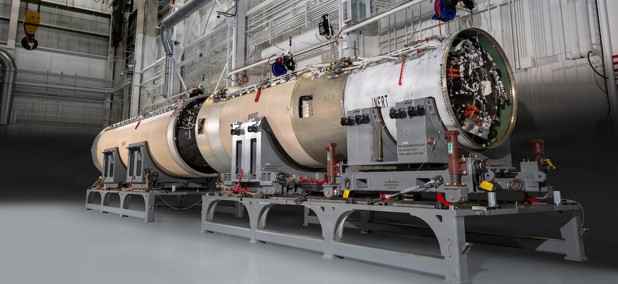
The Air Force pointed to successful ground tests, solid rocket motor qualifications, and critical design reviews as crucial developments since the program triggered a Nunn-McCurdy Act review in March 2024. The establishment of a new direct reporting portfolio manager, a role recently filled by Gen. Dale White, is expected to enhance oversight of major weapon systems, including the Sentinel. This role allows for quicker decision-making, addressing trade-offs effectively and ensuring alignment with mission priorities set by the Secretary of War and the Secretary of the Air Force.
White stated, “The DRPM has the direct authority to make decisions…that allows us to resolve trade-offs quickly and move with the speed required to deliver credible deterrence—while preserving the discipline this mission demands.” This shift in oversight structure has sparked discussions regarding confidence in the Air Force’s ability to manage its acquisition programs effectively.
According to defense budget expert Todd Harrison from the American Enterprise Institute, the new role signals a lack of confidence in the Air Force’s execution of its primary acquisition programs. He noted, “A lot of these processes it doesn’t seem like are going to apply to these too-big-to-fail programs. Sentinel is definitely one of those, because we don’t have an alternative. We don’t have a fallback.”
Infrastructure Developments and Future Plans
Construction is already underway for three new command and control centers at F.E. Warren Air Force Base in Wyoming, as well as test facilities at Vandenberg Space Force Base in California. This month, teams are set to break ground on a prototype launch silo at Northrop Grumman’s site in Promontory, Utah. This facility will allow engineers to test modern construction techniques and validate the new silo design before full-scale work begins in the missile fields. Prototyping activities at F.E. Warren this summer will further validate construction methods being used for utility corridors.
Plans are in place for the first missile pad launch of the Sentinel program in 2027. Navy Adm. Richard Correll, head of U.S. Strategic Command, emphasized the importance of the program, stating, “The deliberate progress being made on Sentinel ensures that for decades to come, there will be no doubt in the minds of our adversaries about the credibility and readiness of our nation’s nuclear deterrent. That is the ultimate deliverable.”
The renewed focus on the Sentinel program reflects the Pentagon’s commitment to modernizing the land-based component of the U.S. nuclear triad, ensuring the country maintains a robust deterrent capability in an evolving global security landscape.