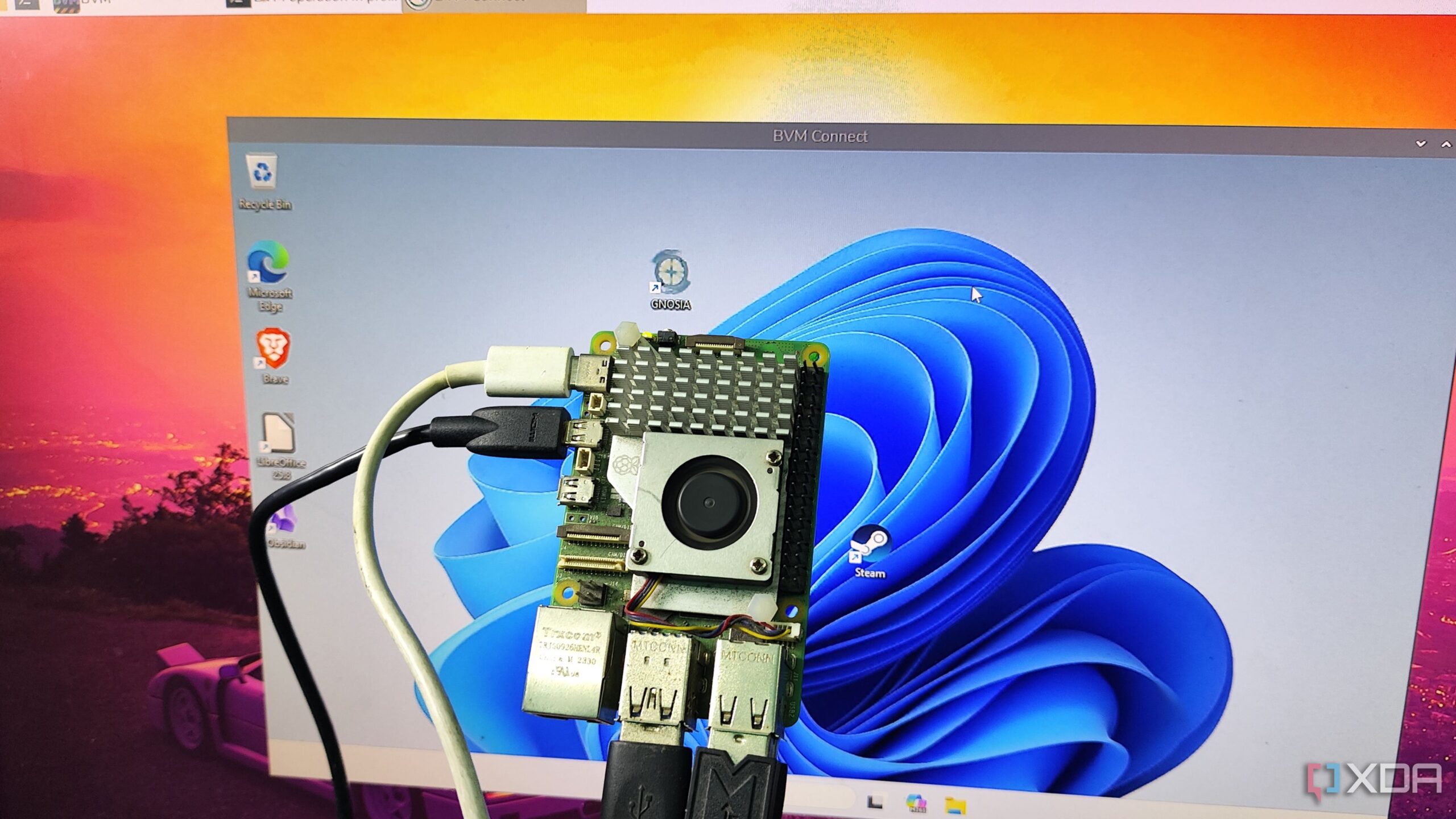
UPDATE: Tech enthusiasts can now run Windows 11 virtual machines on a Raspberry Pi, marking a significant breakthrough in DIY computing. This innovative development comes as users explore the potential of the 8GB Raspberry Pi for demanding applications, including virtualization.
In a surprising turn of events, a user successfully deployed virtual machines (VMs) on a Raspberry Pi, overcoming previous limitations associated with the device’s computational power. Traditionally, Raspberry Pi models have struggled with resource-heavy tasks, but the latest findings reveal that this small board can effectively handle VMs when configured correctly.
The Raspberry Pi community has long been known for its creativity, and this breakthrough is no exception. Utilizing Canonical’s MicroCloud and the Botspot VM, users can now run lightweight Linux-based VMs and even Windows 11, expanding the possibilities for developers and hobbyists alike.
Reports indicate that installing Ubuntu Server on the Raspberry Pi was seamless, allowing for the effective launch of Canonical’s virtualization platform. While earlier attempts to run Proxmox on Raspberry Pi were met with compatibility issues, the recent success shows the power of the latest software developments.
Deploying VMs on the Raspberry Pi opens up new avenues for experimentation. Users can run up to four virtual machines simultaneously without performance degradation, provided memory resources are managed properly. This scalability is particularly significant for developers who require lightweight environments for testing and development.
The potential to run Windows 11 on a Raspberry Pi is particularly noteworthy. Using the Botspot VM, users can configure a Windows 11 instance, which allows for familiar application usage on a compact device. While performance may dip at higher resolutions, switching to a 1080p display restores functionality, making it a feasible option for various tasks.
Many in the tech community are excited about this development, viewing it as an opportunity to experiment with PowerShell scripts and minor programming projects directly from a Raspberry Pi.
However, experts recommend that while running VMs on a Raspberry Pi is viable, containers remain the preferred choice for most applications. Technologies like Docker and Kubernetes function seamlessly on Raspberry Pi, enabling users to leverage the device’s full potential without the overhead of traditional VMs.
This breakthrough not only highlights the versatility of the Raspberry Pi but also showcases the ongoing innovation within the tech community. As more users experiment with this setup, we can expect further advancements and optimizations to emerge.
For those eager to dive into this exciting development, resources and guides are readily available online, making it easier than ever to explore the world of virtualization on Raspberry Pi.
Stay tuned for more updates as the community shares their experiences and findings with this pioneering technology.