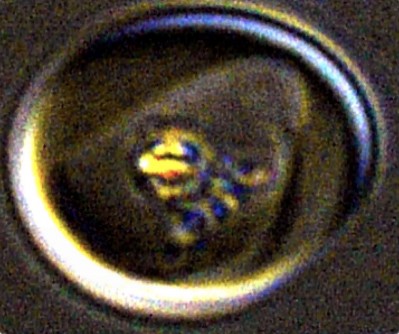
BREAKING: Scientists have made a groundbreaking discovery about the deadly *Plasmodium falciparum* malaria parasite. New research reveals that the parasite’s tiny iron crystals, which have baffled experts for decades, spin due to a process akin to rocket propulsion. This could revolutionize malaria treatments and inspire the next generation of nanotechnology.
In a study published in *PNAS* on October 15, 2023, a team led by Paul Sigala, PhD, at the University of Utah, confirmed that the motion of these crystals is powered by the breakdown of hydrogen peroxide, a chemical reaction responsible for launching rockets into space. The implications of this discovery are immense—potentially leading to new malaria therapies and innovative nanorobots.
As the *Plasmodium falciparum* parasite thrives, its microscopic iron crystals dance chaotically, moving like “change in an overclocked washing machine.” These movements cease only when the parasite dies, indicating a vital role in its survival. Sigala notes, “People don’t talk about what they don’t understand… it’s been a blind spot for parasitology for decades.”
The research team found that hydrogen peroxide, a waste product of the parasite, builds up in the compartment housing the iron crystals. As the crystals encounter this toxic substance, they spin into motion, a phenomenon previously unseen in biological systems. Postdoctoral fellow Erica Hastings, PhD, highlighted that while hydrogen peroxide decomposition powers large-scale rockets, it has never before been observed in living organisms.
This discovery could lead to a deeper understanding of malaria’s mechanisms. The frenetic spinning of the crystals may help the parasite eliminate excess toxic peroxide or manage the storage of iron compounds. Sigala explains, “The spinning motion might also help the parasite quickly deal with excess heme by preventing crystal clumping, which could hinder its metabolism.”
The potential applications extend beyond treating malaria. The findings could inspire designs for self-propelling nanoparticles, with applications in drug delivery and industrial processes. Sigala emphasizes, “Nano-engineered self-propelling particles can be used for a variety of industrial and drug delivery applications, and we think there are potential insights that will come from these results.”
Moreover, the research opens the door to novel antimalarial drugs targeting this unique mechanism. “If we can block the chemistry at the crystal surface, that alone might be sufficient to kill parasites,” Sigala asserts. By focusing on such parasite-specific mechanisms, new treatments could minimize harmful side effects in humans.
The research was supported by the National Institutes of Health and other grants, illustrating the collaborative effort behind this significant breakthrough. As scientists delve deeper into the mysteries of malaria, they are not only addressing a critical global health issue but also paving the way for innovations that could save countless lives.
Stay tuned for further updates on how these findings might transform malaria treatments and nanotechnology. The implications are vast, and the scientific community is abuzz with excitement over the potential to combat one of the world’s deadliest diseases.