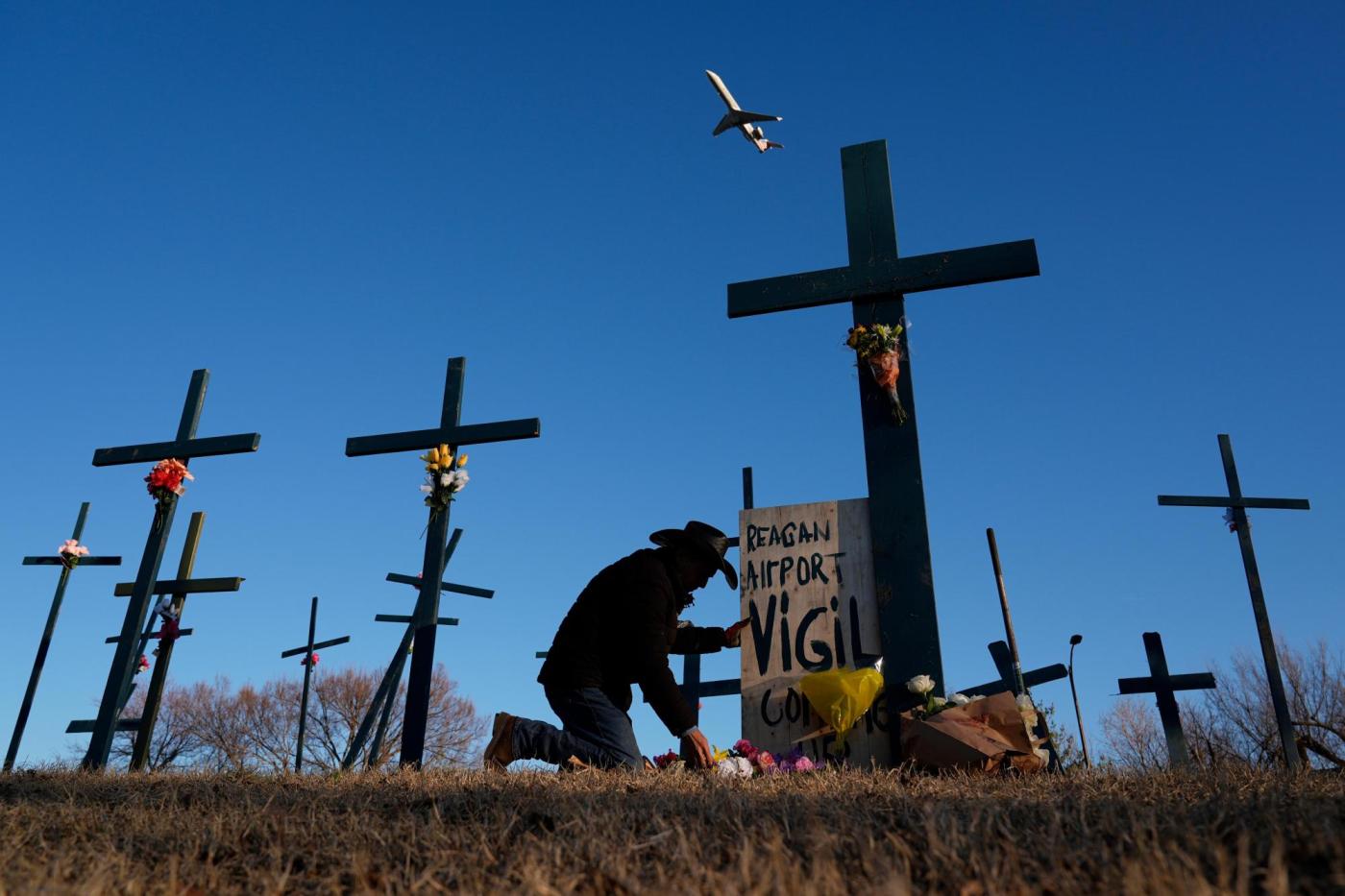
URGENT UPDATE: Senators from both parties are demanding immediate changes to a significant defense bill following alarming warnings from crash investigators and victims’ families that the legislation could reverse critical safety reforms. The bill, passed by the House on Wednesday, would allow military helicopters to operate in high-traffic airspace around Washington, D.C., essentially as they did before a tragic collision in January that resulted in 67 fatalities.
The head of the National Transportation Safety Board (NTSB), along with family members of the victims, have voiced strong opposition, stating that the proposed legislation threatens to make America’s skies less safe. Democratic Senator Maria Cantwell and Republican Senator Ted Cruz are advocating for amendments to eliminate provisions that would exempt military helicopters from using the Automatic Dependent Surveillance–Broadcast (ADS-B) system, a key safety requirement that was implemented by the Federal Aviation Administration (FAA) in March.
“This bill represents a significant safety setback,” said NTSB Chairwoman Jennifer Homendy, emphasizing the pressing need for genuine safety improvements rather than loopholes for the Department of Defense. “It poses an unacceptable risk to the flying public, as well as to military and commercial aircraft.”
Currently, the legislation permits military aircraft to bypass the ADS-B requirement, which is crucial for broadcasting their locations in crowded airspace, mirroring practices from before the fatal crash. Homendy criticized the bill as a “shameful” dismissal of the investigation into the incident and the families of the victims, highlighting the potential for a repeat disaster.
Victims’ families, including Tim and Sheri Lilley, whose son was the first officer on the American Airlines flight involved in the crash, expressed their outrage. They stated that the proposed changes only offer “window dressing” while continuing to allow the military to sidestep essential safety protocols.
The bill’s implications extend beyond mere regulations; it raises questions about the military’s ability to assess safety risks effectively. Homendy pointed out that neither the Army nor the FAA noticed numerous close calls at Ronald Reagan National Airport leading up to the crash, proving a critical failure in oversight.
As the Senate prepares to discuss the bill next week, the timeline is tight. Congress is set to adjourn for the holiday break, and passing the National Defense Authorization Act by the end of the year is deemed essential. However, it remains unclear if any amendments will be allowed. Senate Majority Leader John Thune has not yet responded to inquiries about potential changes.
The White House has not addressed these safety concerns directly, but President Trump has indicated his desire to sign the defense bill, which includes a 3.8% pay raise for military personnel and aligns with several of his priorities.
As this situation develops, attention is focused on whether Senators will succeed in making necessary amendments to ensure the safety of American airspace and honor the memories of those lost in the January tragedy. Readers are urged to stay tuned for updates as the Senate reviews this critical legislation.