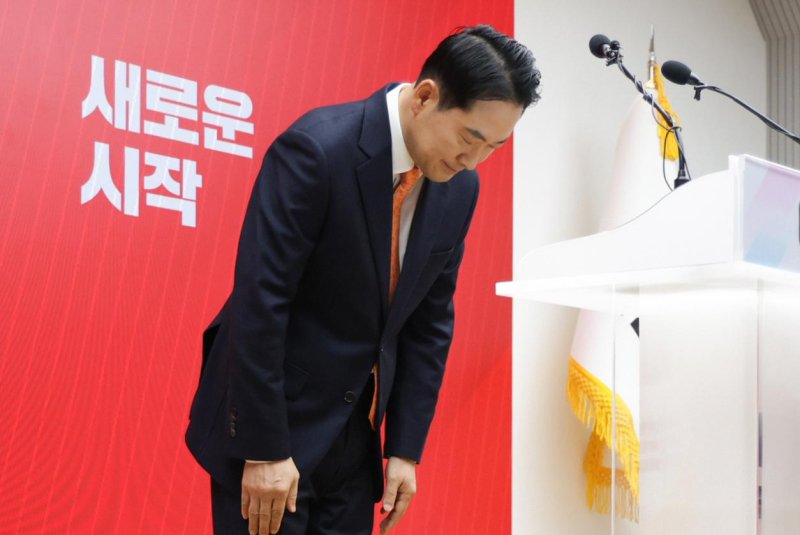
UPDATE: In a stunning apology, the leader of South Korea’s main opposition, the People Power Party (PPP), has distanced the party from former President Yoon Suk Yeol following his controversial declaration of martial law last year. During a press conference held today, January 7, 2025, at party headquarters in Seoul, Chairman Jang Dong-hyeok expressed regret over the December 3, 2024 incident, marking a significant shift for the party as it prepares for upcoming local elections.
Jang’s apology comes as Yoon faces serious legal challenges, including trial on insurrection charges. He labeled the martial law declaration as a “wrongful measure” that caused “great confusion” among the public and “deep wounds” within the party. “We bear a heavy responsibility for this episode,” Jang stated, acknowledging the party’s failure to uphold democratic values.
In a move to regain public trust, Jang introduced the “Change to Win” initiative, aimed at revitalizing the party ahead of the critical local elections scheduled for June 1, 2025. The plan emphasizes youth involvement and expert policymaking, with proposals for mandatory youth nominations and new platforms to attract outside policy experts. Jang’s push for reform signifies a desperate attempt to reestablish the PPP as a formidable contender against the ruling administration of President Lee Jae Myung.
Jang made it clear that the PPP is willing to collaborate with other opposition parties to challenge the current regime. “If they agree with the values of liberal democracy and share the will to stop the dictatorship of the Lee Jae Myung regime, we will open our hearts and join forces with anyone,” he declared, indicating a significant potential shift in South Korean political dynamics.
The backdrop of this political upheaval includes accusations against Lee’s government for overreach, with conservatives claiming that legislative dominance has sidelined the opposition. Jang emphasized that the PPP would not shy away from internal reforms, including stricter anti-corruption measures and centralized oversight of candidate nominations.
As South Korea navigates this turbulent political landscape, the implications of Jang’s apology and the PPP’s reform strategy are profound. “We will cross the river of martial law and impeachment and move toward the future,” he concluded, urging the party to focus on rebuilding public confidence.
This urgent update highlights not only the immediate repercussions for the People Power Party but also sets the stage for a potentially transformative period in South Korean politics as the nation approaches its local elections.