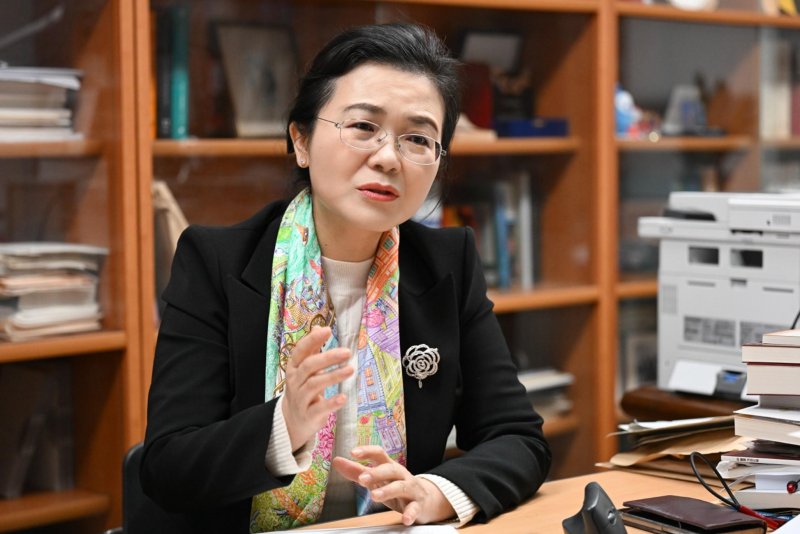
UPDATE: A renowned law professor from Korea University, Cha Jin-ah, has issued an urgent warning regarding a controversial package of judicial reform bills backed by South Korea’s ruling party. These reforms, she argues, could severely undermine judicial independence and threaten the separation of powers, stating emphatically, “unchecked power leads to dictatorship.”
The reforms, proposed on December 17, 2023, include expanding the number of Supreme Court justices, introducing a court petition system, and establishing a special court for treason. As the ruling party pushes for swift passage of multiple bills, concerns are mounting about the political motives behind these changes.
In an exclusive interview conducted earlier today, Cha expressed conditional support for certain reforms, such as a modest increase in the number of Supreme Court justices, suggesting that adding four justices is a reasonable step. However, she firmly opposed the proposed increase of twelve, warning, “Replacing that many people at once becomes a blatant political appointment.”
The proposed court petition system has also raised alarms. Cha criticized it as “too naive,” questioning how the Constitutional Court would manage a flood of petitions related to alleged due process violations. She highlighted the risk that every controversial prosecution decision could become a target for review, overwhelming the court’s capacity.
Cha further scrutinized the calls for a special court for treason and the introduction of a crime for “distorting the law.” She described the latter as “barbaric,” drawing parallels to Germany’s historical context during the Nazi regime, noting that such laws could be weaponized against judges and prosecutors. “If adopted here, it will be exploited endlessly, dragging out cases,” she warned, emphasizing the potential for immense political pressure on officials to conform to the ruling party’s agenda.
Moreover, Cha voiced strong opposition to the proposal to abolish the court administration office, arguing that stripping judicial administrative authority from the courts contradicts constitutional principles. “Judicial power includes not only adjudication but also judicial administration,” she stated, highlighting the inherent risks of reducing the checks and balances essential to democracy.
With the ruling party holding a majority, the question looms: what can halt these sweeping reforms? Cha insists that public opinion is the only force capable of stopping a legislative rush. “Winning an election does not mean everything the ruling party does equals the people’s will,” she cautioned, urging citizens to remain vigilant and engaged beyond election day.
As these developments unfold, the implications for South Korea’s democracy and judicial integrity are profound. Observers are keenly watching how public sentiment and opposition actions may shape the future of these proposed reforms.
The urgency of this situation cannot be overstated. Citizens and officials alike must grapple with the potential erosion of judicial independence in South Korea. As the narrative develops, it is critical for the public to stay informed and vocal about the direction of their nation’s governance.