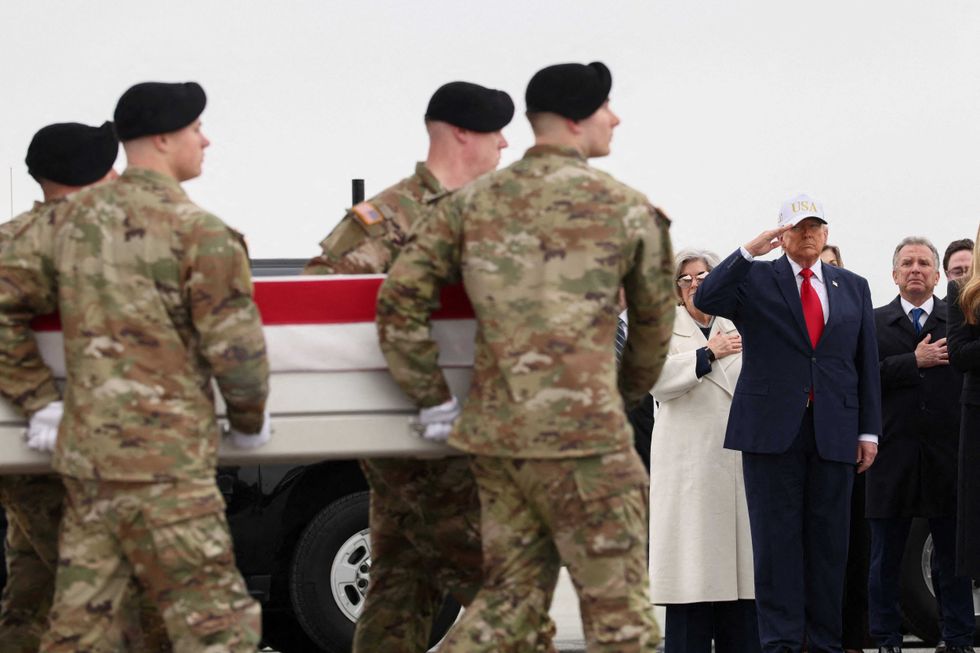
A recent fundraising email from Donald Trump‘s political action committee has ignited significant backlash due to its use of a solemn image from a dignified transfer ceremony honoring six fallen U.S. soldiers. The email, sent by Never Surrender, Inc., featured a photograph taken at Dover Air Force Base during the transfer on October 28, 2023. This moment was intended to honor the service members, but critics argue that it was exploited for political gain.
The email promoted a “National Security Briefing Membership” and encouraged recipients to “claim your spot” to join an exclusive group receiving updates on national security threats. It promised members access to “private national security briefings” and “unfiltered updates” regarding various perceived dangers, including border security and foreign adversaries. The message blended patriotic imagery with aggressive fundraising tactics, featuring Trump saluting next to a flag-draped transfer case.
Critics have been quick to condemn the email. Gavin Newsom, the Governor of California, called it “despicable,” asserting that Trump is “fundraising off of dead soldiers.” He described Trump as a “deeply sick and disgusting man!”
Additional voices of dissent included Senator Andy Kim from New Jersey, who questioned whether the briefings would adequately address foreign policy issues. He remarked, “I hope the donors’ national security briefing doesn’t skip the ‘Iran will close the Strait of Hormuz’ section that Trump and Hegseth missed.”
Toronto Star columnist Bruce Arthur expressed his disdain on social media, suggesting that Trump’s actions were akin to selling state secrets for profit. He stated, “I have long said he would eventually sell state secrets off the back of a truck, and I think this basically qualifies.”
Former Republican and U.S. veteran John Jackson criticized the fundraising approach, comparing it to a deceptive lottery scheme. He wrote, “Trump, being the fraudster that he is, has now combined publishers clearing house fake checks with the accoutrements of the presidency.”
Additionally, Representative Mike Quigley from Illinois pointed out the timing of the email, noting that six U.S. servicemembers had recently died in Iran. He stated, “Instead of honoring them, the President is profiting off their deaths,” underscoring a perceived lack of respect for those in uniform.
The email’s content raised serious ethical questions about the use of military imagery in political fundraising. Many individuals who have served in the military or have connections to the armed forces expressed their discontent, emphasizing the need for respect and honor in the remembrance of those who have made the ultimate sacrifice.
This incident highlights the ongoing tensions in the political landscape as figures like Trump continue to navigate the complex relationship between military service, patriotism, and political fundraising. As reactions continue to unfold, it remains to be seen how this controversy will influence Trump’s support among his base and the wider electorate.