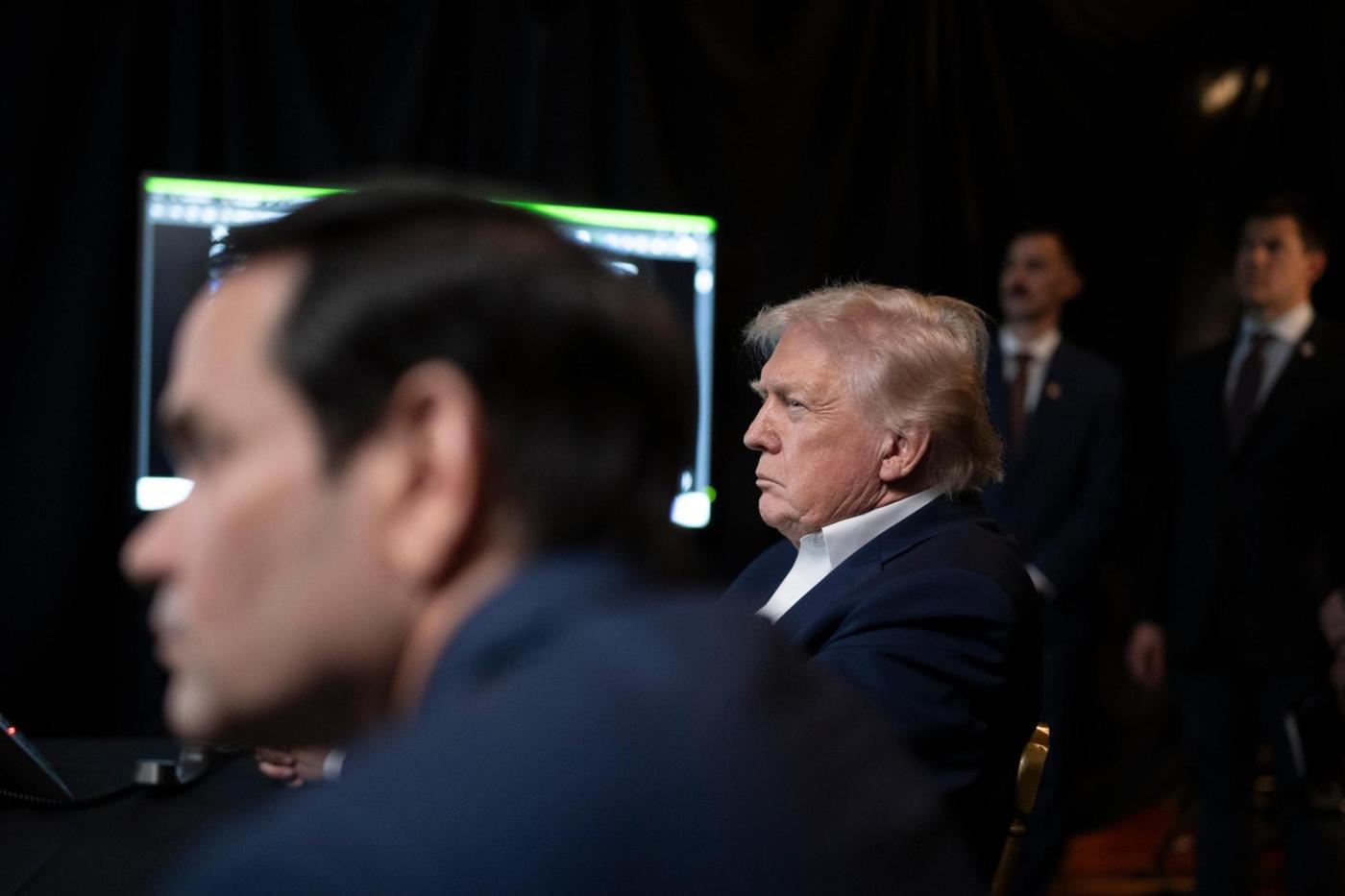
BREAKING: Former President Donald Trump has officially redefined American foreign policy with a new corollary to the historic Monroe Doctrine, targeting Venezuela and reshaping the U.S. stance in Latin America. This announcement is drawing immediate attention as it echoes the assertiveness of Theodore Roosevelt’s policies from the early 20th century.
The Trump administration asserts its right to intervene in the hemisphere, stating the U.S. will act “when local governments fail to keep hostile influences in check, to prevent migrant surges, or to curb drug cartels.” This development, highlighted in a recent Wall Street Journal column by Walter R. Mead, marks a significant escalation in U.S. involvement in regional affairs, raising questions about its implications for diplomatic relations.
Historically, the Monroe Doctrine, first articulated in 1823, served as a protective measure for newly independent Latin American nations against European colonization. The doctrine was born out of fears that European powers would attempt to reclaim territories liberated from Spanish and Portuguese rule. James Monroe and his contemporaries understood the necessity of safeguarding these newly formed republics, leading to a unilateral declaration that the Western Hemisphere was “not to be considered for future colonization” by any European powers.
Yet, the doctrine’s enforcement has often relied on military might and foreign policy shifts. Over the years, presidents have invoked or adjusted its tenets—from James K. Polk‘s interventions in the 1840s to John F. Kennedy’s actions during the 1962 Cuban Missile Crisis. Most recently, John Kerry declared the Monroe Doctrine “dead” in 2013, suggesting a shift in U.S. priorities. However, Trump’s renewed focus on the doctrine suggests that its influence may still be potent in shaping U.S. engagement with Latin America.
The implications of this revived doctrine are profound. As the U.S. grapples with the growing influence of China in the region, Trump’s approach signals a potential return to more militaristic foreign policy strategies, reminiscent of Roosevelt’s “Big Stick” diplomacy. This could lead to heightened tensions and increased military presence in Latin America, raising concerns about the potential for conflict.
Observers note that the revival of the Monroe Doctrine, particularly in its latest form, reflects the ongoing political oscillation surrounding U.S. foreign policy. John J. Tierney Jr. from the Institute of World Politics has characterized the doctrine as a “paper pledge,” but its historical significance cannot be understated. The U.S. has frequently oscillated between diplomacy and military intervention, raising critical questions about the future of its role in the region.
With Trump’s administration asserting this right to intervene, the focus now shifts to the next steps. What measures will the U.S. take in Venezuela, and how will Latin American nations respond? As this situation unfolds, it is clear that the Monroe Doctrine remains a pivotal element of U.S. foreign policy, ready to be wielded by leaders who seek to assert American influence in the hemisphere.
As developments continue to emerge, the global community watches closely. The revival of a centuries-old policy in the context of modern geopolitics highlights the ever-evolving nature of international relations and its direct impact on millions in Latin America. Expect further updates as this story develops.