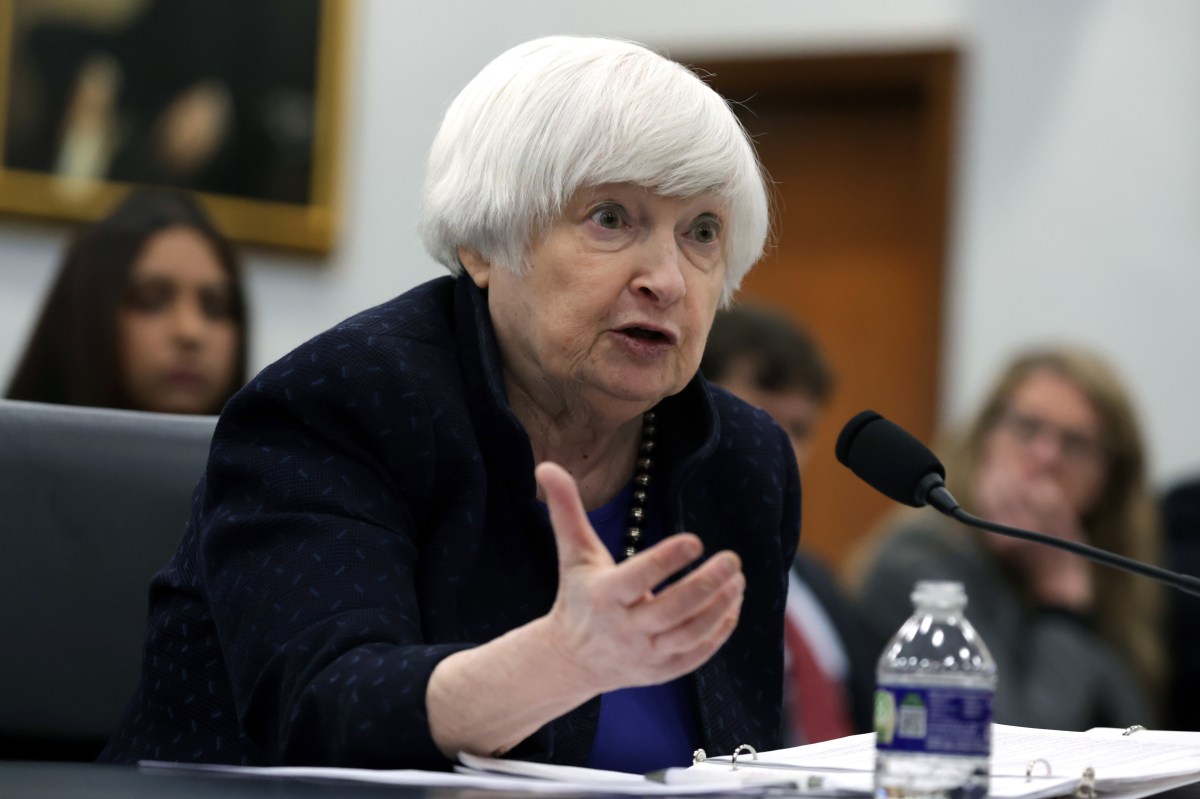
UPDATE: Former Treasury Secretary Janet Yellen has issued a stark warning that the recent tax exemption granted to U.S. corporations by the Trump administration could significantly worsen the nation’s fiscal deficit. This urgent development follows the OECD’s announcement on Monday, which finalized a plan for a 15 percent global minimum tax affecting 147 countries, while controversially exempting U.S. multinationals.
Yellen, speaking exclusively to Newsweek, emphasized that this exemption not only jeopardizes U.S. tax revenue but also undermines efforts to address the country’s growing fiscal challenges. “This exemption sacrifices significant tax revenue,” she stated, highlighting the detrimental impact on the nation’s ability to manage its deficit.
The OECD’s agreement aims to discourage tax avoidance among large corporations and curb a “race to the bottom” in global taxation. However, the U.S. exemption has drawn sharp criticism from tax transparency advocates who argue it will diminish the effectiveness of the global tax framework. As Yellen pointed out, U.S. firms represent nearly half of all global multinational profits, making their exclusion from the agreement particularly problematic.
The OECD’s announcement marks a significant shift from the earlier commitments made under President Joe Biden and Yellen, who had sought a unified approach to multinational taxation. The 2021 agreement had the support of over 130 nations, pushing for a minimum tax rate and requiring companies to pay taxes where they operate. Yellen had hailed this as a “once-in-a-generation accomplishment,” aiming to create a level playing field.
However, the current landscape reflects a stark contrast, as the Trump administration successfully renegotiated terms, leading to U.S. companies being exempted from the minimum tax. Critics, including Attiya Waris, a U.N. expert on foreign debt, argue that this exemption reflects a broader reluctance from the U.S. to engage in meaningful global tax cooperation.
In response to the OECD’s exemption, Alex Cobham from the Tax Justice Network warned that countries like France, Germany, and the UK are already losing billions annually due to tax evasion by U.S. firms. He highlighted that bending to U.S. demands will cost these nations even more, undermining their tax bases and fiscal health.
The urgency of the situation is underscored by Yellen’s assertion that the agreement’s effectiveness may be weakened further, prompting nations to reconsider their commitments to global minimum taxation. “Multilateral tax systems thrive only when major players participate in good faith,” she stated, drawing attention to the risk of a fragmented tax landscape.
Moving forward, the OECD has committed to providing more details on the agreement’s implementation in the coming weeks. Scott Bessent, Treasury Secretary, asserted that the U.S. would continue to engage with international partners to ensure the arrangement’s stability, but skepticism remains high among experts.
As the implications of this development unfold, the potential to exacerbate the U.S. deficit raises urgent questions about the future of global tax policy and economic diplomacy. The global community watches closely as the U.S. navigates its path amid mounting international criticism and economic responsibilities.
Stay tuned for updates as this story develops further.