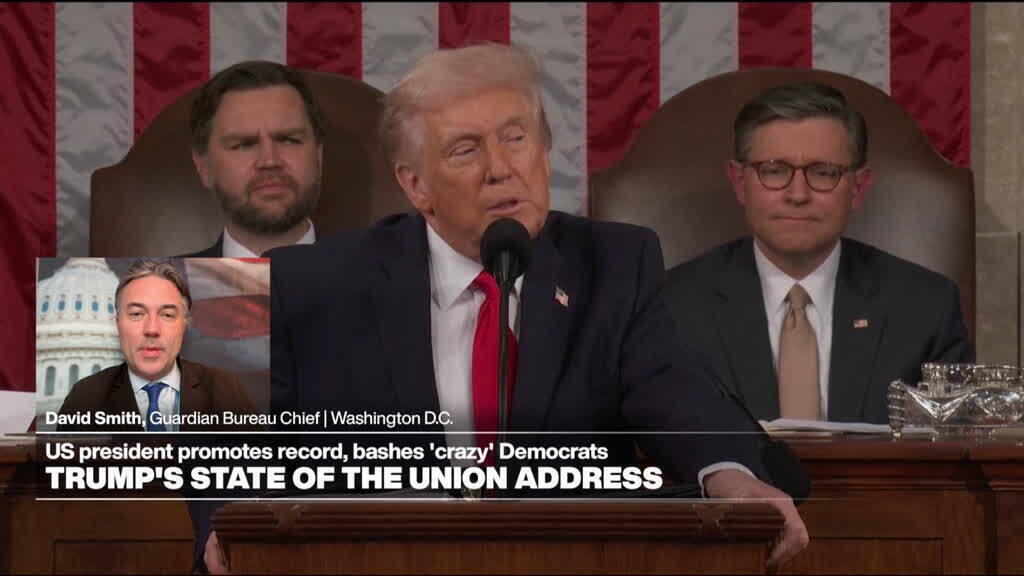
BREAKING: President Donald Trump delivered a highly contentious State of the Union address on January 24, 2026, showcasing the deep divisions within U.S. politics. This address, now the longest in history, focused heavily on immigration, resonating with his base but igniting fierce backlash from Democrats.
During the speech, Trump made little effort to appeal to the opposition party, a move that led to vocal disapproval from the Democratic side of the chamber. David Smith, the Washington D.C. bureau chief for The Guardian, remarked on FRANCE 24 that Trump’s rhetoric was designed to rally his supporters rather than bridge gaps with Democrats.
The speech was marked by moments of tension, with heckling erupting from Democratic lawmakers as Trump pressed his “red meat” issues. This approach highlights the stark polarization in Congress, drawing sharp contrasts between the parties. As the nation approaches the 2026 elections, the implications of such divisive dialogue could be significant.
Why This Matters NOW: With the political landscape increasingly fractured, Trump’s address serves as a reminder of the challenges facing bipartisan cooperation. The lack of outreach to Democrats signals a potential escalation in partisan conflict as lawmakers prepare to tackle pressing issues like immigration reform and economic policies.
In the weeks leading up to the address, public opinion polls indicated that many Americans are seeking unity and collaborative solutions. However, Trump’s focus on incendiary topics may further alienate an already divided electorate.
What’s Next: As reactions to the State of the Union unfold, all eyes will be on Congress to see how legislators respond. The upcoming legislative sessions could be marked by heightened tensions, with key debates on immigration and budgetary matters likely to incite further conflict.
Stay tuned for updates as this story develops, and watch how Trump’s divisive strategy influences the political climate in the lead-up to the midterm elections.