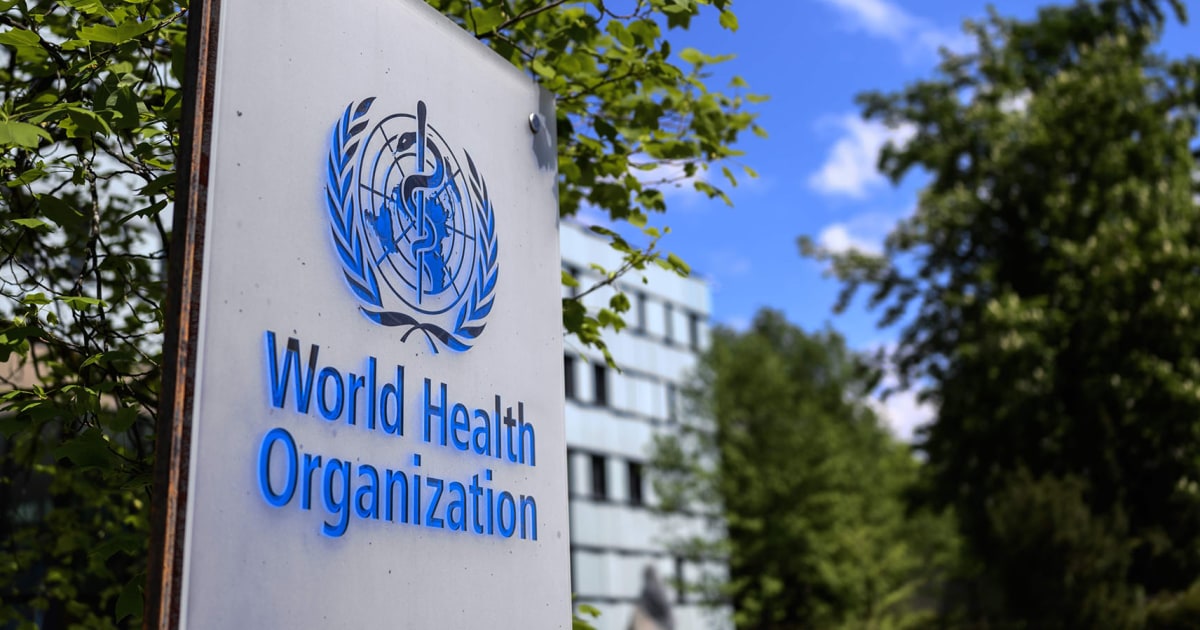
UPDATE: The United States has officially terminated its partnership with the World Health Organization (WHO), raising urgent concerns about flu surveillance as the nation grapples with a severe flu season. This shocking announcement came from Department of Health and Human Services (HHS) officials just hours ago.
In a call with reporters, officials revealed that the U.S. will no longer collaborate with WHO, opting instead to form direct partnerships with other nations and private organizations. “The U.S. will continue to lead on global health, but it will not be done through the WHO,” stated an HHS official, although they declined to speak on the record. This shift raises pressing questions about the adequacy of these new partnerships for monitoring emerging diseases.
Experts warn that cutting ties with WHO could create dangerous gaps in disease surveillance, particularly concerning the flu, one of the deadliest illnesses in the U.S. During an especially nasty flu season, the Centers for Disease Control and Prevention (CDC) reports that approximately 18 million Americans have fallen ill, with nearly 10,000 deaths, including 32 children, this year alone.
“This is an act of monumental stupidity,” said Jesse Bump, a global public health expert at the Harvard T.H. Chan School of Public Health. He emphasized the significance of WHO’s expansive network of 127 laboratories worldwide, crucial for detecting and sequencing flu strains. “We no longer have access. We don’t have that library card,” Bump added, highlighting the urgent implications of this decision.
The implications are particularly critical as WHO prepares for its annual meeting on February 27, 2025, to discuss which flu strains to include in upcoming vaccines. Historically, the U.S. has played a pivotal role in this meeting, and officials have yet to confirm whether the U.S. will participate this year.
Dr. Judd Walson, chair of international health at the Johns Hopkins Bloomberg School of Public Health, warned that the absence of a unifying body like WHO complicates international comparisons of infectious diseases. “It’s impossible to make those comparisons,” Walson noted, stressing the importance of collaborative surveillance, especially for emerging strains such as the H3N2 subclade K strain, which has dominated this flu season.
The decision to withdraw from WHO has been a long time coming, originally initiated during the Trump administration. In April 2020, then-President Donald Trump criticized WHO for its handling of the initial coronavirus outbreak, accusing it of mismanagement. On his first day of his second term in January 2025, Trump notified WHO of the U.S.’s impending withdrawal, stating, “Today, we are fulfilling that promise.”
Former global health security coordinator during the Biden administration, Stephanie Psaki, expressed concerns that this withdrawal leaves the U.S. more vulnerable than before the pandemic. “These decisions are not being made based on a strategy or a plan to protect Americans,” Psaki warned, reflecting on the potential dangers of this abrupt shift.
As the situation develops, the global health community will be watching closely to see how the U.S. navigates its new path and whether it can effectively replace the comprehensive surveillance capabilities once provided by WHO. The stakes have never been higher as the flu season intensifies, and the need for effective monitoring and response systems becomes critical.
Stay tuned for updates as this story unfolds and more information becomes available.