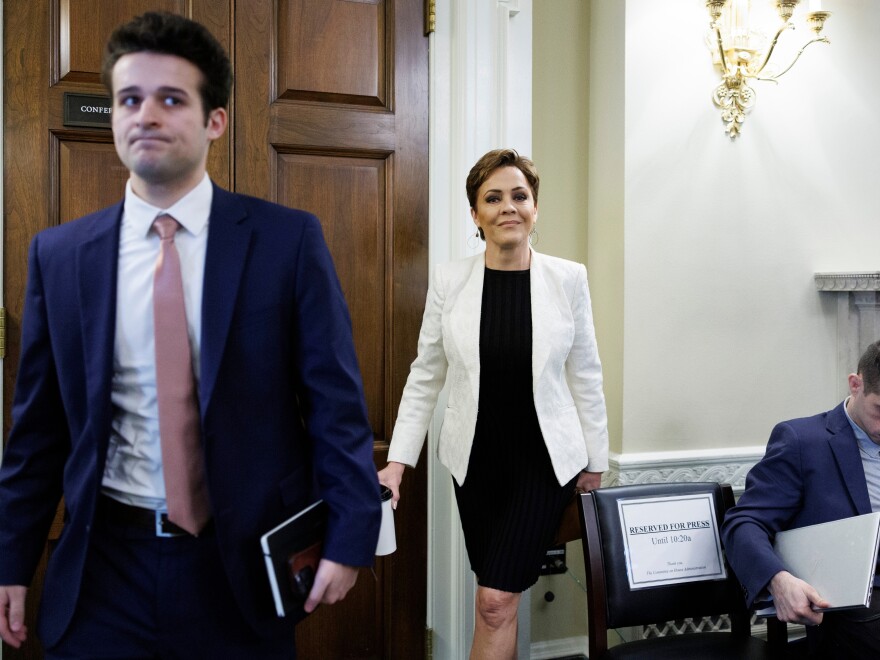
UPDATE: A federal judge has just ruled that Kari Lake acted unlawfully while overseeing the Voice of America (VOA), declaring her actions null and void in a significant legal blow to the Trump administration. This urgent ruling, delivered by U.S. District Court Judge Royce C. Lamberth on July 31, 2025, means that over 1,000 layoffs she enacted at the U.S. Agency for Global Media will be contested.
Judge Lamberth’s decision comes after a series of courtroom exchanges where he questioned the credibility of Lake’s claims to authority. He criticized the government’s argument that Congress should have no influence over the agency’s future, labeling it unconvincing. The ruling represents a direct challenge to the Trump White House and Lake’s inner circle, which has faced intense scrutiny for its management of the network.
In her response, Lake vowed to appeal the ruling, calling it an attempt by an “activist judge” to undermine the Trump administration’s goals of reducing bureaucracy and waste. “The American people gave President Trump a mandate to cut bloated bureaucracy,” she stated, asserting that Judge Lamberth’s ruling exemplifies a pattern of judicial activism.
The implications of this decision are profound. If upheld, it could reverse numerous controversial actions taken under Lake’s leadership, including the dismissals of contractors, the firing of the VOA director, and the termination of funding for critical international broadcasting networks like Radio Free Europe and Radio Free Asia. Critics argue that these actions aligned more with political agendas than with journalistic integrity.
Three plaintiffs, including VOA journalists Patsy Widakuswara and Jessica Jerreat, expressed relief and gratitude for the ruling, viewing it as a critical step toward restoring the integrity of the agency. “Today is a win in the fight against autocracy,” stated Skye Perryman, president of Democracy Forward, which acted as co-counsel for the plaintiffs.
Judge Lamberth’s ruling sidesteps broader constitutional questions about the balance of power between Congress and the presidency, focusing instead on whether Lake had the legal authority to enact her sweeping changes. The ruling comes as the VOA, a federally funded broadcaster, has seen its programming drastically cut, with broadcasts in only six languages as of January 2025, down from 49 prior to Lake’s tenure.
As the situation unfolds, Lake’s attempts to reshape the VOA into a platform for pro-Trump messaging—particularly regarding conflicts such as the one in Iran—have drawn fierce backlash from within the journalism community. The VOA has been historically known for its commitment to presenting unbiased news, and the latest developments have raised alarms about its future direction.
Moving forward, the focus will be on how the U.S. Agency for Global Media responds to the ruling and whether it can regain its footing in the wake of Lake’s controversial decisions. The upcoming appeal will be critical, not only for Lake but for the future of U.S. international broadcasting.
Stay tuned as this story develops, with potential ramifications for the integrity of U.S. journalism on the global stage.