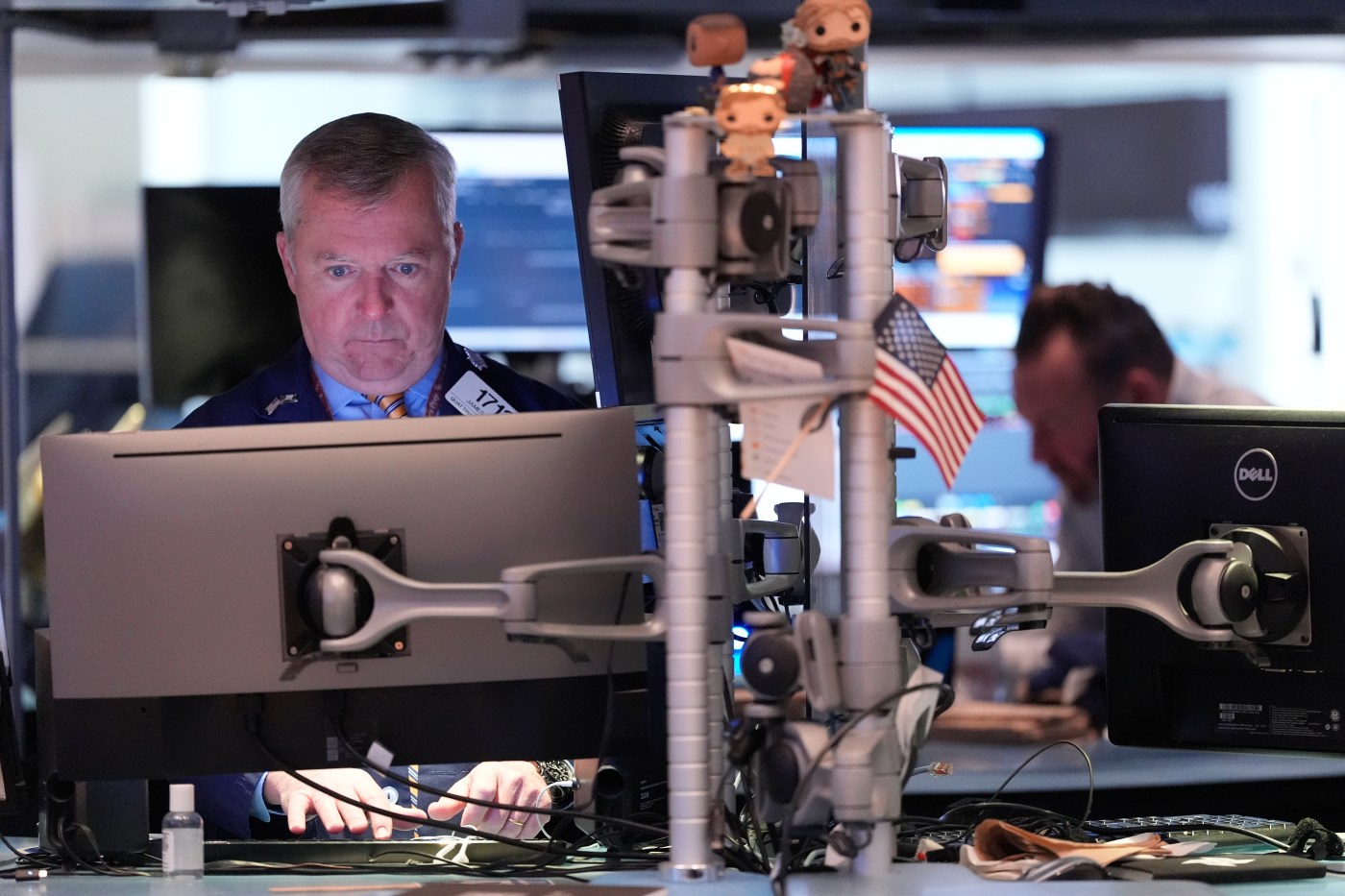
URGENT UPDATE: The U.S. stock market is in turmoil as heavyweights like Nvidia and Bitcoin continue to drag down investor confidence. Just reported, the S&P 500 dropped 0.9%, pulling further from its all-time high, while the Dow Jones Industrial Average plunged 557 points or 1.2% in a single day.
The Nasdaq composite also suffered, falling 0.8% as Nvidia remains a significant burden on the market, closing down 1.8%. Other AI stocks are also feeling the heat, with Super Micro Computer nosediving 6.4%. The fallout from Bitcoin’s decline, now below $92,000—a sharp drop from nearly $125,000 just last month—has further fueled this downturn, dragging Coinbase Global down 7.1% and Robinhood Markets by 5.3%.
As market analysts express concern over inflated valuations, critics warn that the stock market could be primed for a significant drop. The AI sector, which has skyrocketed over the last few years, is now under scrutiny. Even with Monday’s losses, Nvidia remains up 39% for the year, following its unprecedented price doubling in four of the last five years. Investors eagerly await Wednesday‘s earnings report from Nvidia, which could either validate or shatter expectations for tech stocks.
The pressure is not just on Nvidia; Aramark also reported disappointing profits, sending its shares down 5.2%. The food management company noted it expects profit growth of only 20% to 25% in the upcoming year—less than analysts had anticipated. In contrast, Alphabet surged 3.1% after Berkshire Hathaway, led by renowned investor Warren Buffett, disclosed a $4.34 billion stake in Google’s parent company, reflecting Buffett’s strategy of targeting undervalued stocks.
As the S&P 500 closed down 61.70 points at 6,672.41 and the Dow at 46,590.24, investors are anxious about the Federal Reserve’s next move regarding interest rates. The Fed is expected to release September’s delayed jobs report on Thursday, which could significantly influence market direction. Strong job figures might halt anticipated rate cuts, while weak data could intensify economic worries.
According to Barry Bannister, chief equity strategist at Stifel, the Fed’s approach to interest rates is shifting. In 2026, Bannister predicts the Fed will likely only cut rates in response to a weakening economy, ending the era of easy monetary policy that has buoyed stock prices for so long. The notion that the “Fed’s ‘free lunch’ is over” signals a challenging environment ahead for investors.
As the market reacts, all eyes will be on Nvidia and the upcoming jobs report. The urgency for investors to recalibrate expectations has never been more critical, making this a pivotal moment for the U.S. stock market.