BREAKING: New data from the Australian Bureau of Statistics reveals that headline annual inflation has eased to 3.4% in November, down from 3.8% in October. This update raises urgent questions about the Reserve Bank of Australia’s (RBA) potential interest rate hike at their next policy meeting on February 3, 2024.
The latest inflation figures indicate a slight decline, but experts warn the RBA may still face tough decisions ahead. The trimmed mean reading, which the RBA prioritizes as a measure of core inflation, dropped marginally from 3.3% in October to 3.2% in November. However, this remains above the RBA’s target threshold of 2% to 3%, suggesting persistent inflationary pressures.
Monthly insights reveal significant price increases in key areas: new dwelling prices surged by 2.8% and rents jumped by 4.0%. Even food price inflation remains stubborn, steady at 3.3% since June. These factors leave the RBA in a cautious stance, considering when to take action if inflation proves too rigid.
Market analysts are divided. Current estimates show about 35% odds of a rate hike at the February meeting. While Commonwealth Bank of Australia (CBA) and National Australia Bank (NAB) predict a rate increase, Westpac and ANZ expect the RBA to maintain current rates for a longer period. Westpac cautions that potential risks could influence future decisions.
As the RBA grapples with these developments, the Australian dollar (AUD) will be closely monitored. With the odds of a rate hike looming, the upcoming release of the December quarter data on January 28, 2024, will be crucial. Analysts are keen to assess whether inflation is becoming too entrenched, forcing the RBA’s hand.
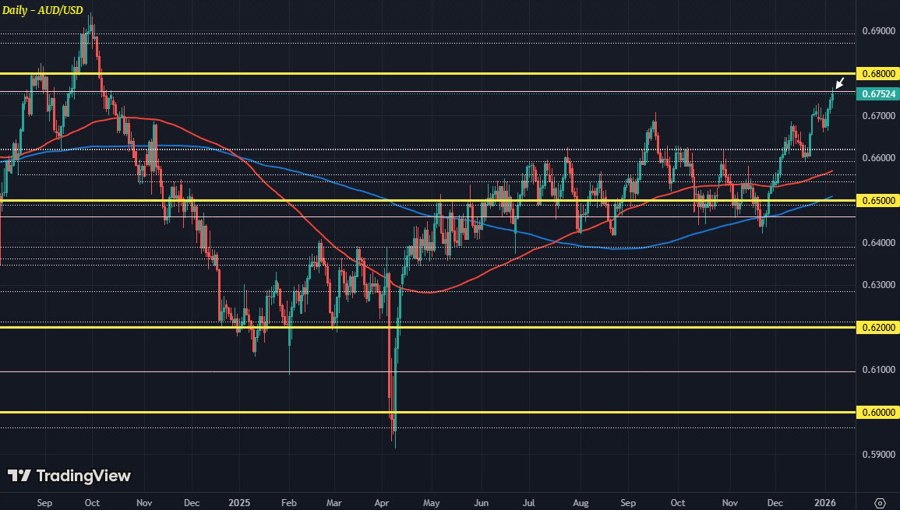
The AUD/USD currency pair is currently trading at its highest level since October 2024, despite a minor setback following the data release. Technical indicators suggest a bullish outlook, with prices remaining above critical moving averages. Traders are eyeing potential resistance near 0.6800, while the pair could aim for highs around 0.6915-0.6940 if the RBA signals a possible February hike.
The broader market sentiment and upcoming US labor market reports will also play pivotal roles in shaping the future of the AUD. As inflation dynamics continue to unfold, both consumers and investors remain on high alert for the RBA’s next move.
Stay tuned for further updates as these developments continue to evolve.